Understanding DNR: Its Meaning, Perspectives, and Legal Aspects
- dev_kamboja
- (updated )
- 6 min read
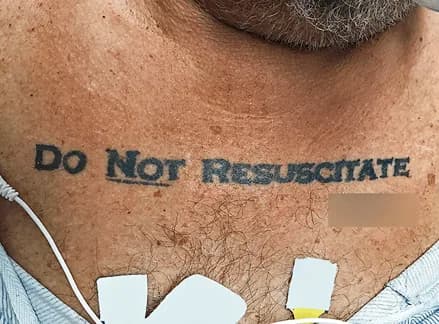
DNR, short for "Do Not Resuscitate" or "No Resuscitation Measures", is a medical decision that means a person does not wish to receive emergency measures to save their life in the event of organ failure or cardiac arrest.
This concept, although it has a strong ethical and medical basis, often sparks complex debates about ethics, morality, and law in medical practice. In this article, we will discuss what DNR is, and consider the various perspectives and laws related to this decision.
What Is DNR (Do Not Resuscitate)?
Resuscitation is a procedure in the medical world with the aim of saving a person's life when their breathing or heart stops working.
This resuscitation measure is usually abbreviated as RJP (Resusitasi Jantung Paru) or CPR (Cardiopulmonary Resuscitation).
CPR is performed on patients who experience several conditions, such as being unconscious, being unable to breathe normally, or even not breathing at all.
Briefly, CPR is carried out by giving chestcompression, or pressing on the chest to massage the heart from the outside, opening the patient's airway (airways) by tilting the patient's head back, and giving artificial breaths (by a trained person).
For patients who suffer cardiac arrest and undergo CPR, the chance of survival is only about 20%, while for patients with chronic illness, the percentage drops to 5-10%.
Although the survival percentage is only 5-20%, efforts to save these patients must still be made to the fullest and carried out immediately, because it is considered an emergencymeasure, except for patients who have an advance directive in place.
According to Hamzah Shatri et al. (2021), an advance directive is a document containing a patient's instructions or wishes about the care to be given if the patient becomes incompatible (unable to participate) in making decisions.
One of the statements contained in these advance directives is an order not to perform Cardiopulmonary Resuscitation, or CPR, which is then called "Do Not Resuscitate" or DNR.
Please note that the patient has ordered DNR treatment before becoming ill and while still fully conscious. DNR is certainly a difficult decision as it raises ethical dilemmas for nurses, doctors, or other healthcare workers involved.
Ethical Perspectives on DNR
The existence of ethical perspectives on DNR is the reason for justifying this action. Please note that when performing CPR, four bioethical principles must be considered, as follows.
1. Beneficence
When performing CPR, the principle of benefit must be considered. Based on this principle, doctors must be able to consider the benefit of CPR for the patient.
CPR is considered an effective measure for patients experiencing cardiac arrest caused by heart disorders. Meanwhile, patients in prolonged shock are an indication not to perform CPR, or serve as an order for DNR.
2. Non-maleficence (Do No Harm)
This is the principle of preventing healthcare actions that could increase the patient's pain. Please note that, basically, giving CPR too late will actually cause further suffering to the patient. The patient may survive, but in a condition of persistent coma or vegetative state.
For this reason, healthcare workers must consider whether, after performing CPR, the patient will gain more benefit or more harm.
3. Patient Autonomy
When making decisions that concern life and death, the patient must still exercise their right to autonomy. The doctor must ensure that the patient makes the decision to consent to or refuse CPR.
This patient must of course be an adult under national regulations, that is, at least 18 years old. Before making a decision, the patient must communicate with the doctor, and the doctor is obliged to provide informed consent to the patient.
However, if an emergency occurs before the patient has made a decision, the wise choice is to still provide medical assistance according to standard practice.
4. Fair Treatment (Justice)
Fair treatment can uphold patients' rights by balancing the achievement of social goals. To ensure fair treatment of patients, every healthcare provider must consider whether a medical action can have effects such as:
- Treating, preventing, and providing a high life expectancy;
- Minimizing side effects and pain;
- Providing more benefits than harm; and
- Providing more positive than negative impact.
DNR Law in Indonesia
Please be aware that there are as yet no specific regulations governing DNR in Indonesia. However, the implementation of every medical action must be based on the patient's consent after hearing sufficient explanation from the doctor.
This is contained in Law No. 29 of 2004 on Medical Practice, Article 39. Furthermore, Article 45, paragraphs 1 and 2, strengthens this law. Referring to this law, healthcare workers are obliged to respect and honor every patient decision for DNR.
The Indonesian Medical Code of Ethics (KODEKI), Article 17, states that every doctor is obliged to provide emergency assistance as an expression of humanitarian duty, except where they are convinced that another person is willing and able to provide it.
Article 17 of KODEKI also provides another explanation: one of the reasons that releases a doctor from the obligation to provide emergency assistance to a patient is when the patient has a medical decision of DNR.
Regarding the chapter and articles on determining death, organ utilization, and the discontinuation or postponement of life support therapy, these are found in Minister of Health Regulation (Permenkes) No. 37 of 2014.
In stopping or postponing life support therapy, the party that decides must be the team of doctors treating the patient, after consulting with the Medical Committee or Ethics Committee team. The patient's family may request this, but one of the requirements is that the patient must already have stated their wishes.
Religious Views on DNR
Some religious views permit DNR, especially when CPR has been performed but does not produce a good result and instead adds to the burden on the patient and family.
A lecturer at the Faculty of Medicine, University of Mataram (Unram), Dr. Raehanul Bahraen, M.Sc, Sp.PK, explains that the real condition permitting doctors to withdraw resuscitation equipment is when the patient has experienced brain stem death.
This condition is based on the determination of the Majma' Fiqh Al-Islami: that is, a condition in which the heartbeat and breathing have completely stopped, the medical team has confirmed that this cannot be reversed, and all brain activity has ceased.
Do You Understand What DNR Is?
DNR treatment must, of course, have the approval of the patient, whose wishes should be respected by every medical professional. DNR may be one preparation for old age for some people who have chronic illness and a small life expectancy.
In addition, a noble wish in the heart to donate one's organs to others may also be one of the reasons why someone chooses DNR later on.
Respecting the patient applies not only to patients who are still alive, but also to patients who have passed away. One form of final respect for a DNR patient before the funeral is to carry out the care of the body in accordance with their beliefs.
You can rely on body care services from Kamboja which, in addition to providing body care services for Muslims and non-Muslims alike, also provides death certificate processing services. Get more information and discuss with one of the Kamboja team by contacting Kamboja contact.

dev_kamboja
The Kamboja team writes guides on bereavement, funeral arrangements and funeral planning to help families in Indonesia.