What is cremation? Most of you have probably heard this term before, but you may still be unsure of its meaning and benefits. Indeed, in Indonesia cremation is not very well known among the general public.
Yet it is a funeral practice followed by certain religions. Recently, the term became widely heard after the body of Instagram celebrity Laura Anna underwent cremation at Grand Heaven Pluit in December 2021.
Regardless of the passing of the late Laura Anna, we will explain more fully what cremation is, covering its definition, process, and history.
Do You Know What Cremation Is?
As mentioned earlier, cremation is one form of funeral practised by certain religions. It is a process in which a deceased human body is burned or reduced to ashes. It should be noted, however, that the process must not be carried out carelessly.
There are several provisions that must be observed first, such as the temperature used to burn the body and the length of time the burning process takes.
For this reason, cremation must not be carried out carelessly. It is usually only performed by professional funeral services.
From various sources, the word cremation comes from the Latin word "cremo," meaning to burn. Cremation is therefore the practice of disposing of a body by burning it.
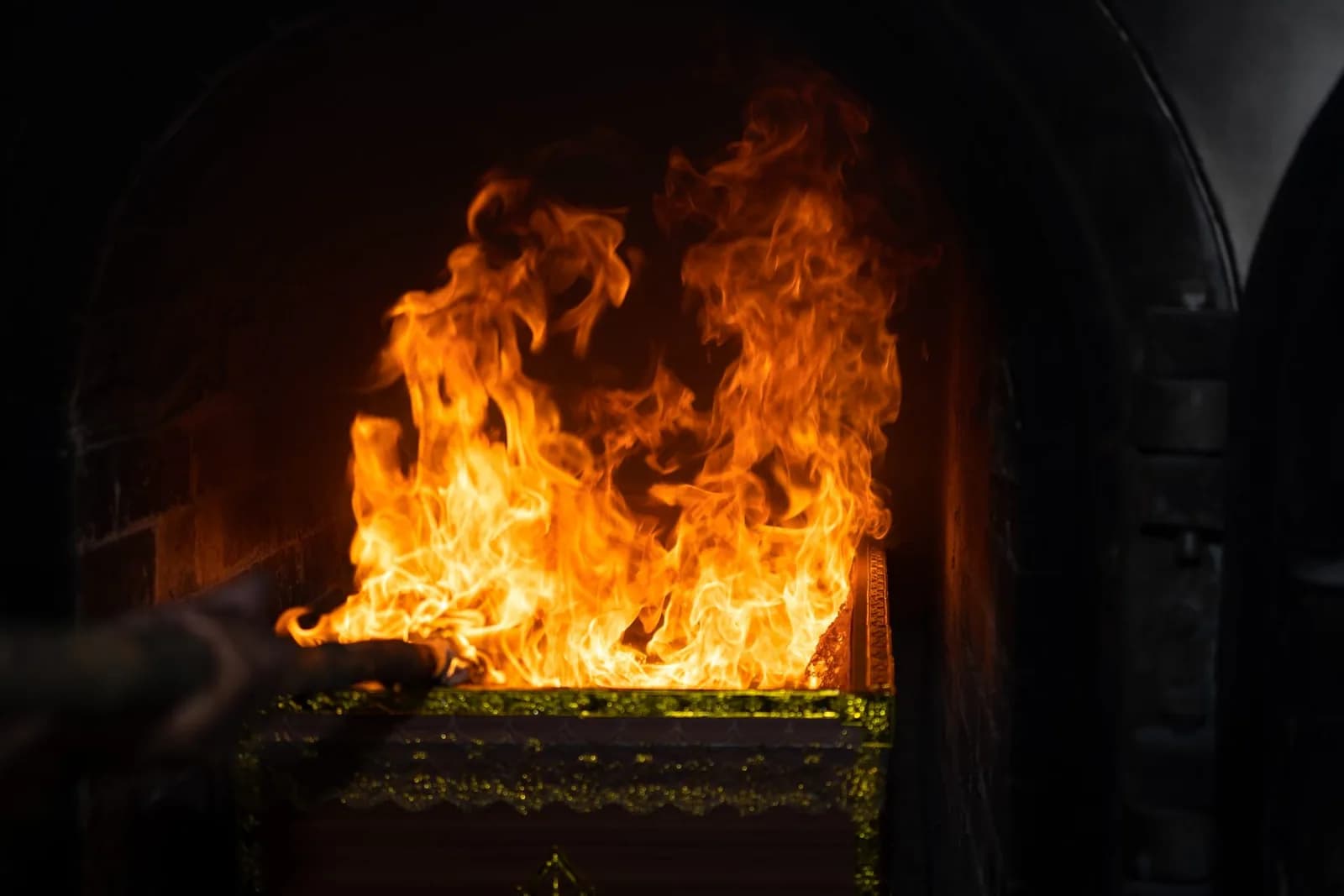
Another provision is that the fire used in the process must reach a temperature of 800 degrees Celsius or more.
Because of this temperature, only bones and ash remain after cremation. The resulting remains are then ground into a finer powder and stored in a special container such as an urn.
The ash from the burning process can be many times lighter than the weight of the body.
After the burning process is complete, the ashes are kept for several days in the funeral home. Afterwards, the ashes are scattered.
However, scattering may not be carried out if the deceased had certain types of illness. The scattering is also part of the overall funeral process.
The History of Cremation
You now understand what cremation is, but what is the history of this funeral process or ritual? Historically, the practice of cremation existed in Ancient Greece as early as 1000 BC.
The practice is believed to have been adopted from peoples living in the northern parts of the world, where it was used for soldiers who fell in battle.
The ashes were collected and then sent back to their homeland.
In addition, the practice of cremation in Greece was also symbolically associated with virtue, courage, and patriotism. According to Ancient Greek mythology, Achilles, the bravest, greatest, and most handsome warrior in the Trojan War, was also turned to ashes and dressed in the garments of the gods.
Not only the Greeks, but the Romans later followed the Greek custom of cremating war heroes. However, from around 100 AD onward, the cremation of bodies was discontinued except in emergencies.
Although there is no concrete reason why cremation was discontinued, most experts suspect it was due to the spread of Christianity. The most plausible explanation, however, is to avoid a shortage of wood.
Like the Greeks and Romans, the Scandinavians also held similar beliefs. Cremation was practised to help free the spirit from the flesh and to prevent the dead from disturbing the living.
In Hinduism, cremation is also believed to release the soul so that it no longer has ties to the world.
Severing ties with worldly things is believed to help the material elements that make up the body return to unite with nature.
In India, cremation is a desired practice for Hindus.
The ashes are then immersed in the Ganges River, which is considered the holy river of the country. In several Asian countries, such as Tibet and Laos, cremation is reserved only for holy people.
Beyond these countries, you will also find cremation ceremonies in Bali, where the ritual is known as Ngaben.
It is usually held only on auspicious days, with the aim of guiding the deceased to the best possible place.
Cremation in Modern Society
This funeral ceremony is closely tied to the traditions and beliefs of society. However, cremation in modern times is carried out differently. It is no longer done with an open fire; instead, the body is placed in a coffin and enters a chamber heated to a very high temperature.
The ashes from cremation are placed in a small urn and then interred in a columbarium or scattered in a location of the family's choosing. Moreover, this service is usually only available through professional funeral providers, so it cannot be carried out carelessly.
In addition, only some religions permit cremation, such as Buddhism, Hinduism, several Christian denominations (the Catholic Church, Baptist, Methodist, and Jehovah's Witnesses), Liberal Judaism, and Sikhism. Meanwhile, some religions prohibit cremation, including the Baha'i Faith, Islam, Orthodox Judaism, and certain Christian denominations such as the Greek Orthodox, Russian Orthodox, Pentecostal, and Charismatic churches.
Advantages of Cremation
Funerals with cremation also offer several advantages. What are they? Read the explanations below:
1. Practical
It should be noted that cremation is far more practical than burial. This is because the process does not take much time, usually only about 3 hours.
2. Requires Little Land
Another benefit is that it requires little land. As is known in cities, burial land is very expensive, sometimes reaching hundreds of millions of rupiah. For this reason, cremation can be an alternative.
3. Requires Lower Costs
In addition, the cremation process also does not require large costs. This contrasts sharply with burial, where the expenses can be very high.
Now that you know what cremation is, including its process, history, and benefits, if you wish to use this funeral process for your family, please consider funeral services from Kamboja.

dev_kamboja
The Kamboja team writes guides on bereavement, funeral arrangements and funeral planning to help families in Indonesia.