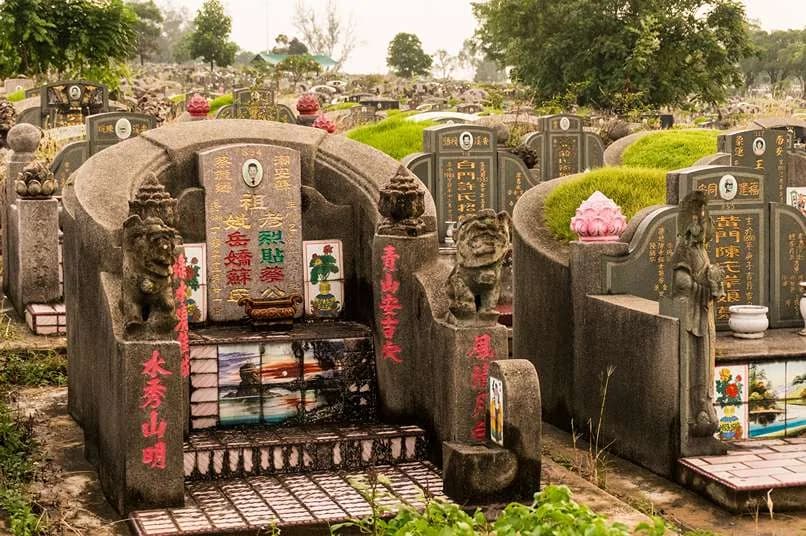
For the Chinese community, the tradition of honoring ancestors carries strong philosophical and spiritual depth. One tangible expression of this respect is the bongpay, a gravestone characteristic of Chinese tradition that is more than a marker of a grave. It is also a symbol of family bonds, cultural values, and the belief in the continuity of human life and the spirit after death.
In this article, we will discuss in full what a bongpay is, its types, the Feng Shui rules in its making, the writing conventions used on it, and the differing views on bongpay among Christian and Confucian families.
What Is a Bongpay?
Bongpay, also known as Mu-bei (墓碑) in Mandarin, is the Hokkien dialect term for the traditional headstone or grave marker placed at Chinese graves.
Bongpay is usually made from durable materials such as natural stone, marble, or granite, and is carved with Hanzi (Mandarin characters) that reflect the identity of the deceased and their relationship with family and ancestors.
In Chinese culture, a bongpay is not merely an inscription of death, but evidence of the love and respect of descendants toward their ancestors. It also carries cultural, philosophical, and spiritual symbols that connect earthly life with the afterlife.
Types of Bongpay
In general, bongpay has no formal classification such as "type A" or "type B" in any particular traditional document, but its variations can be seen based on its function and the context of use within Chinese grave traditions:
1. Individual Bongpay
This is a form of bongpay made for a single individual only, usually carved in one complete section that lists the name of the deceased and other important information about them.
2. Family Bongpay
For families with a large family grave or with more than one person buried in the same area, the bongpay usually includes information about several members of the family lineage, including the names of children or a longer line of descent.
3. Modern Bongpay
As times change, some Chinese families, especially those who hold modern values, tend to simplify the form of the bongpay, both in design and layout of its inscriptions. Modern bongpay is often more minimalist and does not always follow Feng Shui calculations as strictly as traditional practice.
Feng Shui Rules in Making a Bongpay
In traditional Chinese culture, Feng Shui, the art of arranging space and orientation based on the balance of energy (qi), is highly regarded in the making of graves and bongpay. This is not merely about aesthetics, but is believed to affect the good fortune and well-being of the living descendants.
Some general Feng Shui rules to note include:
- The position of the grave and bongpay should be in a location considered favorable from an energy perspective. Graves are usually placed on higher ground or in areas not easily exposed to natural disturbances.
- The direction of the bongpay and the orientation of the grave are also chosen based on calculations related to the calendar, traditional compass directions, and the surrounding environment so that positive energy can flow optimally.
- The size and proportion of the bongpay are carefully considered, as the physical structure of the bongpay is believed to influence the composition of energy in the grave area.
Mistakes in arranging these points may be considered to bring an imbalance of energy that is unfavorable according to traditional belief, which is one reason why the making of a bongpay is often consulted with Feng Shui experts.
Writing Conventions on a Bongpay
The writing found on a bongpay follows conventions based on tradition and history. These writing conventions often follow the rules below:
1. Writing Direction
The writing on a bongpay is usually read from right to left and from top to bottom, following the traditional style of classical Mandarin character writing.
2. Structure of the Bongpay Sections
A bongpay is generally divided into four main sections:
- Right Column: Contains information about the date the bongpay was made or restored, which may use the imperial calendar system or the modern calendar.
- Center Column: Contains the name of the deceased and their social status, such as family title, profession, or the deceased's relationship within the family.
- Top of the Bongpay (Upper Section): Sometimes lists the family's region of origin or broader genealogical information.
- Left Column: Usually contains a list of the names of children and grandchildren, as an expression of devotion from the next generation.
These writing conventions have been used for centuries and are passed down through generations, beginning from the Ming Dynasty (about 600 years ago) and still in use today.
Differences in Bongpay for Christian and Confucian Families
Although the bongpay originates from a broadly shared Chinese culture, views on the bongpay can differ depending on the religious beliefs held by the family:
1. Bongpay in Confucian Tradition
For Chinese families who still hold strongly to Confucian teachings (Confucianism), the bongpay has strong philosophical value as an expression of respect for ancestors and a symbol of filial devotion from the next generation. This approach often includes Feng Shui rules and complete classical writing conventions.
2. Bongpay for Chinese Christians
For Chinese-descended Christians, the bongpay is still regarded as an identity and an honor to the deceased's contributions to the family.
In practice, however, Christian families are often more flexible about Feng Shui rules and classical writing conventions, and focus more on the meaning of eternal life from the perspective of their faith (such as the cross symbol or specific Bible verses).
Kamboja Helps With Funeral Arrangements, Including the Bongpay!
Preparing a bongpay and planning a funeral is deeply meaningful but also full of technical detail. This process often requires professional support so it can be carried out with respect, in good order, and without adding to the burden of a family in grief.
For this, you may consider support from a trusted body handling service and funeral service, including the option of flexible and responsive on-demand funeral services tailored to the family's needs.
With the right support, from consultation on the writing of the bongpay, site preparation, to the carrying out of the ceremony, everything can proceed smoothly in line with the tradition and values you hold.
One professional service provider that can help is Kamboja, which has experience in supporting families with the full range of funeral needs. For further information and consultation, you can contact Kamboja via WhatsApp at 082211111415.
- #funeral services

Kamboja Blog
The Kamboja team writes guides on bereavement, funeral arrangements and funeral planning to help families in Indonesia.


