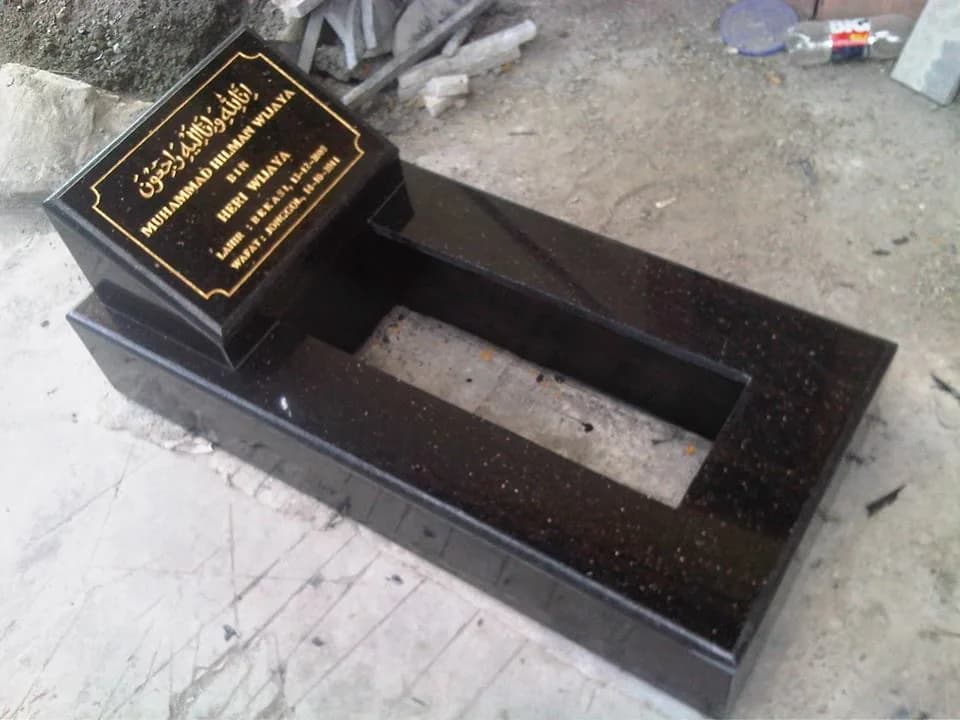
The ruling on tiled graves is a frequent question, especially when looking at modern burial trends that use ceramic tiles to make graves look neater, cleaner, and more durable. But what does Islam actually say about this? Is it permissible to tile a grave, or is it discouraged?
This article discusses the ruling on tiled graves in Islam in a complete and easy-to-follow way, from its basis and the views of scholars to the requirements and recommendations to keep in mind. Let's take a closer look.
Have You Seen a Tiled Grave?
Before getting into the ruling, let's first understand what a tiled grave means.
A tiled grave is a grave whose top or surroundings are covered with ceramic tiles, marble, or other hard materials. The usual purposes are:
- To look neater and cleaner
- To make the grave easier to maintain
- To prevent soil erosion or damage
- As a form of respect for the deceased
In Islam, however, everything related to death has its own rules, including burial.
The Legal Basis of Burial in Islam
In Islamic teaching, burial is recommended to be done simply. This is based on several hadiths that forbid excess in the treatment of graves.
The Messenger of Allah ﷺ said: “The Prophet Muhammad ﷺ forbade plastering graves, writing on them (as markers), building structures over them, and stepping on them.” (Narrated by Ahmad and At-Tirmidhi)
This hadith carries the following meanings:
- Graves should not be raised excessively
- No structures should be built over graves
- Graves should not be treated as something to be venerated
In essence, Islam teaches that death is a call to simplicity and a reminder of the afterlife, not a way to display social status.
Is It Permissible to Tile a Grave in Islam?
The following are some legal views on the use of tiles on graves according to various sources and scholarly opinions:
1. The Ruling Is Haram
Some scholars hold that building or covering a grave with tiles is an act that is prohibited. The reason is that it can lead to excessive veneration of the deceased.
If left unchecked, this condition is feared to open the door to practices that do not align with Islamic teaching, such as treating the grave as sacred or even worshipping it, which is clearly forbidden in Islam.
2. The Ruling Is Makruh
There is also a view that the ruling on tiled graves becomes makruh if the purpose is merely to decorate or beautify the appearance of the grave. This means it is not haram, but it is still not recommended because it conflicts with the principle of simplicity in Islam.
However, in some specific cases, some scholars grant leniency, as long as it is not excessive. For example, for the graves of righteous people, scholars, or religious figures.
3. The Ruling Is Not Permitted
Other views firmly state that the use of tiles on graves is not permitted, because it does not conform to the guidance taught by the Messenger of Allah ﷺ.
In Islam, graves are recommended to be made simple, not built excessively, and not turned into symbols of luxury or social status. The use of tiles is considered a deviation from these principles.
4. The Ruling Is Haram (Based on Hadith)
In several hadiths, the Messenger of Allah ﷺ prohibited taking graves as places of worship or as something to be venerated. From this, some scholars conclude that building graves with tiles may also fall under what is prohibited, since it has the potential to lead to the veneration of graves.
Therefore, this practice is considered close to what is forbidden if it is not properly controlled.
From these various views, it can be concluded that the ruling on tiled graves in Islam leans toward being discouraged, and may even be haram if it leads to luxury and excessive veneration.
Islam itself emphasizes simplicity in burial and reminds us that what matters most is prayer and good deeds, not the appearance of the grave.
Requirements for Graves Permitted in Islam
Rather than focusing on physically beautifying the grave, Islamic burial emphasizes a simpler form of respect that is spiritually meaningful. There are several requirements and recommendations that can serve as guidelines so that the grave remains in line with Sharia:
A. Not Decorated or Built Excessively
In Islam, graves are not recommended to be decorated or built excessively. This prohibition is even mentioned in hadiths, where Muslims are not encouraged to use materials such as cement, tiles, marble, or paint merely to beautify graves.
The aim is to keep the grave simple and prevent it from becoming a symbol of luxury or worldly pride.
B. Simple Headstones Are Permitted
Although excess is not allowed, graves may still be marked with a headstone. The Messenger of Allah ﷺ himself once placed a marker on the grave of one of his companions. However, its function is only to mark the location, not to decorate or beautify the grave.
C. Reasonable Height of the Grave
Graves may be raised, but only to about one handspan above ground level. The purpose is for the grave to be easily recognized and not trampled, not to make it look conspicuous or grand. The principle remains simple and not excessive.
D. No Structures Over the Grave
Islam also prohibits structures over graves, such as domes, gateways, or other ornaments. This prohibition aims to preserve the purity of faith so that the grave or the deceased is not excessively venerated.
E. Focus on Prayer and Visitation
What matters most in Islam is not the appearance of the grave, but the prayer after burying the deceased and the washing of the deceased in accordance with Sharia as a form of respect for the one who has passed away.
Visiting graves is also highly recommended, but its purpose is to pray for the deceased and to remember the afterlife, not to admire the beauty of the grave or to show it off.
For Peace of Mind and Compliance with Sharia, Use Kamboja Burial Services
Understanding the ruling on tiled graves and following the requirements of burial in accordance with Sharia is a wise step to ensure that the burial process stays in line with religious teaching. If you wish for the burial process to proceed more smoothly, orderly, and in accordance with Islamic provisions without having to handle everything yourself, you may consider the help of professional burial services.
For more information about trustworthy, Sharia-compliant Islamic burial services, please contact the Kamboja team at 082211111415. They are ready to help you with the right and trusted service.
- #burial services

Kamboja Blog
The Kamboja team writes guides on bereavement, funeral arrangements and funeral planning to help families in Indonesia.


