When discussing funeral services, cremation practices are often the topic people ask about most, especially when linked to Buddhist teachings.
Many people know that Buddhists generally cremate the deceased, but not everyone understands the philosophical reasons, spiritual meaning, and process behind this tradition. On the other hand, not all Buddhist schools require cremation, and some traditions even prefer burial.
This article will cover, in a complete and relaxed way, the reasons for cremation in Buddhism, the views of several different traditions, and how the cremation process is carried out in line with Buddhist teachings and values. Let's learn together.
Basic Buddhist Views on Death
In Buddhist teaching, death is not the end of everything. Death is seen as a natural part of the cycle of life known as samsara, the cycle of birth, life, death, and rebirth.
The physical body is considered a temporary vessel for the mind or consciousness. After a person dies, the body no longer has a spiritual function. For this reason, the way the deceased is treated in Buddhism emphasizes simplicity, respect, and non-attachment, rather than luxury or excessive ritual.
This principle is the foundation of why the cremation process is widely chosen in Buddhist practice.
Why Is Cremation Commonly Practiced in Buddhism?
Before understanding more about the process and procedures of cremation in Buddhism, it is important to first know the basic reasons why cremation is so commonly practiced by Buddhists and carries a deeper meaning than simply a burial tradition.
1. The Body Is Impermanent (Anicca)
One of the main teachings of the Buddha is anicca, impermanence. Everything that is formed, including the human body, will inevitably decay and change.
Cremation is seen as the clearest symbol of this teaching. When the body is burned and turns to ash, Buddhists are reminded that the body is only temporary matter that should not be clung to excessively.
2. Following the Parinirvana of the Buddha
Historically, the Buddha Gautama himself was cremated after attaining Parinirvana (the passing of the Buddha). His remains were then divided and placed in stupas as a sign of respect, not as worship of the physical body.
For this reason, many Buddhists view cremation as a way of burial that follows the example of the Buddha.
3. Reducing Family Attachment
In Buddhist teaching, excessive attachment can be a source of suffering. The cremation process helps families more quickly accept the reality that a loved one has passed away, and learn to let go.
Seeing the body symbolically return to ash helps the family understand that the one who has gone is no longer bound to a physical form.
4. Practical and Aligned with the Value of Simplicity
Cremation is also seen as more practical, simple, and efficient. This aligns with Buddhist values that teach living simply and without excess, including in matters of death.
Is Cremation Mandatory in Buddhism?
The answer: it is not absolutely mandatory. Buddhism has no rigid rules regarding the method of burial. What matters most is not the method of disposal, but the mental state of the deceased and of the family left behind.
This makes funeral practice in Buddhism very flexible, able to adapt to culture, local traditions, and particular circumstances.
Buddhist Traditions That Prefer Burial
Although cremation is more common, there are some Buddhist conditions and traditions that choose burial, among them:
1. Buddhist Traditions in Certain Regions
In some countries or communities, burial is practiced due to cultural, climate, or local legal factors. For example, in areas with limited crematorium facilities, burial becomes the realistic choice.
2. Mahayana and Chinese Traditions
In Chinese Buddhist traditions influenced by Confucian values, respect for ancestors is very strong. Some families choose burial so that the grave can serve as a place of honor and family pilgrimage.
However, such burials are still carried out with the principle of simplicity and without the belief that the body holds spiritual value after death.
3. Special Practices for Certain Monks
In some rare cases, the body of a monk regarded as having reached a high spiritual level is not cremated immediately. Some are temporarily preserved or buried before eventually being cremated, depending on the local monastery's tradition.
The Spiritual Meaning Behind Buddhist Cremation
For Buddhists, cremation is not merely a physical process but also a spiritual ritual rich in meaning.
The fire in a cremation symbolizes:
- Letting go of worldly attachments
- Purifying attachment
- The return of the body to the elements of nature
The ashes that remain are usually kept in an urn and may be placed in a vihara, a stupa, or any location the family considers appropriate.
How Does the Cremation Process Work in Buddhism?
As part of the final act of respect, the cremation process in Buddhism follows several stages:
1. Preparing the Body
The cremation process in Buddhism begins with preparing the body. The deceased is usually bathed as a final act of respect, then dressed in clean and modest clothing. Some families also prefer to use funeral arrangement services during this time of grief.
In many Buddhist traditions, the body is not elaborately adorned, since simplicity is an important part of the Buddha's teachings. At this stage, family members and monks often chant paritta, or Buddhist prayers.
These prayers aim to calm the mind of the deceased while also bringing peace and inner strength to the grieving family.
2. Recitation of Paritta or Sutras
Before the cremation takes place, monks recite paritta, sutras, or Buddhist chanting. This recitation serves as spiritual support, not as a means of saving the soul.
In Buddhist teaching, every being is responsible for its own karma. Paritta serves to radiate wholesome energy, calm the mind of the deceased, and create a peaceful atmosphere for the family left behind, so they may let go of a loved one with greater acceptance.
3. Procession to the Crematorium
After the prayers are completed, the body is taken to the crematorium. This procession usually takes place in a calm, orderly, and respectful atmosphere. There is no expectation to show excessive sorrow, because Buddhists are taught to accept death as a natural part of life. In some Buddhist cultures, families also bring simple offerings such as flowers or incense as symbols of respect and final prayers.
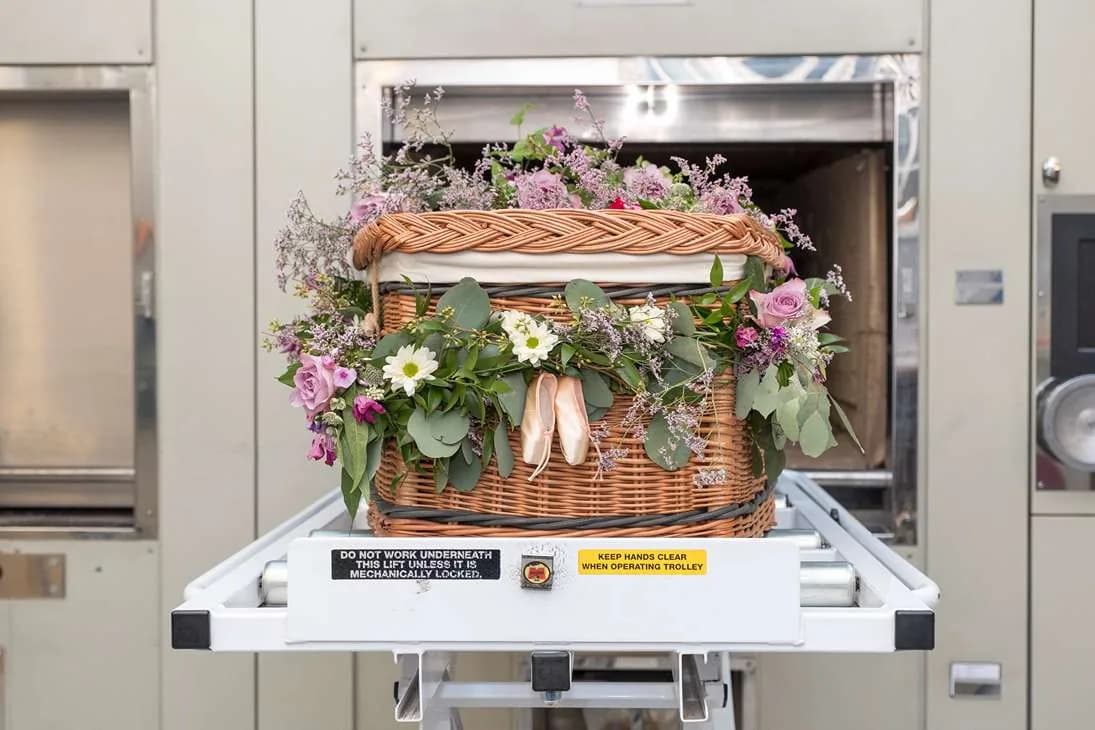
4. The Cremation
Upon arriving at the crematorium, the cremation is carried out according to the applicable procedures. While the burning takes place, family members may choose to meditate briefly, recite prayers, or sit in silence.
This moment is often used to reflect on the teaching of impermanence, to let go of worldly attachments, and to pray that the deceased may attain a good state of mind in accordance with their karma.
5. Collecting the Ashes
Once the cremation is complete, the ashes are gathered and placed in an urn. The family then decides how the ashes will be cared for. Some choose to keep them in a vihara, place them in a stupa, or scatter them in the sea or a river, in accordance with local traditions and regulations.
From a Buddhist perspective, all of these choices are acceptable as long as they are carried out with good intention, with respect, and without excessive attachment to the physical body.
Kamboja: A Trusted Partner for Funeral Arrangements and Burial Services
In conclusion, cremation in Buddhism is not merely a funeral process but part of a spiritual journey rich in meaning about impermanence, letting go, and final respect.
Each stage is carried out calmly, simply, and with mindfulness, by both the deceased and the family left behind. We hope this understanding helps families move through their period of grief with greater acceptance and without being burdened in managing the final rites.
To support grieving families, Kamboja provides professional and comprehensive funeral arrangement and burial services.
If you need more information or would like to consult with us, please contact the Kamboja Customer Service via WhatsApp at 082211111415 or
to get fast and compassionate assistance. +62 815-1353-2488 to get help quickly and with compassion.
- #jasa kremasi
- #kremasi
- #layanan kremasi jakarta

Kamboja Blog
The Kamboja team writes guides on bereavement, funeral arrangements and funeral planning to help families in Indonesia.