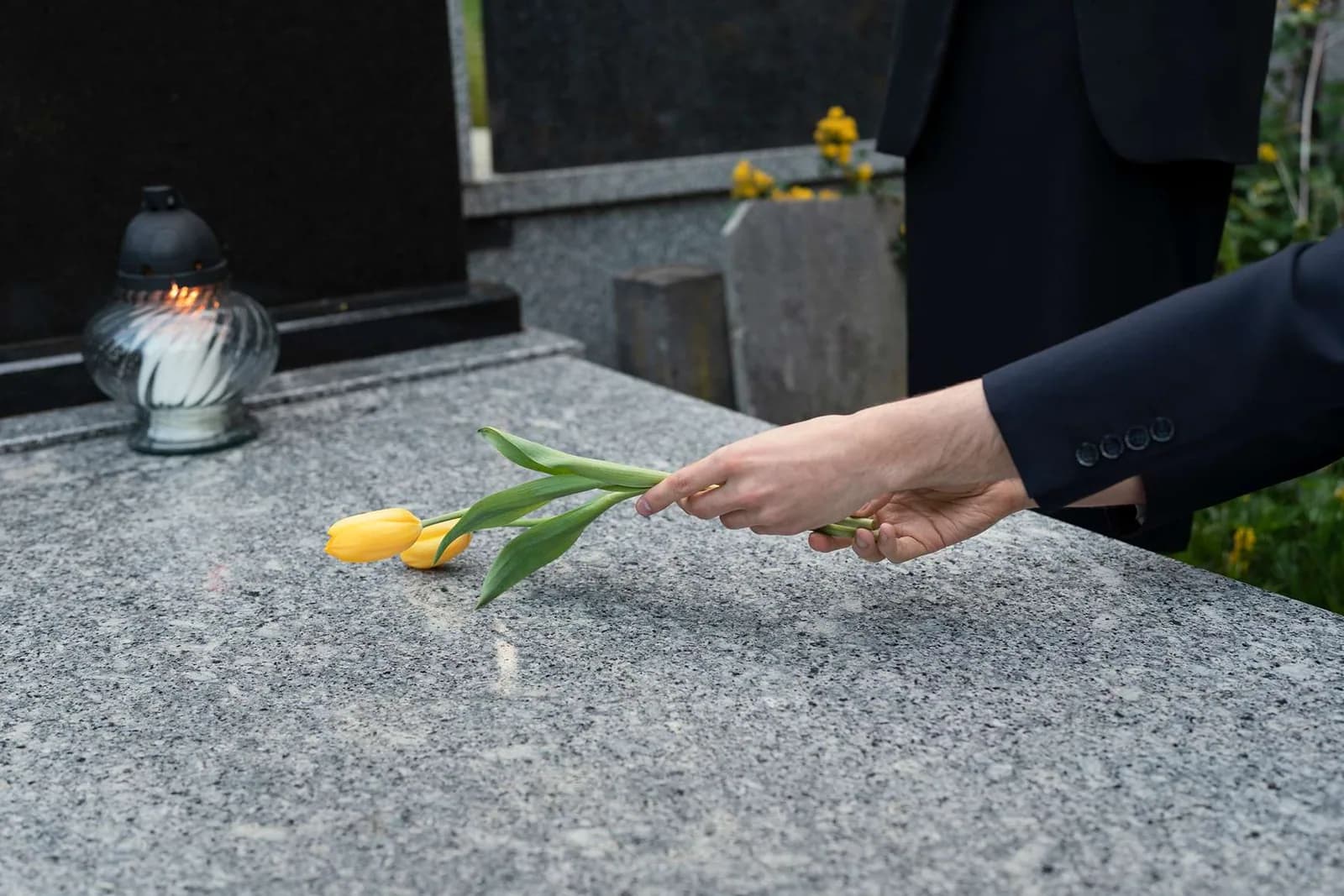
When it comes to death, one question that often comes up is what Islam says about cremation. Many people wonder whether it is really permitted to burn a body as part of cremation. In some countries, cremation has become common for practical or cultural reasons.
In Islam, however, the way the deceased is treated is governed by clear rules and is rooted in deep respect.
That is why understanding cremation in Islam is so important, so that families do not make mistakes when deciding how to handle a funeral. In this article, we will discuss in a relaxed but thorough way the Islamic view of cremation, what the Qur'an and Hadith say, and what funeral practices Islam actually recommends.
Why Is Cremation Prohibited in Islam?
In Islam, cremation is not permitted because the human body is considered very honorable and must continue to be respected, even after death.
So, from the perspective of cremation in Islam, the body of the deceased must not be treated in a damaging way such as burning, because this is seen as removing human dignity.
A person must be treated with respect from birth until after death. An important message is narrated from Aisha radhiyallahu 'anha, the wife of the Prophet Muhammad, who said that "breaking the bones of a dead person is like breaking them while he is alive."
From this, it can be understood that any treatment that hurts or damages the body of the deceased, including cremation, is not justified. Islam also teaches that the human body and soul are creations of Allah and their dignity must be protected.
Humans were created from earth, and after death they should return to the earth through burial, not burning. This is considered a natural cycle that is in line with the decree of Allah.
What the Qur'an and Hadith Say About Cremation
In Islam, cremation is clearly not permitted because it contradicts the teachings of the Qur'an and Hadith, which emphasize the importance of preserving the dignity of the deceased.
From the Islamic perspective, the human body is not merely physical but something honored by Allah, so even after death it must be treated with great respect. The Qur'an teaches that humans were created from earth and will return to earth.
Therefore, burial is the approach that aligns with this natural state. The deceased is returned to the earth intact, not burned or damaged, because that is considered disrespectful to the creation of Allah.
In the Hadith, the Prophet Muhammad also affirmed the importance of preserving the dignity of the deceased. There is even a narration stating that harming a dead person is like harming them while alive. From this it is clear that Islam strongly protects the honor of the human body, both while alive and after death.
In addition, Islamic teaching includes the belief in the Day of Resurrection, when people will be raised again from their graves. For this reason, caring for the body well through burial is considered an important part of faith.
Proper Funeral Practices in Islam
In Islamic burial, the procedures are arranged very neatly, with great respect and a deep spiritual meaning. The purpose is not only to take care of the body, but also as a final act of honor before a person returns fully to Allah.
Here are the proper funeral practices in Islam, explained in an easy-to-understand way.
1. Ghusl (Washing the Body)
The first step is ghusl, which is washing the body by close family members or someone of the same gender. This process is carried out very carefully, gently, and with great respect.
The water used is usually at normal or warm temperature, and is not excessive, because the purpose is to cleanse and honor the body, not merely as a physical procedure. Washing the body in Islam is regarded as a final act of love, as well as preparation for the journey to the next life.
2. Kafan (Wrapping the Body)
After washing, the body is wrapped in a simple white burial shroud, usually made of cotton or linen.
This simplicity carries an important meaning: it shows that before Allah, all people are equal. There is no difference between rich or poor, high or low status.
The simple shroud also reminds us that worldly life is temporary, and that what matters most is good deeds and piety.
3. Salat Jenazah (Funeral Prayer)
Next, the body is prayed over through the Funeral Prayer, which is performed in congregation. In this prayer, Muslims ask Allah to grant forgiveness and mercy to the deceased.
This moment also serves as moral support for the grieving family. The presence of many people shows that grief is not carried alone, but shared together.
4. Burial Procedure
After the funeral prayer, the body is buried promptly. In Islam, burial is carried out with the body facing the qibla (the direction of the Kaaba), usually lying on the right side.
This follows the teaching of the Prophet Muhammad ﷺ as a form of final respect. Burial is done as soon as possible after death, without unnecessary delay, as a way of hastening the return to the earth.
In Islamic funeral arrangements, humans come from the earth and will return to the earth, so this process is regarded as a natural cycle full of meaning.
Funeral Services That Support Families
Arranging a funeral is certainly not easy, especially when the family is in a state of grief. Many things need to be considered at once, from preparing the body, handling administration, to the funeral process itself.
In moments like these, the help of a funeral service can be very valuable so that families do not have to feel overwhelmed handling everything alone. Kamboja is a funeral service ready to accompany families from the beginning to the end of the process.
Everything is handled neatly, calmly, and with respect for Islamic burial procedures, from preparing the body and arranging the ceremony to burial at the final resting place. With this support, families can focus more on prayer, sincerity, and togetherness, without being burdened by the fairly complex technical details.
Learn the Best Way to Honor the Deceased!
Cremation in Islam is not permitted because it conflicts with the principle of respecting the deceased. In the Qur'an and Hadith, a person who has died must still be treated with respect, from being washed, shrouded, prayed over, to being buried in the earth. This process shows that Islam deeply protects human dignity, even after death.
In times of grief, families need peace, not the added burden of complicated technical matters. That is why Kamboja offers funeral services that help with all needs from beginning to end, including the logistical arrangements for the funeral ceremony.
With the right support, families do not need to worry about the details of the process or how to bury the deceased, because everything is handled neatly and according to proper procedure. This allows families to focus on prayer, sincerity, and togetherness as they offer a final tribute with calm and dignity.
If you need more information about Islamic funeral costs or other funeral services, please contact the Kamboja team at 0822-1111-1415.
The Kamboja team is ready to help you and your family with great empathy, from consultation to managing the entire funeral process in accordance with Islamic law, so that you can get through this difficult time with greater peace of mind.
- #funeral services

Kamboja Blog
The Kamboja team writes guides on bereavement, funeral arrangements and funeral planning to help families in Indonesia.


