Sinking Grave: What Does It Mean? Myths, Facts, and Explanations
- Kamboja Blog
- (updated )
- 6 min read
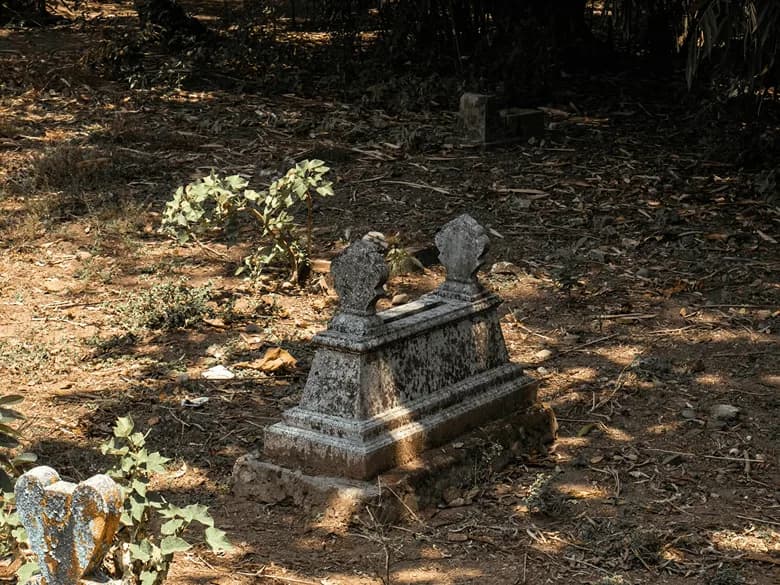
The sight of a grave that suddenly sinks often leaves people wondering. Many immediately think of mystical causes and ask, “What does a sinking grave actually mean?”
Especially when this happens in the neighborhood or even at a family member's grave, it feels even more puzzling and worrying.
However, if we look more deeply, the answer to what a sinking grave means does not always relate to the supernatural. There are more reasonable explanations, both from a scientific perspective and from Javanese views.
In this article, we will thoroughly explore the myths that circulate, the actual facts, and how families can respond appropriately when facing this situation. Let's read on.
What Does a Sinking Grave Mean?
When discussing what a sinking grave means, there are indeed many perspectives that have developed in society, especially within Javanese culture. These range from long-standing inherited beliefs to explanations that are more logically sound. So that no misunderstanding arises, let's discuss them one by one:
1. A Sign from Nature and Its Connection to Ancestors
In Javanese culture, nature is believed to play a major role in conveying messages to humans. A sinking grave is often considered one form of sign from nature.
Many believe this is not merely an ordinary event but carries meaning. It may be a warning, a reminder, or even a form of communication from ancestors. This belief stems from the idea that the bond between the living and the deceased is never fully severed.
The grave is regarded as the resting place of an ancestor's spirit, so when a grave sinks, some interpret it as a signal that the living family should pay attention to something.
For example, if the sunken grave belongs to an important figure in the family, some interpret it as a reminder for descendants to uphold the family's good name and honor its heritage. Of course, this is more of a cultural interpretation.
2. Karma and the Consequences of Actions
Beyond being seen as a sign from nature, some also link a sinking grave to the concept of karma. In Javanese belief, every action has consequences, whether they are felt immediately or affect future generations.
So, when a grave sinks, some people see it as a symbol of retribution for the deceased person's actions during their lifetime. It is as if nature is rejecting something or showing that a balance has been disturbed.
However, it is important to remember that this view is not always accurate and cannot be generalized. Not every sinking grave is connected to karma or negative events. It may simply be caused by other, more reasonable factors.
3. A Symbol of Imbalance and an Invitation to Reflect
Some also view a sinking grave as a symbol of imbalance in life. This imbalance may appear within the family, in economic circumstances, or in spiritual matters.
From this perspective, a sinking grave becomes a gentle reminder to reflect on ourselves. Have we lived well so far? Are our relationships with others maintained? Or is there something that needs to be improved?
This approach is essentially a form of self-reflection rather than a way to frighten people. It can therefore be seen positively, as a moment to become better individuals.
4. Natural Factors
From a more logical standpoint, a sinking grave is most often caused by natural factors. One of the main causes is soil condition. Loose or less compacted soil is more prone to sinking or subsiding than hard soil.
The type of soil also matters. For instance, clay soil can expand when wet and shrink when dry, making the ground surface unstable. In addition, weather conditions such as heavy rain or prolonged dry seasons can worsen the situation.
Groundwater also plays an important role. When the water content in the soil is high, the soil structure can become softer, eventually causing the grave to sink. From this angle, a sinking grave is actually a very common occurrence.
5. Grave Construction Factors
Besides natural factors, the way a grave is built can also be a cause. If a grave is constructed without a strong foundation, the risk of sinking is greater.
The materials used also matter. For example, poor-quality cement mixtures or low-grade building materials can cause the grave structure to deteriorate quickly.
Furthermore, if the soil beneath is not properly compacted, it can shift over time and cause the grave to drop. So this is not a matter of strange signs but rather a technical issue that can actually be prevented.
What Should the Family Do?
After learning the various explanations of what a sinking grave may mean, you might be wondering, “So as a family, what should we do?” Relax, there is no need to panic or jump to unusual conclusions.
In fact, moments like this can be approached more wisely and positively. There are several simple yet meaningful steps the family can take:
A. A Spiritual Reminder
From the perspective of Javanese culture, a sinking grave is often seen as a reminder for the living family. Not something to be feared, but rather an invitation to reflect.
This may be the right time to look back at our lives: whether we have been living well, whether our relationships with family and others are maintained, and whether our worship has been sincere.
In other words, this event can serve as a gentle alarm to draw us closer spiritually, pray more often, and remember that life is temporary. So rather than focusing on mystical interpretations, it is better to take its positive meaning as a reminder for oneself.
B. An Opportunity for Repair
Beyond the spiritual side, a sunken grave is also an appropriate moment to take practical action. For example, by repairing the damaged grave, leveling the soil, or cleaning the area around the cemetery.
This is not merely a physical task but also a form of respect for the deceased. By caring for the grave, we show concern and honor the family heritage.
In addition, activities like this can be a simple way to strengthen bonds among family members, as they are carried out together with a shared, good purpose.
Focus on Appropriate and Meaningful Actions!
What a sinking grave means is not something that needs to be immediately linked to frightening things. Most cases happen due to natural factors such as soil structure or processes within the grave itself, rather than a specific mystical sign.
Most importantly, as a family we have a responsibility to keep the grave in good condition. If it sinks, it should be repaired promptly so that it remains neat and dignified.
Arranging a funeral amid grief is never easy, especially when you have to think about many things at once. That is why Kamboja is here as a solution, offering a practical and trustworthy funeral service. All needs, from preparing the body through to the ceremony itself, are handled carefully so the family is not overwhelmed.
Families can also continue traditions such as reciting Yasin for the deceased and the moments of prayer during grave visits to parents with greater peace of mind, because everything has already been arranged. In this way, the family can focus more on prayer and togetherness, without being burdened by complex logistical matters.
If you need further information about funeral services or other related assistance, please contact the Kamboja team at 0822-1111-1415. The Kamboja team is ready to help you and your family so the process can proceed more calmly during this difficult time.
- #funeral services

Kamboja Blog
The Kamboja team writes guides on bereavement, funeral arrangements and funeral planning to help families in Indonesia.