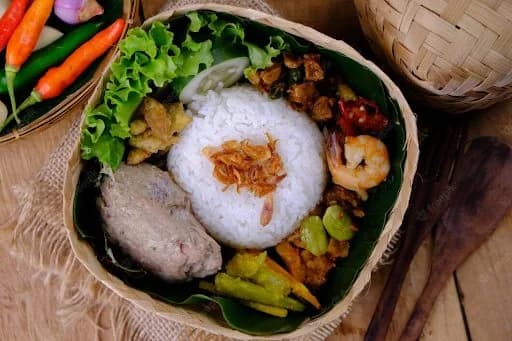
Both traditional burials and cremations are forms of farewell that still require food. The trouble is, food is an aspect that people rarely pay attention to, especially traditional foods served during mourning.
Yet there are many kinds of traditional dishes commonly served at funeral gatherings around the world, and their tastes and forms are just as varied.
8 Traditional Foods Served in Times of Mourning
Just like births, grief is a universal experience that people mark all over the world. Of course, the traditions differ, especially when it comes to the traditional dishes served at funeral ceremonies. Here are some traditional dishes that people serve during times of mourning:
1. Nasi Berkat
This list would certainly not be complete without mentioning the traditional food of our beloved homeland, Indonesia. Among the many traditional Indonesian dishes, nasi berkat is one of the best known at funeral ceremonies.
This dish is not lavish at all but very simple. Nasi berkat usually consists of white rice, side dishes such as egg, tofu, or chicken, vegetables, sweet cakes, and fruit.
Its container is often just a basket or greaseproof paper, although nowadays it has largely shifted to food boxes.
Muslims usually provide nasi berkat at tahlilan, the prayer gatherings held on the 40th day, the 100th day, and the first year after a family member has passed away. If you use an event organizer for the funeral, they usually already arrange this nasi berkat.
2. Funeral Potatoes
Potatoes are usually the main ingredient for fried snacks or sambal goreng. In the United States, however, mashed potatoes are a signature dish served at funeral ceremonies.
This dish, also known as a casserole, can be made not only from potatoes but also from corn flakes. To keep the flavor from being too monotonous, Americans usually serve funeral potatoes with chicken soup or cream soup.
Nobody knows for certain where funeral potatoescame from, but many people today believe the tradition began in a church in Utah. Others say it comes from the women's organization of The Church of Jesus Christ of Latter-day Saints.
3. Amish Funeral Pie
The next funeral dish is amish funeral pie. For those who don't know, the Amish are a community that rejects the development of technology, so their traditional food is made entirely from natural ingredients.
Just like funeral potatoes, Amish funeral pie uses potatoes as a base ingredient. This traditional funeral dish from Pennsylvania, USA, also requires eggs, salt, wheat flour, lemon, and other spices that add flavor.
As for the filling, the pies the Amish traditionally prepare for funeral gatherings use fresh fruit. You can surely imagine the sweet flavor that comes from this particular dish.
4. Halva
At first glance this dish resembles brem, a specialty of Madiun, but it actually comes from the Middle East and the Balkan region. Halva is usually made from a mixture of nut paste combined with semolina flour, rice flour, and cornstarch.
Semolina is a variety of wheat flour with a firm texture. This firmness also comes from nuts and vegetables such as carrots, pumpkin, sweet potato, and others.
The result is a cake with a sweetness that makes you want to keep eating. Besides being served during times of grief, halva is also commonly associated with the Eid al-Fitr celebration.
5. Koliva
Koliva is a traditional Greek food that is usually served during times of mourning. Similar to Halva and Amish Funeral Pie, this food of grief has a sweet and savory flavor.
As for its main ingredients, koliva uses various kinds of berries and wheat. Both ingredients are boiled for some time until they blend perfectly.
Before it is ready to be served, you can add a variety of topping to the koliva. Some topping that are often recommended are pomegranate, honey, raisins and many others.
Because it is so sacred, eating koliva is not to be taken lightly, but should be done with deep respect and reverence.
6. Mannish Water
From Jamaica, a traditional dish that often appears at funeral ceremonies is mannish water. Although the name contains the word "water," this dish is rich in flavor and sensation.
How could it not be? The main ingredients of this food are various cuts of goat meat and spices, such as shallots, thyme, and habanero chili. That is why mannish water is also known as Jamaican goat soup.
The origin of the name mannish water is also quite unique: it comes from a food that was mostly made by men (man). Besides being a dish during times of grief, the term mannish water is also used because the groom eats it at his wedding.
7. Borsok
From Kyrgyzstan, there is a traditional food called borsok. Its composition is made from a dough of wheat flour, salt, water, yeast, sugar, and butter or margarine.
The result is a fried bread that has a savory taste yet holds significant meaning in a funeral ceremony. It is said that the aroma of this particular food can be smelled by those who have passed away.
8. Boiled Egg
Besides being a topping for gado-gado and soto, this food is also one of the mourning foods for those who follow the Jewish faith.
After the body of a beloved person has been buried, relatives will eat a boiled egg, which also goes by the name seudat havara'ah, meaning "meal of consolation."
Aside from serving it as usual, Jewish families often use the hamine technique. With this method, boiled eggs cooked for six to 18 hours turn brown in color. This process gives the egg a nutty flavor.
Which Mourning Foods Do You Know?
Although the traditional foods of each country differ for times of mourning, the funeral protection service trusted in Indonesia remains one. Through funeral service Kamboja, you do not need to worry about the arrangements. funeral costs when the final day arrives.

dev_kamboja
The Kamboja team writes guides on bereavement, funeral arrangements and funeral planning to help families in Indonesia.