When a loved one passes away, paying a final tribute can be one way of expressing your affection for them. One such tribute is the use of a safe and comfortable funeral hearse.
By choosing the right vehicle, you can make it easier to take the deceased to their final resting place.
What Is a Funeral Hearse?
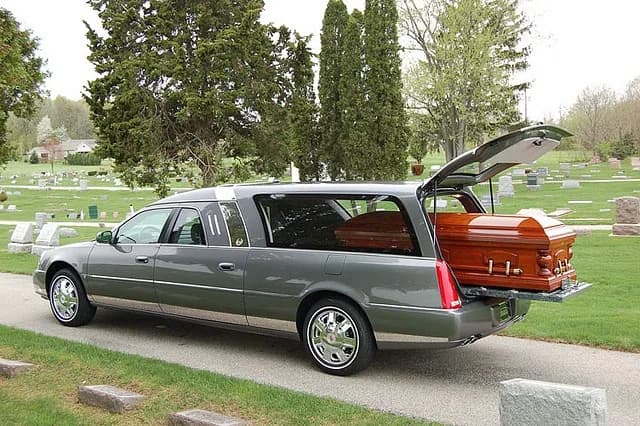
A funeral hearse is a specially designed vehicle for carrying the deceased from a particular location, for example from a hospital to the family home or to the cemetery. This service serves as a final tribute to the deceased.
Every funeral hearse service must involve at least one driver and four funeral attendants for transporting the body from the place of death. For transporting the body to the cemetery, one driver and two funeral attendants are required.
In addition, guidance and supervision of funeral hearse services is the responsibility of the Parks and Cemetery Office at the Regency/City level.
A Brief History of the Funeral Hearse
The term "mobil jenazah" (funeral car) originally referred to a triangular agricultural tool used to carry produce and goods in the Middle Ages. At that time, bodies were usually transported using simple horse-drawn carriages.
Later, the term developed into "hearse" in English in the late 16th century. This term was then used to describe the vehicle that carried the coffin to the cemetery. At that time, transport still used simple carriages.
In the early 20th century, motorized vehicles began to be introduced for transporting bodies, replacing the horse-drawn carriages that had been commonly used before.
Subsequently, as time and technology advanced, funeral hearses have become more modern and efficient in transporting the deceased. The hearse has become a deeply meaningful symbol, representing a person's final journey to their resting place.
The Difference Between a Funeral Hearse and an Ambulance
Basically, funeral hearses and ambulances are both special vehicles commonly used in healthcare services. However, they have different functions and designs. This is in line with Health Ministry Decree No. 143/Menkes-Kesos/SK/II/2001. Here are 4 notable differences:
1. Main Function
Ambulances are used to transport patients who need emergency medical care to healthcare facilities. Ambulances are also equipped with medical equipment and trained medical staff.
Hearses, on the other hand, serve a more specific purpose: to safely transport the deceased to the family home or the cemetery.
2. Onboard Facilities
Ambulances are equipped with fairly complete medical equipment, such as monitors, oxygen, IV fluids, nebulizers, and medications to provide first aid to emergency patients during transit. The ambulance cabin is also not separated from the driver's area, giving direct access to the patient.
Funeral hearses, meanwhile, carry fewer medical supplies. However, they have a dedicated, separate compartment for placing the coffin, with safety straps. Some hearses are also fitted with a cooling or temperature control system to keep the body in good condition until it reaches its destination.
3. Personnel in Charge
Ambulance staff are trained medical personnel ready to provide first aid. Hearse staff, on the other hand, consist of a driver and funeral attendants responsible for handling the body.
Priority of Ambulances and Funeral Hearses on the Road
Ambulances and funeral hearses are both vehicles given priority on public roads. Under Government Regulation (PP) No. 43 of 1993 on Road Infrastructure and Traffic, ambulances are given greater priority because they carry sick people in emergency conditions. The order of priority is as follows:
- Fire engines on duty;
- Ambulances carrying sick persons;
- Vehicles providing assistance at traffic accidents;
- Vehicles of the Head of State or visiting state guests;
- Funeral procession convoys;
- Convoys/parades/vehicles for persons with disabilities; and
- Vehicles for special purposes.
Furthermore, referring to Law No. 22 of 2009 on Traffic and Road Transportation, traffic signals and traffic lights do not apply to ambulances and funeral hearses. Both are entitled to pass these signals regardless of the traffic light.
Nevertheless, drivers must still maintain a safe distance so as not to endanger other road users. Ambulances and hearses have a maximum speed limit of 80 km/h on toll roads and 40 km/h on regular roads.
Kamboja Funeral Hearse Service
Because this vehicle is so important to ensuring the grieving process runs smoothly, you should not choose a funeral hearse rental service. You may choose Kamboja for professional and trusted service, with the following service options:
| Service Type | Vehicle Type | Price (IDR) | Facilities |
| Standard | APV | 1.500.000-2.500.000 | 1. Driver & Funeral Escort
2. Coffin 3. Funeral Home to Cemetery 4. Fuel, Tolls, and Parking 5. Voorijder/Escort (optional) |
| Premium | Alphard/Vellfire | 7.000.000-9.000.000 | |
| VIP | New Alphard/Vellfire | 9.000.000-11.000.000 | |
| Standard Domestic Indonesia | APV | 4.500.000,00 | 1. Driver & Funeral Escort
2. Coffin (Optional) 3. Funeral Home to Cemetery 4. Fuel, Tolls, and Parking 5. Coordination and Administration 6. Voorijder/Escort (optional) |
| Premium Domestic Indonesia | Alphard | 13.500.000,00 | |
| VIP Domestic Indonesia | New Alphard/Vellfire | 16.000.000,00 |
*Prices do not include Management Fee Kamboja. For more complete information, you can contact the Kamboja team through the website or by phone at 0822 7713 1415.
Don't Choose the Wrong Hearse!
In short, ambulances focus on emergency medical care, while hearses are for transporting the deceased with dignity. That is why it is important to choose the best and most comfortable vehicle to help the grieving process run smoothly.
Renting a hearse from Kamboja is an excellent choice. Our fleet is always well maintained, equipped with special facilities for the deceased, professional funeral drivers, and optional family transport.
With service from Kamboja, you can be assured that every step of the funeral procession is carried out with care and full respect.
If you would like more comprehensive service, choosing Funeral Home Package from Kamboja is a wise choice. Therefore, funeral arrangements from the transfer of the body to the burial ceremony and paperwork, all will be handled directly by the Kamboja team.

Kamboja Blog
The Kamboja team writes guides on bereavement, funeral arrangements and funeral planning to help families in Indonesia.