Many Don't Know: Taboos Surrounding the Deceased in Chinese Culture
- Kamboja Blog
- (updated )
- 6 min read
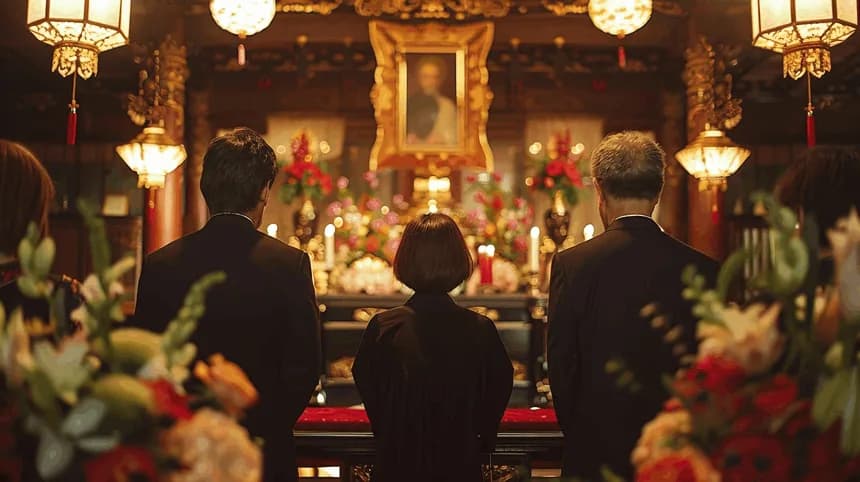
Taboos surrounding the deceased in Chinese culture are still believed in and observed by many families today. In Chinese tradition, funeral rites are not only about letting go of a loved one, but also a final act of respect so that the spirit may depart peacefully and the family left behind may continue to receive good fortune and protection.
For this reason, there are many customs, traditions, and specific prohibitions that are usually observed when a family member passes away. Some may sound unfamiliar to those who are not yet acquainted with them, but all of these taboos carry deep meaning related to respect, spirituality, and symbols of good fortune.
So, what are the taboos surrounding the deceased in Chinese culture that are still believed in today? Read the full explanation below.
Why Are Chinese Funeral Traditions and Taboos So Carefully Observed?
In Chinese culture, death is regarded as a transition to another life. For this reason, funeral procedures and the honoring of the deceased are carried out with great care.
These traditions are also influenced by the teachings of Confucianism, Taoism, and Buddhism, which emphasize the importance of honoring ancestors. Many families believe that if funeral rites are performed correctly, the spirit will rest peacefully and the family left behind will be spared misfortune.
Conversely, if any of the rules are broken, it is believed that negative energy or disharmony within the family may follow.
Chinese Taboos Surrounding the Deceased That Are Still Believed In
Taboos surrounding the deceased in Chinese culture are not merely myths or traditions passed down without meaning. Behind these prohibitions lies a value of respect in its own right. Here are some of the taboos surrounding the deceased in Chinese culture that are worth knowing:
1. Bright-Colored Clothing Should Not Be Worn
One of the most common taboos is wearing brightly colored clothing such as red, vivid yellow, or other striking colors when paying respects at a wake.
In Chinese culture, red symbolizes happiness, good fortune, and celebration. For this reason, red is considered inappropriate in a setting of mourning.
Mourners are usually advised to wear black, white, grey, or other dark colors as a symbol of respect and condolence.
2. Joyful Events Should Not Be Held During the Mourning Period
Immediate family members who are in mourning usually avoid holding parties, weddings, birthdays, or large celebrations for a certain period of time.
This is done as a sign of respect for the family member who has passed away. In some traditional Chinese families, the mourning period may even last for 49 days or longer.
The purpose is for the family to truly focus on praying for and honoring the one who has passed.
3. Haircutting Is Discouraged
In some Chinese traditions, immediate family members are not encouraged to cut their hair during the mourning period.
Hair is regarded as a symbol of inheritance from parents and ancestors. Not cutting one's hair is a form of respect and a sign of deep grief over the loss of a family member.
Although this rule is not always strictly observed today, some traditional families still practice it.
4. Excessive Jewelry Should Not Be Worn
When attending a wake or following the funeral procession, wearing conspicuous jewelry is considered less than respectful.
Chinese culture places great emphasis on simplicity in times of grief. Wearing gold or excessive accessories is feared to show a lack of empathy toward the grieving family.
For this reason, many people choose to dress simply throughout the funeral proceedings.
5. Excessive Weeping Near the Body Should Be Avoided
Although weeping is a natural response to losing a loved one, in some Chinese beliefs, overly hysterical crying is thought to make it difficult for the spirit to depart peacefully.
For this reason, families are usually encouraged to remain composed and not to continuously wail in front of the body.
The meaning behind this taboo is that the spirit's journey to the next realm should not be hindered by the sorrow of those left behind.
6. Pregnant Women Are Not Advised to Attend Funerals
In some Chinese traditions, pregnant women are believed to be more sensitive to negative energy, so they are not advised to attend funeral rites.
This is done to protect the safety of the mother and the baby. Some families even believe that the energy of mourning can affect the condition of the pregnancy.
Today, however, its observance has become more flexible and depends on each family's beliefs.
7. Young Children Should Preferably Not Be Brought to Funerals
Apart from pregnant women, infants and young children are also often advised not to come to the house of mourning or the funeral.
Young children are believed to have weaker energy and are therefore more vulnerable to negative energy according to traditional Chinese beliefs.
For this reason, some families choose to leave their children in someone else's care during the funeral proceedings.
8. Items Should Not Be Taken From the House of Mourning
In Chinese culture, taking items home from the house of mourning is believed to bring the energy of sorrow or bad fortune.
That is why guests usually do not carelessly take items, food, or certain objects from the location of the house of mourning without permission.
Conversely, grieving families usually give out special items such as red thread or candy as symbols of warding off misfortune to the guests who attend.
9. One Should Not Go Straight Home After the Funeral
After attending a funeral, some Chinese people have the custom of stopping at another place before returning home.
The purpose is to cleanse the energy of grief so that it is not carried into the home.
Some also wash their hands, wash their faces, or remove the red thread as a symbol of purifying themselves before returning home.
10. Harsh Words Should Not Be Spoken
During a period of mourning, negative remarks, quarrels, or harsh words are strictly avoided.
Chinese culture believes that words carry energy and prayer. For this reason, guarding one's speech during the mourning period is considered important so that misfortune is not brought upon the family.
People usually try to speak politely and keep the atmosphere calm.
The Philosophical Meaning Behind Chinese Taboos Surrounding the Deceased
When observed closely, most taboos surrounding the deceased in Chinese culture actually serve good purposes, such as:
- Honoring the deceased
- Maintaining decorum during the mourning period
- Providing peace of mind for the family
- Preserving harmony and positive energy
- Avoiding behavior considered improper in times of grief
Although some traditions may sound mystical, many moral values remain relevant today, such as respecting the atmosphere of mourning and showing empathy toward families who have lost someone.
Do All Chinese Families Still Observe These Taboos?
Not always. Each Chinese family has its own traditions and varying levels of belief.
Some families still observe the full set of customs, especially those who hold firmly to traditional culture. Others are more flexible and only observe some of the traditions.
In addition, differences in religion, regional origin, and the influence of modern culture also mean that Chinese funeral traditions can vary from one family to another.
Need Help With Funeral Arrangements? The Kamboja.co.id Team Is Ready to Assist
Arranging funeral proceedings is certainly not easy, especially when one must understand the many customs, traditions, and taboos of Chinese and Buddhist funerals.
That is why it is important to use a professional and experienced service so that every process runs smoothly, orderly, and still respects the family's traditions.
Kamboja.co.id is ready to help you with funeral services, Chinese funeral arrangements, and Buddhist funeral management, with professional and compassionate support. For more information about funeral services and nearby body handling services, please contact Kamboja.co.id at 082211111415.
- #funeral services

Kamboja Blog
The Kamboja team writes guides on bereavement, funeral arrangements and funeral planning to help families in Indonesia.


