Toraja Funeral Traditions: Rambu Solo and the Londa Burial Cave
- Kamboja Blog
- (updated )
- 6 min read
If you travel to South Sulawesi, Toraja funeral traditions are one of the local cultures you can witness firsthand. The Toraja indigenous people have a special tradition for laying their deceased family members to rest. Curious about the procedures, process, and costs of a Toraja funeral? Read on below!
Toraja Rambu Solo Funeral Ceremony
One of the most famous Toraja traditions is Rambu Solo. What is it? Let's understand it through the following overview.
1. Definition
Many of the indigenous people of Tana Toraja follow Christianity or Islam, yet the cultural values they uphold remain very strong, so the way they handle funeral arrangements differs in general. The Toraja indigenous people hold a special ceremony called Rambu Solo.
This is a traditional ceremony intended to honor the deceased before the community escorts them to their final resting place. In the local language, the word "Rambu" means ceremony and "Solo" means death, so the name of this tradition roughly translates to "Death Ceremony."
In fact, not everyone in Toraja society is entitled to Rambu Solo after passing away. Only families from certain social classes are entitled to follow this Toraja funeral tradition, and they are required to prepare a very substantial amount of funds.
According to the Unindra Journal, the Rambu Solo funeral ceremony is divided into four levels: disilli, dipasangbongi, dibatang, and rapasan. Disilli is the lowest-ranking ceremony and is intended specifically for babies or toddlers who have not yet grown teeth.
Meanwhile, adults from the general public who are not economically well off may hold a dipasangbongi, which lasts for one night. Next is the dibatang ceremony for adults from the middle to upper classes, during which a buffalo is slaughtered each day.
The final type of funeral ceremony is the rapasan, reserved exclusively for the highest nobility. This ceremony also comes in different forms, including rapasan diongan, which has minimum requirements. Then there is rapasan sundun for customary leaders. Finally, rapasan sapu randanan, which is the most lavish.
2. Procession
The first step in this Toraja funeral procession is wrapping the body in a burial shroud and placing it inside a coffin. Next, the community places the coffin inside a traditional tongkonan house as a temporary resting place.
Outside the tongkonan house, the deceased's family must prepare offerings, animals for slaughter, traditional clothing, and other necessities. Once all the ceremonial requirements are ready, the customary leader and local community will hold the Rambu Solo ceremony in front of the tongkonan house.
The activities involve slaughtering buffalo, reciting prayers to ancestors, and performing traditional dances. The entire series of ceremonial activities must take place at the same location and on the same day. Afterward, the coffin is decorated with threads in gold and silver.
Only after the funeral ceremony is complete can the family carry the coffin to a sacred location. The place where the coffin is placed is called Londa Cave. This permanent relocation of the body must be carried out with great care and deep respect.
3. Funeral Costs
It is worth knowing that the cost of a Toraja funeral is not paid in money, but by slaughtering a certain number of buffalo. The higher the status of the person being buried, the more buffalo must be slaughtered.
If the deceased came from the middle class, the slaughter must include 8 buffalo, plus 50 pigs. For someone from the upper class, the family must prepare between 24 and 100 buffalo.
However, for ordinary people and young children, the family does not need to hold any slaughter at all. That said, the cost of burying someone in Tana Toraja can reach hundreds of millions of rupiah, and even billions.
Londa Burial Cave
Now that you understand Rambu Solo, this burial cave, which is often a tourist destination, is just as fascinating to learn about. Here is a full explanation:
1. History
Once the Toraja Rambu Solo funeral procession is complete, the local community takes the body to its final resting place. Unlike the general public, who bury bodies in the ground, the people of Tana Toraja lay the deceased inside caves.
According to the Indonesia Kaya website, this practice stems from the Tana Toraja people's ancestral belief known as alukta or aluk todolo. Over time, this belief became the foundation for the rituals and traditions the Toraja people have practiced ever since.
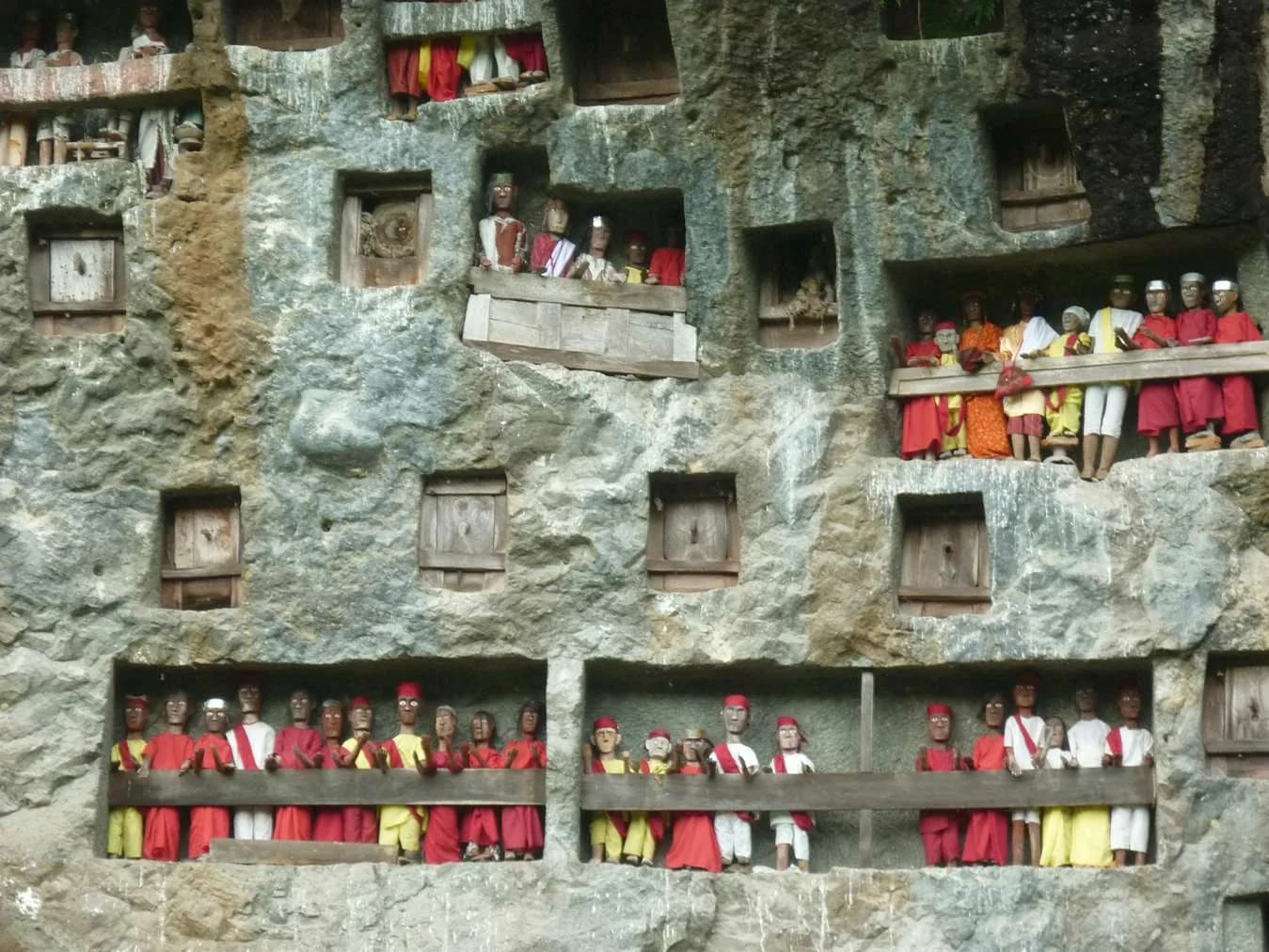
The name of the burial cave is Londa, a rocky cliff that local residents consider a sacred site. Inside are many burial niches carved from stone by the community. Around the cave are also many dolls dressed in traditional clothing, said to represent the deceased.
Many of the coffins you can find in Londa Cave are stacked on top of each other. This is because the cave has become full of coffins, so bodies have had to be placed in the cave's crevices.
2. Local Legend
Did you know that this cave is said to hold a tragic love story that is reportedly similar to "Romeo & Juliet"? This folk tale involves two figures named Lobo and Andwi. In the legend, they are cousins because their families are related by blood.
Even so, the two young people still fell in love with each other. Neither family approved of this love between cousins, so Lobo and Andwi agreed to hang themselves from a tree.
After their families found the bodies of the two lovers, they were taken into a cave to be buried. The people of Toraja named this cave Londa, and it became a sacred Toraja burial site.
3. Visiting Rules
Since Londa Cave is sacred land for local residents, there are several visiting rules that tourists must follow. One of them is to bring a light when entering the cave, whether alone or with a local tour guide.
There is also a prohibition on touching or moving any objects inside the cave, out of respect for the deceased. Local people believe that anyone who disturbs the items inside the cave will be possessed.
It is said that visitors used to be required to bring offerings in the form of flowers, betel leaves, or areca nuts as a sign of respect for the ancestors. Nowadays, however, only family members need to bring these offerings.
Do You Now Understand Toraja Funeral Traditions?
Whatever one's ethnicity, race, or nationality, a funeral ceremony is a final act of respect for the deceased, even if carried out in different ways. Even if you do not follow customs like the Toraja people, you should still look for a professional funeral service that is available 24 hours a day.
One funeral service option that has earned a rated excellent rating on Trustpilot and that you can trust is Kamboja. There are also 3 types of Kamboja funeral home packages with prices you can choose based on your needs and budget. Let's prepare everything in advance with Kamboja.

Kamboja Blog
The Kamboja team writes guides on bereavement, funeral arrangements and funeral planning to help families in Indonesia.