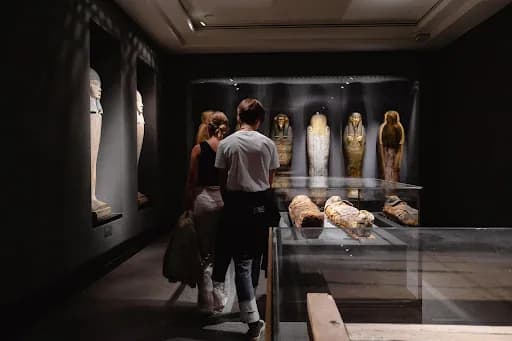
Preserving the body after death, or mummification, was part of how the ancient Egyptians honored those who had passed away. Mummification is a process carried out to preserve the body so that it can last for a long time.
This process of preserving the body was believed to allow the deceased to live a fitting life in the afterlife. How was it done? Read the full information below.
What Is Body Preservation, or Mummification?
Mummification is a method of preserving the body that aims to dry out the fluids in the human body. Through this process, the body of the deceased does not easily decay, even thousands of years later.
You should know that body preservation can also occur naturally, when the body of the deceased is kept in snow or extremely cold temperatures. In addition, the process
of mummification can also happen in deserts, where the air is very hot and dry.
Ade Firmansyah Sugiharto, a forensic doctor, explains that mummification is a continuation of the decomposition of a body. This process occurs due to the influence of the temperature conditions where the body is located.
If the body is outdoors, the mummification process is faster, taking only about 15 days. However, if it is indoors, mummification can take months, roughly 2 to 3 months.
This preservation occurs in hot and dry conditions that cause the body to become dehydrated quickly. During mummification, the tissues harden, dry out, wrinkle, and do not decay.
According to Wiktionary, mummification is the change that occurs in a body due to the evaporation of tissue fluids. This delays the decay caused by bacteria in the respiratory and digestive tracts, so the body becomes dry, hard, and stiff.
In ancient Egyptian tradition, mummification was the process of preserving the body. However, mummification and body preservation are actually two different traditions. The difference lies in the way the body is preserved.
Facts About the Mummification Process
In ancient Egypt, mummification was an important process when mourning arrived. A person who had died and undergone body preservation was called a mummy. For those who are new to this subject, here is a summary of facts about mummification:
1. What Mummification Means
Mummification is the process of preserving the human body by removing moisture from it. This process existed naturally since around 3,000 BCE. However, by 2,600 BCE, mummification began to be done deliberately.
2. Why Mummification Was Performed
The Egyptians believed that another process would follow after death. The deceased would journey to the next world. In ancient Egyptian belief, the deceased would be judged in the Hall of Truth by the god Osiris.
Therefore, the body had to be in good condition so the soul could move back and forth while waiting for the weighing of the heart against the feather of truth. This is the reason why the body of the deceased had to remain intact.
3. The Mummification Process
The body preservation process took a long time, about 70 days. Here are the mummification steps you should know:
- Washing the body of the deceased with alcoholic drink and water from the Nile River.
- Internal organs such as the liver, lungs, stomach, and intestines were removed. However, the heart was left in place, because the ancient Egyptians believed a deceased person needed the heart for the next life.
- The brain was removed through the nose using a hooked tool.
- Natron salt was applied to the body and organs of the deceased for 40 days. The purpose was to remove its moisture.
- The dried organs were wrapped in linen and placed in jars.
- The dried body and skin were cleaned using oil.
- The open parts of the body were sealed with wax.
- The next step of preservation was wrapping the body in 20 layers of linen bandages.
- A funerary mask was placed over the bandages.
- The body was wrapped in a shroud and linen strips.
- The body, now a mummy, was placed into a coffin.
4. Mummification Was Not Only for Humans
Archaeologists have found that not only humans received this kind of treatment at the time of mourning. For religious reasons, some animals also underwent mummification.
According to the beliefs of the ancient Egyptians, animals were intermediaries between humans and the afterlife. In addition, animals could also accompany the body of the deceased on the way to eternity. The animal most commonly mummified was the buffalo.
However, it is not uncommon for animals such as cats, crocodiles, and birds to also be chosen as intermediaries in the afterlife. At Saqqara, there is a bull that was mummified during the early dynasties. Meanwhile, the mummification of cats, crocodiles, and birds took place in later dynasties.
The Difference Between Mummification and Embalming
Mummification is the change that occurs in a body after death due to the evaporation of fluids in the tissues. Through this process, decay caused by bacteria in the respiratory and digestive tracts is delayed.
This is what causes the body to become dry, hard, and stiff. Embalming, on the other hand, is embalming aimed at preserving the appearance of the deceased for a long period. Typically, this tradition aims to keep the body in good condition and prevent it from decaying.
What distinguishes the terms mummification and embalming is the purpose of the viewing period. In addition, the embalming process requires formaldehyde, whereas mummification uses natural materials such as camphor. In carrying out caring for the deceased in Islam it must be done in accordance with the applicable laws and Islamic sharia.
Do You Know What Mummification or Embalming Is?
These are some of the things you should know about the process of embalming or mummification. To this day, modern scientists continue to research the information that comes from these mummification practices, with the aim of understanding the civilization of ancient Egypt.
Well, for those of you who may currently be thinking about preparing for a time of mourning, you can use funeral services from Kamboja. Kamboja will provide comprehensive funeral protection services in full. The cost of funeral services from Kamboja also varies widely. Let's prepare ourselves starting now!

dev_kamboja
The Kamboja team writes guides on bereavement, funeral arrangements and funeral planning to help families in Indonesia.