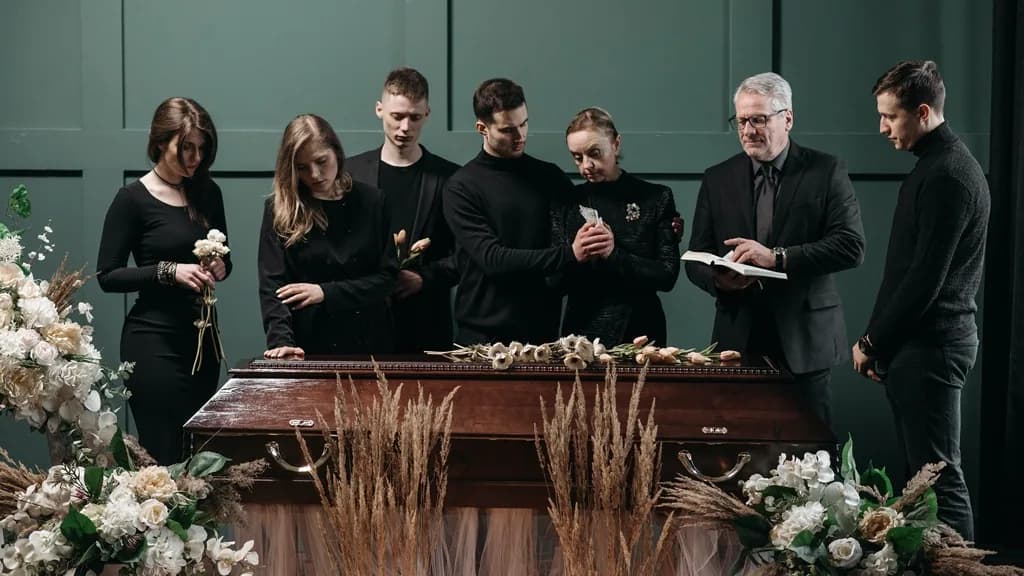
No one knows when death will come, and you certainly don't want to think about it, especially when a loved one is ill. Even so, you need to be prepared in case a family member passes away first, one way being to put funeral planning in place.
During a pandemic like the current one, the number of sudden deaths is very large, and some people feel overwhelmed arranging a funeral because they are still grieving and have made no preparations at all. Choosing a burial location and funeral arrangements then has to be done in a rush.
Here Are 4 Steps to Prepare Funeral Planning
Buying a burial plot is not considered taboo these days, because burial land is becoming scarcer and its price keeps rising. For that reason, there is nothing wrong with starting to think about funeral plans now, whether for yourself or for your family.
Funeral planning can be done as early as possible, so that the family left behind does not have to struggle with arrangements because everything was prepared from the start. The 4 funeral planning steps are as follows:
1. Deciding Whether to Use Body Preparation Services or Not
A person who has died needs special treatment before burial, such as having the body cleaned, washed, wrapped in a shroud, dressed in good clothing, and other treatments in line with the teachings of the religion and beliefs they follow.
Not everyone understands how to care for a body properly, because there are several stages that must be followed and laypeople may not know them. If a family member dies and no other family member can prepare the body, it is best to use a body preparation service.
Especially if the death was caused by a severe accident, body preparation services are very much needed. The aim is to restore the condition of the body so it is fit for burial, and the same applies to deaths from dangerous diseases.
It is advisable to use such services to prevent transmission. Bodies of people who died from COVID-19 and other types of viruses also need special treatment, because it can be very dangerous if preparation is not carried out by trained professionals.
2. Deciding Who Will Handle the Death Certificate
Processing the death certificate is also something that should be done promptly so that various matters can be handled, one of which is insurance claims. So who is entitled to apply for the death certificate?
A child or the closest family member can apply for a death certificate. It can also be handled on their behalf by a lawyer. The process of issuing a death certificate is relatively quick as long as the requirements submitted are met.
If the death occurred in a hospital, you must request a certificate of death from the doctor, then ask the local neighborhood head (RT/RW) for a cover letter to be forwarded to the subdistrict office. If the death occurred at home, you must request a certificate of death from the community health center (puskesmas).
The death certificate will later be used to update population records, namely by separating the Family Card (KK) or creating a new KK. In addition, the death certificate is also very important for handling the distribution of inheritance.
3. Choosing Between Burial and Cremation
Most bodies are buried. However, some families want the deceased to be cremated for various particular reasons.
There is nothing wrong with starting now to consider whether you want to be buried or cremated in your final resting place. As mentioned earlier, burial land is currently very hard to find because the available space keeps shrinking.
If you want to be buried in a public cemetery, you must make a reservation as early as possible. Even then, you must look for a public cemetery that still has available land. Alternatively, you can choose a cemetery managed by a private party.
The advantage of private cemeteries is that their locations are neatly arranged and privacy is better preserved. However, buying burial land there is quite expensive. Monthly maintenance fees are also high.
Today's millennial generation, especially those living abroad, increasingly prefer cremation. The reasons include that it requires no land and is more environmentally friendly. In addition, the cremated remains can be taken home, so they can stay close to the family even after death.
4. Considering the Funeral Ceremony You Want
One thing to consider when drawing up funeral planning is deciding what kind of funeral ceremony will be held. Each religion or belief naturally has different funeral customs and order of events.
Some involve worship services, flower scattering, and religious recitations. Whatever ceremony is held, the purpose is the same: to pray for the deceased so that they receive the best place in His presence.
There is nothing wrong with starting now to plan what kind of funeral ceremony will take place when you pass away. For example, you may want a religious recitation with a religious leader invited, or you may want charity given to orphans.
The four funeral planning steps above do require considerable costs. To avoid burdening your family later, you can prepare everything early. One way is to join a death insurance plan.
This financial product covers all funeral costs from beginning to end. In addition, the family left behind will also receive a benefit of a fairly large amount.
Tips for Choosing Death Insurance If You Are a Beginner
It is not only finances that were directly affected by the pandemic. Insurance companies have also received many clients, especially those wanting to sign up for death insurance. This financial product is in high demand because it can provide many benefits to the policyholder and the insured's family.
You should choose the right death insurance so that its benefits can be maximized. Some tips you can follow include:
1. Understanding the Products
Death insurance products are very varied. Make sure you learn about each one so you do not choose the wrong insurance. Some of them are:
-
Whole Life Insurance
This type of insurance provides protection for your whole life until a certain age limit is reached.
-
Term Insurance
Protection is provided for the term you choose. The terms offered are usually from 5 to 20 years.
-
Endowment Insurance
This insurance product offers two benefits to you as the user: term insurance and savings. The sum assured will still be paid out if you die, and
you can also withdraw the policy within a certain period while the contract is still in force.
2. Adjusting the Premium Amount to Your Ability to Pay
To avoid being overburdened, premium payments should be adjusted to your income. Ideally, allocate 10% of your income to paying insurance premiums. Premiums can be paid monthly, quarterly, semi-annually, or even annually.
For example, if your monthly income is IDR 8,000,000, the maximum premium you should pay is IDR 800,000. That way, your money will not all go toward premiums, and you can still use it for other needs.
3. Paying Attention to the Company's Track Record
Choose an insurance company with good credibility and a clean track record. You can tell this from the number of awards the company has received.
Generally, companies that frequently receive awards from financial institutions tend to be more trustworthy in their performance. Do not let yourself be swayed by a large sum assured only to find that claims are not made easy in the end.
Even when you are young, funeral planning is something you should do so that you do not burden your family. You should also join a death insurance plan so that funeral costs are fully covered by the insurance and your family left behind receives the sum assured.

dev_kamboja
The Kamboja team writes guides on bereavement, funeral arrangements and funeral planning to help families in Indonesia.


