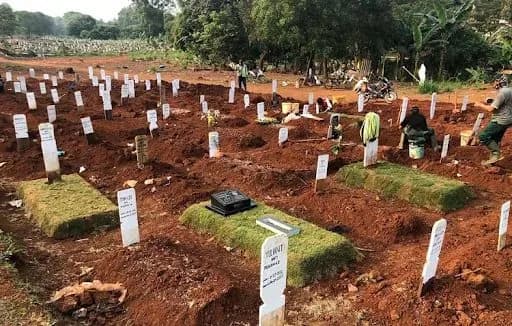
Myths about cemetery soil in Indonesia always carry a wide range of mysteries. This is closely tied to the culture and the burial customs in Indonesia, which are closely associated with sacred rituals. Some of these myths may even make your hair stand on end.
Indonesian culture is deeply rooted and full of distinctive traditions, so the burial process is strongly associated with mystical beliefs. These beliefs have also been passed down from generation to generation. So, what are these myths? Let's read on in this article!
7 Cemetery Soil Myths in Indonesia
Here are several myths about burial grounds that are closely associated with mystical beliefs in Indonesia. Read the full explanations below:
1. Taking Soil from a Grave
There are many myths that say if someone takes a Kamboja flower or soil from a cemetery, they will be overcome by a feeling of unease. This unease often takes the form of fear and hallucinations, as if the person who took the soil is being followed by a spirit.
This myth is based on the belief that cemeteries are gathering places for evil spirits and unseen beings. For this reason, many beliefs in Indonesia say that taking soil and flowers from a grave will bring misfortune.
2. Cemetery Soil as a Medium for Black Magic, Love Spells, and Wealth Rituals
Supernatural practices in Indonesia are strongly associated with mystical things. In fact, many traditional healers in Indonesia use cemetery soil as a medium for particular rituals.
Cemetery soil is also often used for wealth rituals and love spells to attract the opposite sex. The method is to scatter the soil around the home or business that is the target of the healer's or black magic practitioner's ill intent. Frightening, isn't it?
3. The Ban on Pointing at Graves
One unique myth you have probably heard about cemeteries is the prohibition against pointing toward a grave. The belief is that if someone points at a grave with a finger, they will fall ill after returning from the cemetery.
This myth has existed since ancient times. In fact, parents often gave this warning to young children. Regardless of the myth, the ban on pointing at graves was really a way for parents in the past to teach their children a lesson.
The lesson was that when pointing at a grave, one should use all five fingers so as to appear polite, especially toward people older than the child. This comes from the way parents in the past instilled good manners in their children, even in small matters.
4. Bathing Immediately After Returning from a Burial
The fourth myth about cemetery soil is the advice to bathe immediately after returning from a grave. Many traditional beliefs say that burial grounds are filled with negative energy and spirits.
For this reason, parents in the past would tell their children or family members to bathe right after returning from the cemetery. Some myths even claim that if someone does not bathe immediately after visiting a cemetery, they will be struck by misfortune.
Whether or not this is true, bathing after spending time outdoors is clearly beneficial. Harmful bacteria may also be present in cemetery areas. So this advice to bathe immediately after returning from a burial is a good recommendation for health.
5. Guarding the Grave of a Young Woman Who Has Just Died
Another myth about cemetery soil is the belief in guarding the grave of a young unmarried woman who has just passed away. Many myths in Indonesia claim that the soil of the grave and the shroud of a virgin woman are highly effective for love spells and wealth rituals.
In fact, many malicious people have been willing to dig up the graves of virgin women for the purpose of studying black magic.
For this reason, there is a tradition in which the family keeps watch over the grave of a young unmarried woman. The aim is to prevent attempts to steal cemetery soil or to dig up the grave for black magic.
6. Plants in the Cemetery Will Lessen the Punishment of the Grave
In the process of arranging a burial, many aspects must be considered. These include choosing the burial site, the price of the coffin, and maintaining the grave so that it is cool and filled with plants.
It turns out that the purpose of maintaining a grave by planting greenery around it is closely linked to the myth about the punishment of the grave for the deceased.
Many myths say that if a grave has plants around it, this will reduce the punishment of the grave for the person buried there. This belief arises because plants are associated with a cool, serene atmosphere, so the deceased will rest peacefully in their grave.
However, regardless of the myth about plants in cemeteries, planting trees in burial grounds is certainly beneficial. If there are many trees, the cemetery is less likely to flood.
In addition, plants also benefit soil fertility. So the cemetery area becomes more humid and easier to dig for future graves.
7. Untying the Burial Shroud
Have you ever heard the myth that if the burial shroud is not untied during the funeral, the spirit of the deceased will wander? This myth is certainly not unfamiliar in Indonesia. In fact, it is often used as a plot device in horror films.
In reality, forgetting to untie the shroud has no effect whatsoever on the spirit of the deceased. However, untying the shroud is part of the Islamic burial process. It is also part of the Islamic law concerning funeral procedures.
So there will be no wandering spirit just because the shroud was not untied inside the grave. Even if a supernatural figure appears, it is simply a jinn imitating the deceased, not the spirit of a person whose shroud was not untied.
Which Cemetery Myths Are Popular in Your Area?
That concludes the explanation of cemetery soil myths in Indonesia. Regardless of these myths, a person who has died no longer has any connection to the world. The task of those still alive is to pray for the deceased and to draw guidance from the burial process.
One equally important thing is to prepare for death and burial early, so that when the time comes, your funeral does not become a burden on the loved ones you leave behind. A solution is to have funeral protection from Kamboja. Starting from IDR 35,000 per month, you can protect your family from the financial burden and the hassle of arranging your funeral, with coverage of up to IDR 25 million. This will certainly relieve them of the emotional and physical burden when grief sets in after losing you.

dev_kamboja
The Kamboja team writes guides on bereavement, funeral arrangements and funeral planning to help families in Indonesia.