Funeral care is a series of final acts of respect for someone who has passed away, from washing and shrouding to preparing them for burial. In Islam, caring for the deceased is a fardhu kifayah obligation, which must be carried out in accordance with Islamic law.
This article discusses the procedures for caring for the deceased in detail, including the important aspects to keep in mind. Read on!
4 Steps of Funeral Care
Below are the procedures for caring for the deceased from an Islamic perspective, including:
1. Washing
Washing the deceased is the first step in caring for the body, which must be done in accordance with Islamic law. Beginning with the recitation of basmalah, the body is usually washed three times or more, as needed, by pouring water from the head down to the feet.
Place the body on a raised surface so that the water can drain easily. Remove the clothing of the deceased and cover their private parts with cloth. Wear gloves when cleaning the body, including scrubbing areas that are difficult to reach.
Gently press the abdomen to help expel waste, except if the deceased is pregnant. Also clean the body openings with clean water. After cleaning the body, perform wudhu on the deceased just as one would for a living person.
Begin pouring clean water over the body, starting from the right side, followed by washing the entire body thoroughly. Use water mixed with camphor or fragrance for the final rinse, to give a pleasant scent.
For a deceased person who died as a martyr in the way of Allah SWT, such as falling in battle, you do not need to wash them, in accordance with the words of the Messenger of Allah ﷺ narrated in HR Ahmad.
2. Shrouding
Shrouding the deceased is an important part of funeral care. Islam regulates the number of shroud cloths: three layers for men and five for women. The shroud you use is preferably white, clean, and simple, and scented with camphor.
For a deceased man, use the first cloth as the inner wrapping, the second as an additional layer, and the third as the outermost layer. Before shrouding, place cotton on several parts of the body, such as the forehead, nose, and toes.
Then, tie the body with cords at several points, such as the elbows, waist, knees, feet, and head. For a deceased woman, dress her in a headscarf, a long garment, and a wrapping cloth. Make sure the private parts are well covered, including wearing simple undergarments.
Arrange the shroud cloths with cotton and fragrance, then wrap the body in sequence, from the undergarments to the outermost layer. Use shroud cloth that is halal and comes from lawful wealth. Avoid excess; use enough cloth to cover the body completely in accordance with Islamic law.
3. Funeral Prayer
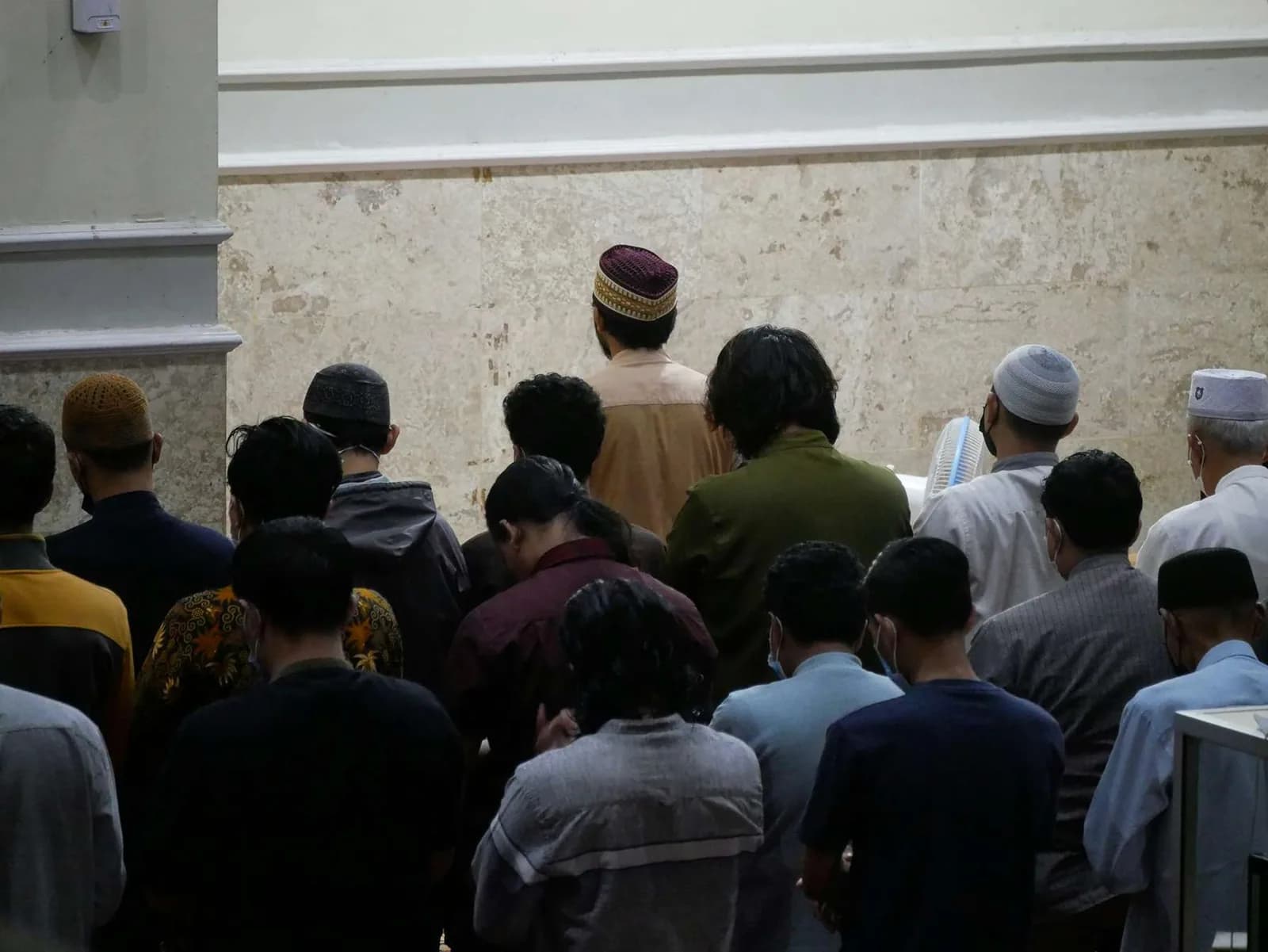
The next step in funeral care is the funeral prayer (salat al-janazah). The funeral prayer is performed with four takbirs, without ruku or sujud. The procedure is as follows:
a. Preparation and Intention
Make sure you are in a state of purity from both major and minor ritual impurity. You also need to cover your awrah and face the qibla. Make the intention in your heart to pray for the deceased sincerely for the sake of Allah SWT.
b. Steps of the Funeral Prayer
- First Takbir: Say the takbiratul ihram while reciting the intention, then recite Surah Al-Fatihah.
- Second Takbir: Recite salawat upon the Prophet Muhammad ﷺ, preferably using the Ibrahimic salawat.
- Third Takbir: Continue by reciting the special supplication for the deceased.
- Fourth Takbir: Recite the supplication for the deceased and all Muslims, then conclude with the salam.
c. Conditions and Sunnah of the Funeral Prayer
The body must be placed facing the qibla. The imam stands level with the head of a male deceased or the abdomen of a female deceased. It is sunnah to raise the hands during the takbir, recite quietly, and have as many worshippers as possible (at least three rows if feasible).
4. Burial
Burial is the final step in funeral care. Here are the important steps you should observe.
a. Preparing the Grave
Dig a lahad-style grave to a depth of about two meters, so that the body is protected from wild animals and the odor does not spread. The base of the grave should be slanted toward the qibla.
b. The Burial Process
- Quickly take the body to the grave, and avoid sitting down before the body is placed.
- Lower the body into the grave slowly from the foot end or from the qibla side.
- Position the body on its right side with the face toward the qibla. Untie the cords of the shroud and let the cheek and feet rest on the earth.
c. Closing the Grave
Cover the lahad with planks or bamboo slats, then fill the grave with soil until it is level and raised a hand's width as a marker. Do not build any structure over the grave!
d. Supplication and Dhikr
When placing the body in the grave, recite: Bismillah wa 'ala millati Rasulillah. After closing the grave, conclude with a supplication asking for forgiveness and steadfastness for the deceased as they face the grave.
The Ruling and Evidence for Funeral Care
Caring for the deceased in Islam is fardhu kifayah, meaning the responsibility is shared among Muslims. If some have carried it out, the obligation is lifted from the rest. However, if no one takes care of the deceased, the sin falls on the Muslims who are aware of this obligation.
This view is agreed upon by the majority of scholars (jumhur ulama) and is explained in various books of jurisprudence, including Al-Wajiz fi Fiqh As-Sunnah by Sayyid Sabiq. Funeral care includes washing, shrouding, performing the funeral prayer, and burial, all of which must be carried out in accordance with Islamic law.
Therefore, you should not be careless in doing it, as each stage has rules set by Islamic law. The Hadith of the Prophet Muhammad ﷺ emphasizes the importance of caring for the deceased.
In HR. Bukhari and Muslim, the Messenger of Allah ﷺ mentioned that whoever attends to the deceased until the funeral prayer is performed will receive a reward equal to a mountain of gold. If they continue through to the burial, the reward becomes two mountains of gold.
When washing the deceased, the Prophet ﷺ also gave guidance on using water and lote-tree leaves (sidr). He said: "Wash them with water and lote-tree leaves, and shroud them in their two garments. Do not cover their head, for Allah will raise them on the Day of Resurrection while reciting the talbiyah." (HR Muslim).
Give the Best Funeral Care to Your Loved One
Caring for the deceased is both an obligation and a way for you to show love and final respect to the departed. By following the correct procedures, you have given the best you can before the body is laid to rest. If you need professional assistance, Kamboja is the solution.
Kamboja's funeral management service provides a complete range of services tailored to the needs of the family. Kamboja also offers the Kamboja funeral home package, with integrated bereavement services, from managing the body to preparing for the burial.
Entrust the funeral care needs and other burial services to us. Kamboja is trustworthy and dependable in looking after your beloved ones.

Kamboja Blog
The Kamboja team writes guides on bereavement, funeral arrangements and funeral planning to help families in Indonesia.