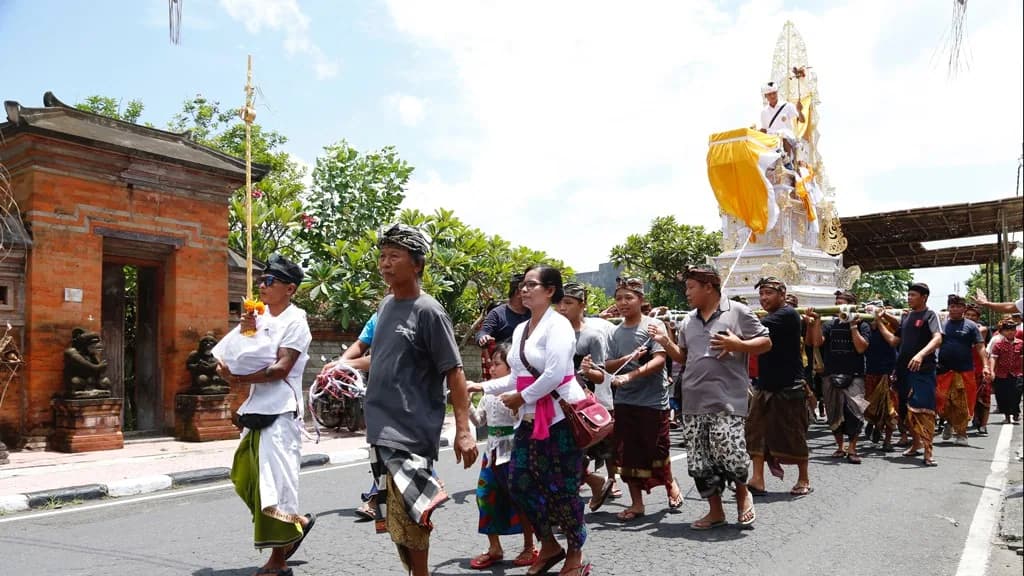
Funeral ceremonies differ from one religion to another, and Hinduism is no exception. However, Hinduism is known for absorbing the local culture of the places where its followers live. That is how Hindu funeral customs come to differ from one place to another.
To keep the discussion focused, this article will concentrate on Hindu funeral ceremonies in Bali, because Balinese Hindus are the majority among Hindus in Indonesia.
Hindu Balinese Funeral Customs in Indonesia
The Ngaben ceremony is mandatory in Balinese Hinduism. However, this cremation ceremony turns out to involve considerable Ngaben costs, which can be a heavy burden for grieving families who are not well off.
For this reason, Bali holds a mass Ngaben ceremony. This ceremony is held so that the costs are lower, since it is carried out together with the families of other deceased people.
So how does the body wait for a mass Ngaben ceremony? Not everyone dies at the same time, after all. The answer is that the body is "entrusted" for the time being, meaning it is buried until the time comes to join the mass Ngaben.
The Ngaben ceremony involves several sequences of rituals, namely:
-
Ngulapin
The word 'ngulapin' comes from Old Javanese, from the word 'ulap', meaning dazzled or blinded. This ceremony is usually held when the deceased died in an accident or from an unnatural cause.
The ceremony is carried out at the location where the accident happened and the person died. This ritual carries the meaning of returning the "Bayu", the inner essence that was left behind at the moment of the event.
In short, when someone is in an accident and their soul is separated from the body, that soul is left behind at that place. If the Ngulapin ceremony is not performed, Balinese Hindus believe that the atma, or spirit, of that person may be unable to return home or may become confused.
-
Nyiramin
As in funeral ceremonies in general, the body is first washed to restore its purity. In the Ngaben ceremony too, before the body is returned to the Supreme Being, it is first bathed through the Nyiramin ritual.
This ritual is performed at the home of the deceased's family.
-
Ngajum Kajang
Each region in Bali has its own way of performing the Ngajum Kajang ritual. Even so, this procession carries the same meaning: strengthening and sincerely accepting the departure of the deceased, carried out by their relatives.
-
Ngaskara
After the Ngajum Kajang procession, the Ngaskara procession follows. It is carried out by a priest or local traditional leader, or by someone who has been given that mandate.
The purpose of this procession is to purify the soul so that it may be "united" with its God. In addition, the procession also carries the meaning of "guiding" the deceased's extended family.
-
Memeras
The Memeras procession in this Hindu funeral custom is not mandatory, as some families perform it and others do not. This may be because the ritual is only performed if the deceased has grandchildren.
Balinese Hindus believe that if a person has grandchildren, it means they have successfully fulfilled their obligations as a human being.
-
Pepegatan
In Javanese, the word 'pegat' means severed. The Pepegatan ceremony carries the meaning of severing the bonds between the deceased and their worldly ties during their lifetime.
-
Pakiriman Ngutang
The six preceding sequences are carried out at the deceased's family home. Once these are complete, the Pakiriman Ngutang activity follows. The body is carried in a bade (funeral tower) procession to the setra, or Balinese cemetery.
-
Ngising
After the body is carried in procession and arrives at the setra, a cremation vessel is prepared before the body is finally burned at the main ceremony. In this procession, the deceased's family brings "provisions" for the body, which may include money, the deceased's favourite items, and items they wished to be included.
All of these items are then burned together with the deceased's body during the main ceremony.
-
Nganyud
After the cremation is carried out and the body has become ash, the next procession is the Nganyud ceremony. The cremated remains, or Ngaben ashes, are placed into a Bungkak, a young yellow coconut.
The yellow coconut containing the ashes is then set adrift in a designated water source, such as a river or the sea.
-
Mekelud
After the cremation and the release of the ashes into water have taken place, the Mekelud procession is held over 12 days. This procession aims to purify the family members and release the negative energy of grief over the death.
Types of Ngaben Ceremonies
As most people know, the Balinese community holds a ceremony called Ngaben when someone dies. This ceremony symbolises that a person who has died must be 'released' from worldly ties.
The ceremony also serves to help the grieving family accept and come to terms with the deceased's departure. In this way, once the ceremony is over, there will be no more sorrow or tears for the family and relatives of the deceased.
The Ngaben ceremony has three purposes:
- To purify the soul of a Hindu who has left this world.
- To return the Panca Maha Bhuta, namely the elements that make up the human body.
- To restore the family's acceptance of the deceased's departure.
Depending on customary traditions passed down through generations and on the financial ability of the deceased's family, the Ngaben ceremony takes different forms. Hinduism still recognises caste, so in general the types of Ngaben are divided according to caste.
Below are some types of Ngaben ceremonies found in Bali.
-
Ngaben Sawa Wedana
The Sawa Wedana Ngaben is held while the body is still intact and has only recently died, specifically 3 to 7 days after death.
Because the body does not go through burial first, it is embalmed beforehand and treated as though it is sleeping.
-
Ngaben Asti Wedana
Unlike Sawa Wedana, the Asti Wedana Ngaben involves bodies that died long ago and have become bones. For this reason, this ceremony can be held for those who were previously buried.
-
Swasta
Many incidents mean the body cannot be found, such as drowning, fire, death abroad, and so on. In such cases, the deceased's family may perform the Swasta tradition, which does not involve the body directly.
The body is substituted with sandalwood, which is then painted and inscribed with magical letters.
-
Ngelungah
Age also changes the funeral customs performed. If the deceased is a child whose baby teeth have not yet fallen out, the Ngelungah ceremony may be held.
-
Warak Kruron
If a mother miscarries during pregnancy, the Warak Kruron ceremony is held for the unborn child who has died.
Some of the Hindu funeral customs described above may differ somewhat where you live, because, as mentioned earlier, Hinduism is closely intertwined with the local culture of the place where you live.
Kamboja offers peace of mind through funeral insurance and stands by your side when grief arrives, so that all funeral arrangement services are better handled and you and your family receive emotional support.

dev_kamboja
The Kamboja team writes guides on bereavement, funeral arrangements and funeral planning to help families in Indonesia.


