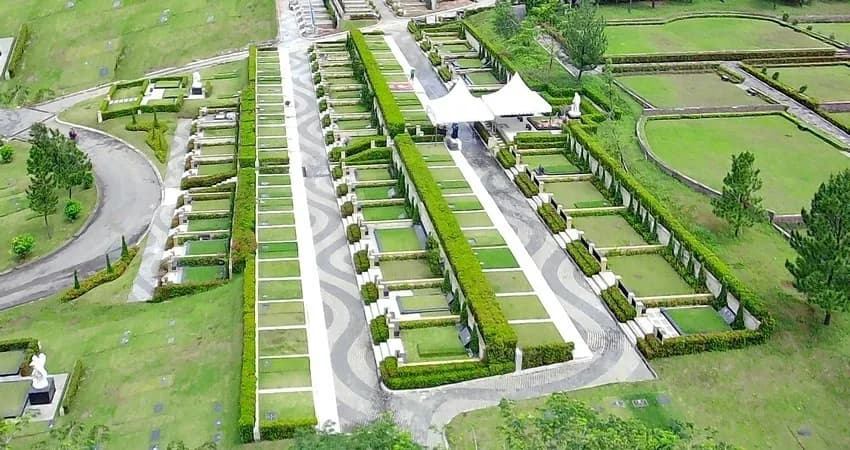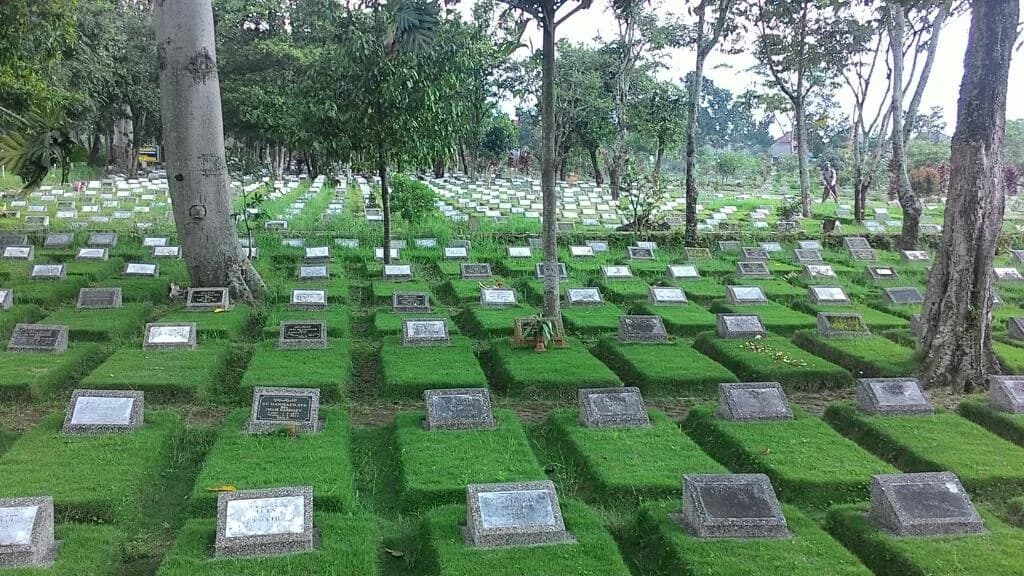
You should know that in Islam there are guidelines or provisions in building graves. These provisions are certainly intended to make things easier for the deceased's family and the surroundings of the grave. So what does a grave look like according to Islamic law? Here is the explanation.
What Does a Grave Look Like According to Islamic Law?
In Islamic law, there are provisions for when one wishes to build a grave. The provisions are:
1. The Burial Pit Has a Specific Depth
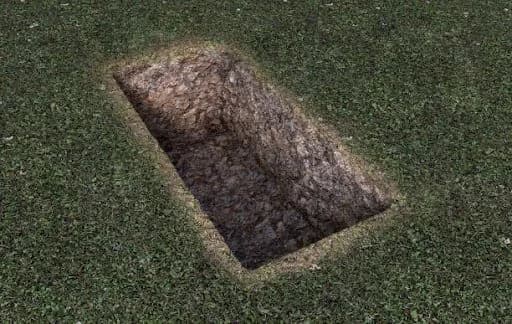
The first provision is that the burial pit must have a specific depth. When digging the burial pit, it cannot be done carelessly or haphazardly. The people digging the grave must know the dimensions and calculate the depth so that it is sufficient for the body of the deceased.
You should know that this provision is recorded in the hadith narrated by An-Nasa'i and At-Tirmidhi, related by Hisham bin Amr ra.
In essence, this hadith explains that during the Battle of Uhud, the Prophet's companions complained that the burial pit dug was not large enough for each person. The Prophet then said to dig it deep and make it good, and to bury two or three bodies in it.
In addition, in the book Syarah Fathal Qarib Diskursus Ubudiyah the dimensions of the burial pit are also written. Its size is equal to the height of an adult with a raised hand, or 3.5–4.5 dhira or 1.62–2.1 m (1 dhira = 46.2 cm).
2. A Gravestone Is Placed on the Grave
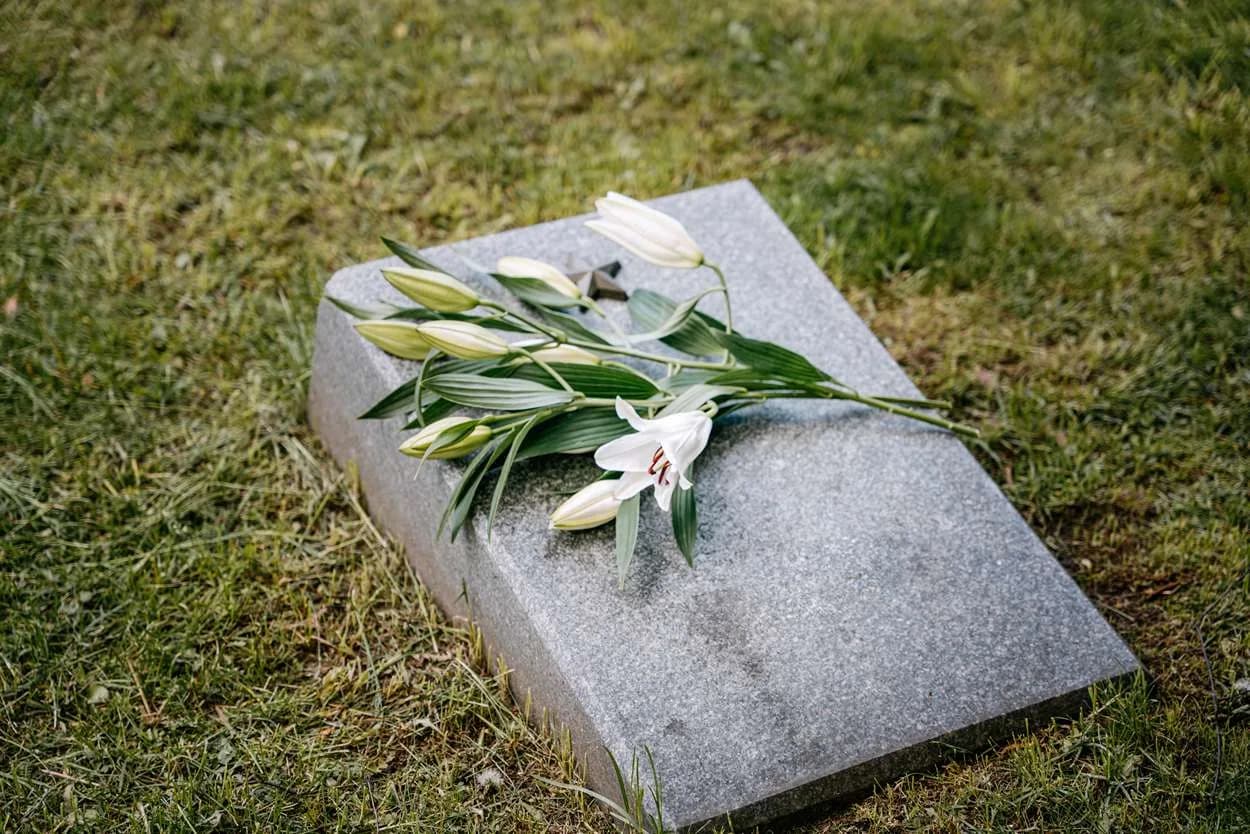
Next, the shape of a grave according to Islamic law includes a gravestone placed on top. Every grave that has been made may be given a gravestone. Such a gravestone serves as a marker so that visitors can easily find it.
Anas bin Malik ra, in a narration recorded by Ibn Majah, also explains the placement of a gravestone. That hadith says that the Prophet SAW once placed a grave marker of wood or stone. The grave the Prophet marked was the grave of Uthman bin Maz'un.
You should also understand the rules regarding writing on gravestones according to Islam. On this matter, each scholar has their own opinion, namely:
a. Hanafi School
According to the Hanafi scholars, the first ruling is that writing on a gravestone is makruh tahrim. Makruh tahrim means something that Islamic law absolutely forbids. However, it is no longer makruh if it is done as a sign so the grave's location is not lost.
b. Shafi'i School
Next, according to the Shafi'i scholars, writing on a gravestone is makruh. This makruh applies broadly, from Quranic verses to other text. However, when the grave belongs to a learned person, it is sunnah to write something on the gravestone to distinguish it, such as the name.
c. Hanbali School
Further, according to the Hanbali scholars, writing on a gravestone such as the name, date of birth, and date of death is makruh. The scholars' statement that it is makruh applies whether the deceased was a learned person or not.
d. Maliki School
Finally, according to the Maliki scholars, writing on a gravestone is haram if the writing is a Quranic verse. However, when writing the name, date of birth, and date of death, the ruling becomes makruh.
3. No Structure Is Built on the Grave
Another element of the shape of a grave according to Islamic law is that no additional structure is built on top of it. Based on a hadith of the Prophet SAW, adding tiles or cement on top of a grave is makruh. In addition, some scholars say that adding tiles to a grave is haram.
Adding tiles or cement is not permitted because it would make things difficult for other family members when burying another family member in the same grave. This is also explained in a hadith narrated by Ahmad and At-Tirmidhi, from Jabir bin Abdillah ra.
In essence, that hadith states that the Prophet Muhammad SAW forbade plastering graves, writing on them, building structures on them, and stepping on them. Then, in the book Ringkasan Fiqih Mazhab Syafi'i by Dr. Musthafa Dib Al-Bugha, plastering is explained as applying cement, walling, and the like.
4. Raising the Grave to a Reasonable Height
Another element of the shape of a grave according to Islamic law is raising the grave to a reasonable height. Raising it means elevating the grave from ground level by about one jengkal (a handspan). The purpose of raising the grave is so it can be seen and visitors can show it respect.
So What Are the Prohibitions on Graves?
It is also important to understand the prohibitions, or things that must not be done, at a grave and while at a grave. The prohibitions include, among others:
1. Do Not Cover the Grave
The first prohibition is against covering a grave or decorating it with stones. Such an act is futile, wastes resources that serve no benefit, and can also mislead people.
2. Do Not Build a Mosque on a Grave
The next prohibition is against building a mosque on top of a grave. Several hadiths state this prohibition, such as the narration recorded by Al-Bukhari & Muslim from Abu Hurairah, may Allah be pleased with him.
In essence, that hadith states that the Prophet Muhammad, peace be upon him, said that Allah cursed the Jews who turned their prophets' graves into places of worship.
3. Praying in a Graveyard
Next, it is not permitted to perform prayers in a graveyard. Such a practice is clearly mistaken and has no basis in Islamic teaching. Even outside the graveyard itself, praying in a mosque built over a grave is also not correct.
Anyone who prays in a mosque built over a grave is no longer considered part of the community of Muslims.
4. Making Vows at Masyahid
The scholars have agreed that there is no Islamic law permitting vows (nadzar) made at mosques built over graves (masyahid). Such vows may involve candles, olives, dirhams, and other offerings.
The Prophet Muhammad, peace be upon him, has also prohibited building mosques over graves and lighting them. Whoever does so has made a sinful vow.
5. Do Not Sit on Graves
Finally, it is prohibited to sit, walk, or lean on graves. In a hadith narrated by Ahmad from Amr bin Hazm, the essence is that when the Messenger of Allah saw a man leaning on a grave, he told him not to harm the occupant of that grave.
Do You Know the Proper Form of a Grave According to Islamic Law?
These are some explanations of how graves should be made according to Islamic law. Beyond that, there are also other things you should know about the prohibitions that apply when you are at a grave.
So, should a member of your family pass away, you can use Kamboja's on-demand service. You can choose the service and the Islamic funeral costs or non-Islamic options. You can also consult about burial land and choose a grave marker according to your wishes, with Kamboja.
Kamboja always by your side, providing funeral insurance for your loved ones when that day comes.
- #grave relocation services
- #funeral services
- #bereavement services

dev_kamboja
The Kamboja team writes guides on bereavement, funeral arrangements and funeral planning to help families in Indonesia.