Today, many individuals burden funeral fees for the deceased and grave maintenance costs, claiming these are government requirements. In truth, an Islamic funeral has no strings attached that would weigh heavily on those who are grieving.
You know that death is something every human being will experience. Both men and women will surely face death.
No matter how strong a person may be, and regardless of the cause, whether illness or accident, death is absolute, and according to Islam its decree does not change.
Graves According to Islam
In Islam, the Qur'an clearly explains that every living soul will return to its Lord. Furthermore, every Muslim who has passed away must be buried in accordance with Islamic law.
From washing the body, wrapping it in a burial shroud, performing the funeral prayer, to carrying it to the grave, these are obligations among fellow Muslims. Indeed, the costs of an Islamic funeral are also regulated in Sharia so that they do not burden the Muslim community.
But does the grave itself conform to Islamic law? In building a grave, Prophet Muhammad (peace be upon him) taught Muslims about the form of a grave that conforms to Islamic teaching.
There are several hadiths that address the correct form of a grave according to Islam, including:
1. Grave Mound Raised One Handspan
From Jabir bin Abdillah may Allah be pleased with them both who heard a hadith conveyed by the Prophet Muhammad (peace be upon him). The meaning of the hadith is as follows:
"That the Prophet was buried in a lahd (a niche-shaped burial chamber), a headstone was placed at its top, and the grave was raised by earth one handspan high." (Narrated by Muslim)
2. Do Not Take Graves as Places of Worship
Another hadith clearly explains the regulations on the form of graves and what must not be done at graves. The following is another excerpt that explains about graves:
Jundub bin Abdillah al-Bajali may Allah be pleased with himsaid that he heard the Messenger of Allah (peace be upon him) say five days before he passed away, meaning:
“.."Be aware that the nations before you took the graves of their prophets and righteous people as places of worship. Be aware, and do not take graves as mosques or places of worship, for indeed I have forbidden you from doing so."(Narrated by Ibn Abi Shaybah).
Grave Forms According to Islamic Law
Before moving on to the costs of an Islamic funeral, you need to know the form of a grave according to Islam. In general, and in accordance with the provisions and explanations of the hadiths and the views of major scholars worldwide, the grave form that conforms to Islamic law is as follows:
A. Having a Lahd as the Resting Place of the Body
A grave, in general across the teachings of various religions, has one essential requirement: there must be a lahd, a hollow niche, where the body is placed in its final resting place.
Likewise, according to the provisions of Islamic law, from the time of the earlier prophets, a Muslim grave must have a lahd within it.
B. A Headstone Placed Above the Grave
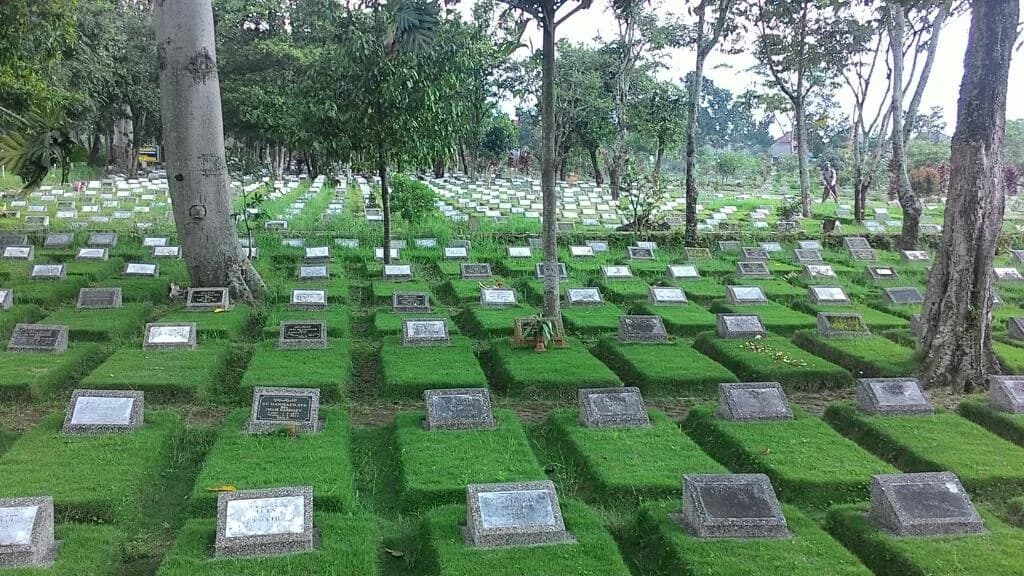
In Islamic burial, the headstone must be placed above the grave. The headstone is positioned at the head of the body. It may be made of any type of stone, or a wooden board or plank.
In addition, the headstone is clearly inscribed with the name of the deceased, the name of the father, "bin" for males or "binti" for females, and the date of death. This serves as a marker so that when relatives and family visit the grave, they can easily find the right one.
C. Grave Raised One Handspan Above the Ground
Once the body has been covered by the burial pit and the grave is level with the ground, extra soil of 1 jengkal, or about 30 cm, should be added on top. This makes the grave easy to recognize and helps prevent the risk of the grave being displaced.
D. No Structures May Be Built Above the Grave
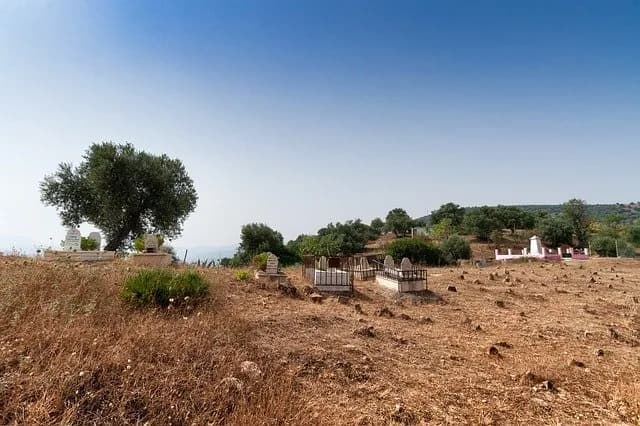
In Islamic law, adding a structure to a grave is forbidden. This is because it can lead to disapproval and may cause land disputes over the grave in the future. Basically, Islamic burial costs should not burden the family of the deceased.
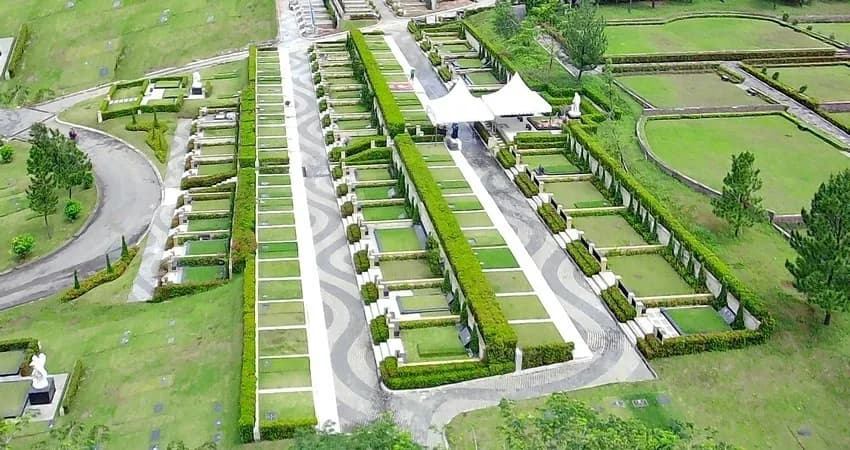
In addition, adding structures to a grave can also become wasteful and a display of extravagance over a matter, especially one concerning death. However, you can replace a structure above the grave with neatly arranged grass over the soil.
Islamic Burial Costs
In principle, Islamic teaching allows cemetery managers to set grave fees, but they must meet the following requirements:
1. Fees Must Not Burden the Family of the Deceased
Death is a deeply sorrowful matter. When someone has passed away, their body must be taken to the grave promptly.
However, if there are obstacles because burial fees are a burden on the family of the deceased, the cemetery manager who sets those fees will be held sinful. Basically, Islamic burial costs should not burden any party.
2. Fees Are Determined Through Deliberation
Besides not being allowed to burden the grieving family, burial fees under Islamic law must be determined through deliberation.
This deliberation must involve the Ulul Azmi (the local government head), local religious scholars, and members of the community or the family of the deceased. The aim is to avoid disputes among all the parties involved in managing the cemetery.
3. Cemetery Land Must Not Be Disputed
Another requirement regarding Islamic burial costs is that the land used as a Public Cemetery (TPU) must not be disputed land between two conflicting parties.
In addition, the best land for a public cemetery is land donated as waqf by someone. The aim is for the grave land not to be tied to costly management, so that burial services remain affordable.
4. No Buying and Selling of Grave Land
The final requirement for Islamic burial costs is that there must be no buying and selling of grave land. This is based on the principle that Indonesian land is Musabbal, or land without an owner.
In other words, the grave land belongs to Allah Ta'ala, and all of humankind has the right to use that land. Furthermore, taking advantage of a time of grief to gain profit is a sinful act according to religious teaching.
Conclusion
That concludes the explanation of grave requirements and Islamic burial costs. The most important lesson to take away is never to exploit other people's sorrow to gain profit in any form.
Kamboja is a burial protection service provider always by your side when that day comes for you and your loved ones. Kamboja also offers professional burial services to provide emotional support for you.

dev_kamboja
The Kamboja team writes guides on bereavement, funeral arrangements and funeral planning to help families in Indonesia.