Types of Flowers Commonly Used for Nyekar, and the Origins of Tahlil
- dev_kamboja
- (updated )
- 6 min read
Nyekar and Tahlil, or Pilgrimage are traditions that have long existed in Indonesia and are still widely practiced today. When visiting the graves of loved ones who have passed away, we often bring flowers as a sign of respect and to adorn the grave.
But did you know that not every type of flower is suitable to bring when doing nyekar? Alongside this, there is also the origin of the tahlil tradition that we should know before performing it. In this article, we will explain the types of flowers commonly used during nyekar and the origins of the tahlil tradition.
The Origins of Tahlil
Before discussing the types of flowers for nyekar, you should understand what tahlil is, as it is the main element of nyekar or pilgrimage. Through tahlil, you can offer prayers for those who have passed away.
For Indonesians, especially those in Java, the term tahlil is surely familiar. Tahlilan is a collaboration between religion and culture.
In fact, the tahlil custom in Java is not something that all Muslims are obliged to perform. This is because there is no saying of the Prophet Muhammad SAW that mentions carrying out tahlilan for 7 days.
The tahlilan gathering originates from the culture of people in earlier times, more precisely before Islam arrived in Indonesia. At that time, when someone died, a lek-lekan event, or keeping vigil through the night for up to 7 days, would be held.
The purpose of lek-lekan was to ensure that the family affected by grief would not feel sad and lonely. After 7 days, it continued on the 40th, 100th, and 1000th day of tahlilan.
The Walisongo brought the teachings of Islam to Indonesia and Java. Then, the lek-lekan custom merged with recitations and the kalimat toyyibah, and so it came to be known as tahlilan.
Some scholars did not know the history of how tahlilan entered Indonesia, particularly Java. Because of this, some of them declared tahlil to be bid'ah (an innovation). In fact, if one investigates this history more deeply, tahlil is a form of Islamic teaching from long ago.
The Purpose of Tahlil
As one of the traditions and cultures of the Javanese Muslim community, tahlilan aims to commemorate and pray for those who have passed away. Usually, this tradition is held on the first night after a person dies, and its implementation on certain nights also has the law of scattering flowers on graves.
For example, on the 7th, 40th, 100th, and 1000th day after a person's death. In Javanese, this tradition is known as mitung dino, matang puluh dino, nyatus dino, and nyewu dino.
The Benefits of Tahlil
At certain moments, tahlilan activities take place with great devotion, whether to send prayers for those who have passed away or simply to join as members of the assembly. So, what are the benefits of this tradition?
A. Getting Used to Reciting the Kalimah
When visiting a grave, you certainly need to recite the Qur'an, and prayers must be read properly. Through tahlilan, you can practice and get used to reciting them, such as the dhikr recitations La ilaha illallah, Subhanallah, Astaghfirullah, and so on.
B. Strengthening Friendship and Kinship
Silaturahmi, or maintaining ties among Muslims, is a habit in their lives. For this reason, silaturahmi must be preserved so that it lasts. The aim is to strengthen kinship and brotherhood among Muslims.
When you hold tahlil, it is customary to invite neighbors and relatives nearby, so that silaturahmi is kept strong.
C. Praying for Close Relatives
Besides attending the funeral and offering flowers for nyekar, the recitation of tahlil contains phrases expressing devotion to parents, relatives, and fellow Muslims.
This is why the tahlil recitation is often used to pray for someone who has passed away. These prayers are a real demonstration of the importance of the Islamic faith.
D. Charity
Charity during tahlilan refers to the food and refreshments you offer to the attendees. You may provide this according to your financial capacity.
Charity is beneficial for warding off misfortune and calamity. The wealth you give in charity will pave a wide path as an investment for the hereafter. Its guarantee is even paradise.
E. Seeking Blessings
When performing tahlil, you are engaging in worship and seeking the pleasure of Allah SWT. For this reason, make sure you truly have good intentions to draw closer to Allah SWT.
Types of Flowers for Nyekar
Before visiting a grave, you should choose the types of flowers for nyekar properly. Therefore, below is a list of flowers you can choose from:
1. Frangipani (Kamboja)
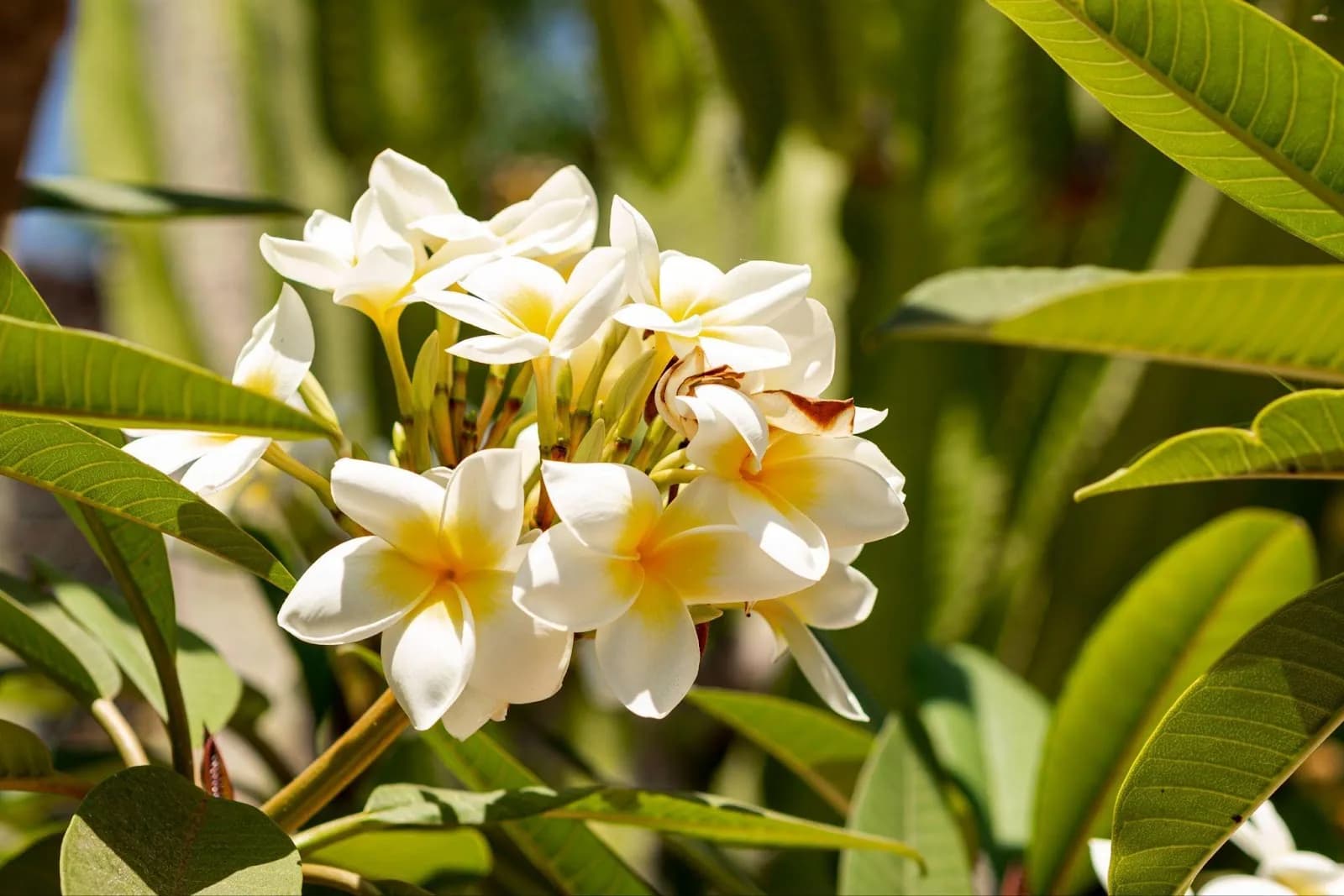
The frangipani flower is closely associated with mourning, so it is no surprise that it is often found in cemetery areas. It is regarded as a symbol of purity and tranquility. Frangipani is usually placed on the grave as a sign of respect and as a symbol of prayer for the person who has passed away.
2. Rose
This red flower is familiar to us all. It turns out that roses can be used for a graveside visit as well. Roses are usually placed on top of a grave as a sign of love and a final expression of respect.
As a suggestion, you may bring roses either whole or scattered as petals. You can also bring rose water to sprinkle over the grave, so that the grave gives off the fragrant scent of roses.
3. Kenanga
Kenanga is a fragrant and beautiful flower, so it is often used in nyekar (grave visit) rituals. The kenanga flower is considered a symbol of loyalty and eternity. Kenanga is usually placed on a grave as a sign of loyalty and a final expression of respect.
4. Kantil
The kantil flower is one of the types often used for nyekar or graveside visits. It has a unique shape, with petals resembling goat horns, and a whitish-yellow color. Kantil also has a distinctive and fairly strong fragrance.
Kantil is believed to carry deep meaning. Some of the meanings associated with the kantil flower are purity, peace, and courage.
5. Sedap Malam
With its very strong aroma, the sedap malam flower is said to have a calming effect on those who smell it. It is said that this flower is traditionally brought to funerals, because its scent can comfort grieving families.
6. Melati
Jasmine is a flower often used in nyekar because of its pleasant and sweet fragrance. It is also regarded as a symbol of purity and holiness. Jasmine is usually placed on a grave as a sign of respect and as a symbol of prayer for the one who has passed away.
7. Asoka
The asoka flower has a unique shape, with petals made up of several thin, pointed leaf-like segments, and it comes in pink or deep red. In Hindu belief, the asoka carries deep meaning, as it is considered a symbol of Kwan Yin, the goddess who represents compassion and wisdom.
Asoka is also regarded as a symbol of beauty, eternity, and peace.
Already Know the Origins of Tahlil and the Flowers for Nyekar?
That is the meaning of tahlil and the flowers used for nyekar. For those who find it difficult to prepare for a funeral, there are several funeral services that can help you.
For example, the on-demand service from Kamboja is ready to help you prepare for all funeral needs. That way, you do not have to struggle with them when the day of mourning arrives. Our funeral arrangement services are flexible and adapted to each family's needs, and Kamboja also provides funeral protection. Please contact Kamboja's contact for the best service solution.

dev_kamboja
The Kamboja team writes guides on bereavement, funeral arrangements and funeral planning to help families in Indonesia.