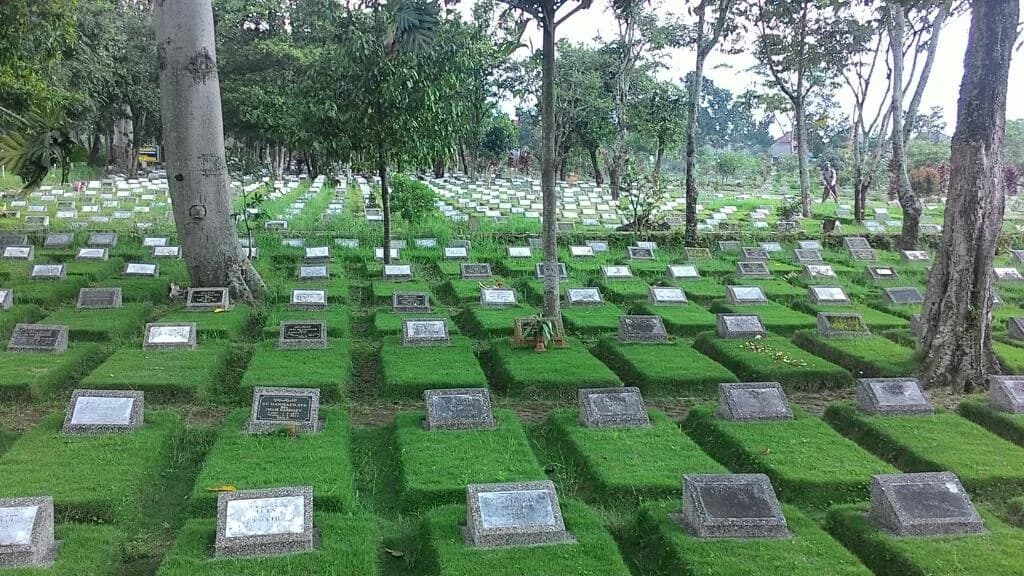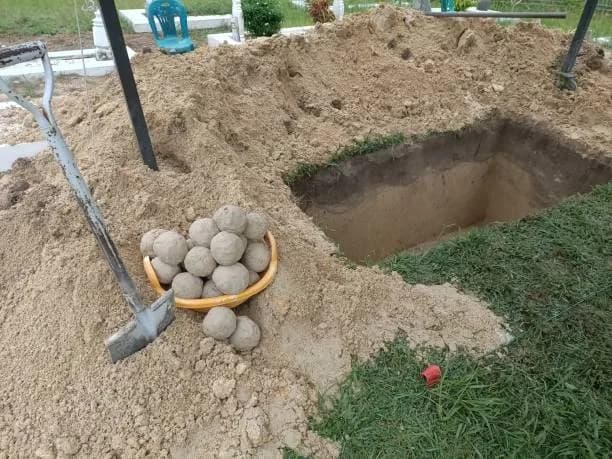
Some people choose to relocate the grave of a relative or family member for certain reasons. These may include the grave being too far from the family's home, or safety concerns. Is it permitted to move a grave? And how is the grave relocated?
This article will answer your concerns about relocating a grave. It covers not only whether it is permitted, but also the complete procedures and requirements. So be sure to read through to the end!
How to Relocate a Grave
Under Islamic law, relocating a grave is in fact prohibited, meaning it is not allowed. However, in certain circumstances, relocating a grave may be permitted for reasons of necessity.
If you intend to relocate the grave of a relative for a particular reason and follow the official procedures, here is how you can do it.
1. Completing the Requirements
Before proceeding, it is advisable to complete the requirements first. These requirements include:
- Prepare the Identity Card (KTP) of the deceased.
- The Identity Card (KTP) of the heir or the person responsible for the body.
- Family Card.
- A referral letter from the village/sub-district office (kelurahan).
- A request letter to the Office of Housing and Settlements.
- Criteria for the body.
- A photocopy of the still-valid permit for use of the grave land.
- A statement of release from any claims or demands in any form from other parties, issued by the heir or the person responsible.
- Shroud and coffin for relocating the grave.
2. Following the Relocation Procedure
Once the requirements are complete, here is the proper way to relocate a grave:
- The applicant or heir visits the local UPT TPU office at the Office of Housing and Settlements.
- The heir submits an application by filling in the form and handing over the necessary documents, such as photocopies of the KTP, the still-valid permit for use of the grave land, and others, to the TPU officer.
- The officer issues a proof of payment according to the retribution calculation.
- The person responsible or the heir pays the retribution for digging up and relocating the grave.
- The application is forwarded to the Head of the Facilities and Utilities Division.
- The Head of the Facilities and Utilities Division instructs the cemetery sub-coordinator.
- The cemetery sub-coordinator directs the cemetery service officers to carry out the grave exhumation or relocation of the body.
- The officer confirms the location of the grave plot to be exhumed.
- The heir determines the appropriate time to exhume the grave.
- Digging and exhumation are carried out by TPU officers.
- The officer takes the body and hands it over to the heir for relocation.
- The officer closes the grave that was exhumed.
- The officer issues a permit given to the heir or the person responsible for the body.
Permitted Reasons for Relocating a Grave
There are several reasons that allow a grave to be dug up again and moved to another place. These reasons must not violate religious law, and can be carried out in cases of emergency, danger, or other justifiable circumstances.
This explanation is in line with the views of the scholars. The view of the majority of scholars (jumhur ulama), with the exception of the Hanafi school, holds that relocating a grave is prohibited.
The Shafi'i school prohibits relocating a grave but tolerates it in cases of emergency. In other words, the Shafi'i school still permits relocating a grave as long as there is an emergency.
Likewise, the Maliki school permits relocating a grave on certain conditions. These conditions are that there must be no damage to the body, it must not diminish the dignity of the deceased, and the relocation must be carried out for the sake of public benefit.
From this legal basis, you can understand the reasons for which heirs are permitted to relocate the body of a relative or family member. For example, if the grave site is affected by a disaster, or the cemetery area is prone to disasters, so that it needs to be moved to prevent it from being damaged.
The reason for relocating a grave is usually a regional development project. Such projects often need to move graves located in strategic spots, for the sake of the public interest.
Apart from these emergency reasons, relocating a grave is not permitted, especially if it would cause negative consequences for many parties.
Meanwhile, a person's grave may be dug up again provided it meets 3 conditions. These conditions include:
- The body has been buried but has not yet been washed, as long as the body has not changed or decomposed.
- The body has not yet been positioned facing the qibla.
- There are possessions buried along with the body.
Why Grave Relocation Must Not Be Done Carelessly
Grave relocation indeed must not be carried out carelessly. The law on grave relocation in Islam is haram, because it may violate the dignity of the deceased or expose their faults.
This is why the majority of scholars (jumhur ulama) prohibit grave relocation. However, if there is a specific cause such as an emergency, it may be permitted. For example, if water seeps into the grave or the burial site is prone to landslides, the body must be moved.
The way a grave is relocated also must not be done haphazardly. You must follow the applicable procedures and pay a certain amount for the relocation so that the parties concerned are informed.
Grave Relocation Costs
The earlier procedure explained that the heirs or the person responsible pay the grave relocation levy. So, how much must the heirs spend?
Quoting sippn.menpan.go.id, the digging fee for relocating a body is IDR 1,200,000.00 for the use of grave-digging services. Of course, this digging and relocation is carried out at the request of the heirs or the person responsible for the body.
In addition, the heirs are obliged to pay the grave land usage levy every year. These costs refer to Regional Regulation (Perda) Number 3 of 2017, with the following details:
- Grave usage fee of IDR 25,000.00 per meter.
- Cemetery officer service fee of IDR 375,000.00.
Do You Understand How to Relocate a Grave Now?
That is the procedure as well as the way to relocate a grave in accordance with the rules. Basically, grave relocation can be carried out in emergencies, such as when struck by a natural disaster or when there is a regional development need.
However, if there is no urgent emergency element, grave relocation must not be carried out. Grave relocation must also obtain permission from the heirs or the person responsible, because they are the ones who bear responsibility and have the right to decide on the relocation.
If you or your relatives are looking for grave relocation services, Kamboja offers body relocation services that you may consider, as well as professional burial protection. Kamboja can also help you manage all the arrangements and complete funeral planning so that you can have peace of mind without needing to worry about any of it.

dev_kamboja
The Kamboja team writes guides on bereavement, funeral arrangements and funeral planning to help families in Indonesia.