Grief is something no human being can avoid. That is why cemeteries exist to honor ancestors who have passed away. From the perspective of Chinese cemetery feng shui, a burial site is also believed to shape the destiny of the generations that follow.
In Chinese culture, all things have a flow of energy, which you may call Qi. This flow of Qi is believed to influence the good or bad elements in a person's life. Graves and burial sites are no exception to the presence of this energy flow.
So, what are the details of this principle? Read more here!
What Is Chinese Cemetery Feng Shui?
Not only houses, but cemeteries also have their own feng shui. Chinese cemetery feng shui, also known as yin zhai , is the science of creating a burial site that can shape the fate of the family or descendants who come after.
Because of shared genetic elements, a grave can have considerable influence on the descendants of the deceased. This influence is usually said to become noticeable in male descendants about one year after the burial.
In fact, poor cemetery feng shui is believed to bring bad fortune to the next generations for up to 30 years. And if the feng shui of a burial site is found to be poor, then the cost of funeral services will inevitably rise, because the grave must undergo renovation or repair.
However, you should also understand that feng shui principles generally require accurate calculations that cannot be done carelessly. That is why feng shui experts play an important role in carrying out these calculations.
Principles of Location in Chinese Cemetery Feng Shui
In practice, feng shui in Chinese funeral customs has several rules and principles that you should follow so that descendants can receive its benefits. There are two main principles that a person should consider when creating a grave. Here is the full explanation:
1. Di Ling Ren Jie (地灵人杰)
“Di Ling Ren Jie" in Indonesian means "Land with life energy, or living Qi, will produce extraordinary people."
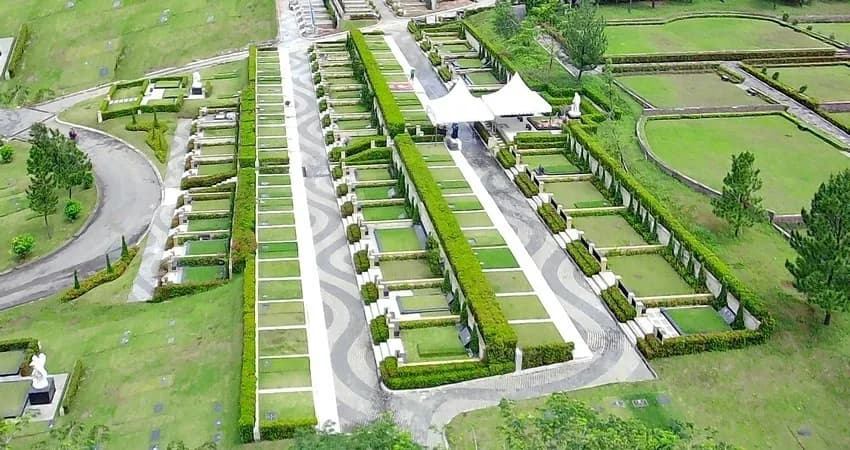
To meet this principle of Chinese cemetery feng shui, you can place the cemetery on highland areas, especially in mountainous regions. In Indonesia, including for house feng shui, this kind of area is known as Tanah Naga (Dragon Land).
2. Zang Feng Ju Qi (藏风聚气)
In Indonesian, this term means "Sheltered from the wind, life energy gathers." In other words, the cemetery land should ideally have a flow of water and a beautiful mountainous backdrop.
Besides being located in Tanah Naga, a grave should also be protected on four sides. On the left is the protection of the Green Dragon, on the right is the White Tiger, Phoenix Red on the front side, and the Black Tortoise on the back side. In Chinese culture, these four protections have another name: Qinglong Baihu.
Tips for Building a Grave According to Feng Shui
Since many factors influence the flow of Qi in Chinese cemetery feng shui, beginners can easily become confused. Fortunately, there are several ways or tips for making the grave you build for your ancestors spread positive energy. Here is a summary:
1. Choosing a Burial Site Near a River
As written in the previous subsection, the location you choose must meet two principles: Tanah Naga and Qinglong Baihu. A well-known location believed to have good influence is one near a river, because rivers are believed to bring positive energy.
However, regarding the river's course, you should pay attention to where it enters and exits. Try to avoid having the inflow come from behind the grave, because, figuratively speaking, it would mean continuously pouring water over the ancestor's head.
The outflow of the river you choose also should not be taken lightly. This is because the direction in which the river flows out can also determine the good fortune, in the form of wealth and health, of the next generations.
Furthermore, in Chinese fengshui for graves, standing water is considered bad luck. You should avoid any pooling water around the grave so that it does not block the flow of positive energy.
2. Grave Placement
Once the location is suitable, you should also learn about how the grave is positioned. In Chinese grave fengshui, it is best for the area in front of the burial site to be an open field rather than a narrow space filled with large trees.
This is because a wide, flat area carries a philosophy of promise and great spirit. In addition, if you are forced to build a grave in a place with large trees, make sure you cut the tree all the way down to its roots.
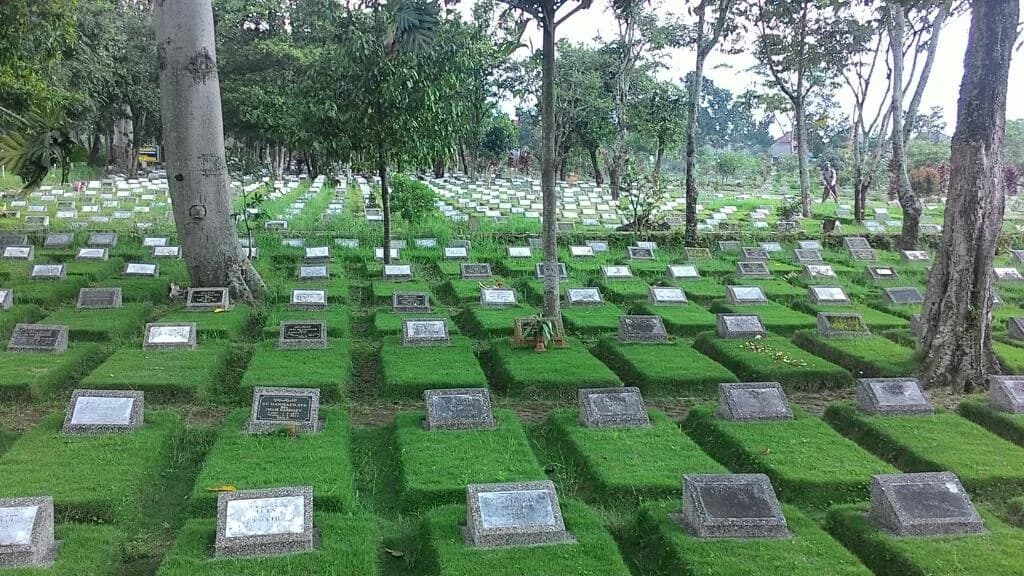
Unlike wide open land, large trees have a bad influence on a grave. The graves should also be arranged in a right-triangle pattern. This is intended to avoid disputes with others.
3. Harmony with Nature
Even though it is located on open land, Chinese grave fengshui also recommends building a grave that blends with nature. In other words, the grave you build for your ancestors should not be set against a dense residential backdrop. Instead, it should have a natural landscape as its background.
Furthermore, the main materials for the grave must not be chosen carelessly. Avoid using cement, concrete, or other materials that could block water and air. Because of such materials, the flow of energy may be obstructed and have no positive effect on the fortune of future generations.
4. Gravestone
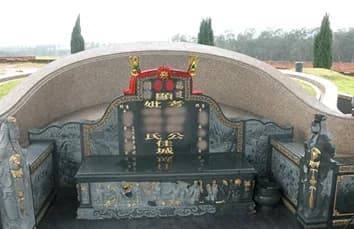
One element that should not be overlooked is the gravestone, or bongpai. Besides serving to identify the grave, the gravestone is also connected to Chinese grave fengshui.
Much like a satellite, the gravestone functions to capture energy from all directions of the earth. Usually, the south to southeast compass direction is chosen as the ideal orientation. In addition, you must not let the gravestone crack or fade.
Do You Understand Chinese Grave Fengshui Yet?
Just as Chinese grave fengshui aims to bring prosperity to future generations, grave protection through Kamboja can also provide a similar sense of security. Kamboja itself is a provider of funeral services that you can rely on to handle every funeral procession so that it runs smoothly.

dev_kamboja
The Kamboja team writes guides on bereavement, funeral arrangements and funeral planning to help families in Indonesia.