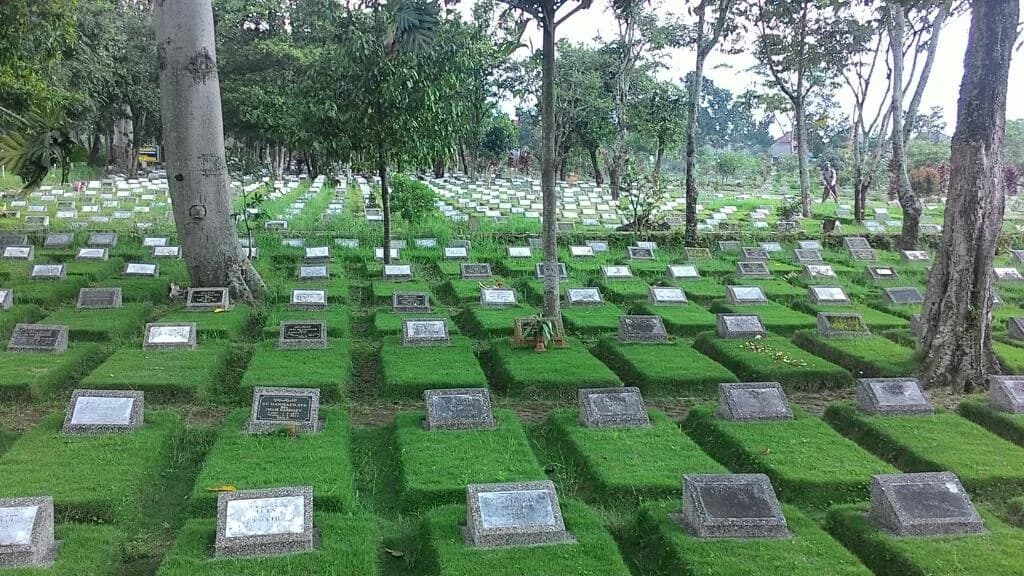
Loss is a predetermined decree of Allah SWT that is absolute. When the time comes, heirs are entitled to receive the inheritance left by the deceased.
It is important to know that the rules for dividing an estate are very significant, as they are set out in Islamic law (syariat). So, what exactly counts as an inheritance? Read the full explanation below!
Understanding the Inheritance
In Islam, the inheritance is known as tarikah or tirkah. The term refers to whatever a person leaves behind.
In terms of its meaning, tirkah is everything left behind by a person who has passed away, whether in the form of property or rights that have been firmly established. In other words, an inheritance consists of both physical things and non-physical things.
This refers to QS. An-Nisa 4:33, where Allah Ta'ala says:
“For every inheritance from what is left by parents and close relatives, We have appointed heirs. And to those with whom you have made a pledge, give them their share. Indeed, Allah is ever, over all things, Witness.”
Based on this verse, property obtained from a person who has passed away is transferred to the rightful heirs in accordance with the provisions set by Islamic law.
Types of Inheritance
Under Article 171 letter e of the Compilation of Islamic Law (KHI), the inheritance is divided into two types:
1. Pre-Marital Property
Pre-marital property is property acquired through marriage that comes from the inheritance of both families.
For example, a husband and wife who each have pre-marital property, whether in the form of grants, alms, or gifts from their parents or relatives after marriage, and this property is not the result of their own efforts.
Pre-marital property is absolutely owned, whether by the husband's family or the wife's family. In addition, in managing pre-marital property, the husband's and wife's property may not be mixed, even after the marriage has taken place.
takes place.
This is explained in Article 86 paragraph 1 of the KHI Compilation, which reads:
“In principle, there is no mixing of the husband's property and the wife's property as a result of marriage.”
Therefore, this pre-marital inheritance has no connection to the property and rights of other people.
2. Joint Property
When you are married, there may well be inherited assets that become shared property. Joint property within a family is unavoidable, since almost every family has this kind of property.
For example, a husband and wife who both work to support their family. The wife helps the husband earn a living rather than only caring for the children at home, so each of them has their own income. Given this, the household's income comes from both the husband and the wife.
The classification of joint property is further divided into 4 categories as follows:
- Property purchased during the marriage: any item bought together during the marriage, regardless of which spouse it belongs to.
- Property purchased and built after divorce: during the marriage, royalties from certain assets may exist, so if divorce happens later, an object built from those royalties is considered joint property even if the couple no longer lives under one roof.
- All property whose acquisition can be proven during the marriage: the acquisition of each property must be provable during the marriage so that it does not become a dispute if the couple later divorces.
- All personal income of both parties: the husband's or wife's income automatically becomes joint property. This is regulated in Article 35 paragraph 1 of Law Number 1 of 1974 and Article 1 letter f of the KHI Compilation. However, both articles apply only if no agreement was made during the marriage.
Classification of Inheritance
In the book Ahkamul-mawaarits fil-fiqhil-Islami, translated and compiled by the Faculty of Sharia Committee of Al-Azhar University in 2004, it explains that inherited property includes four things:
- Material assets: in the form of physical property, both movable and immovable (fixed) goods.
- Non-material rights: consisting of two parts, namely the right of khiyar and syuf'ah. The right of khiyar is the option to continue or cancel when a contract exists in a sale and purchase. Meanwhile, the right of syuf'ah is the right to buy that gives priority to a partner in a joint ownership.
- Activities of the deceased before passing away: covering all activities before death, including hunting game animals after they have died. These can be passed on to the heirs.
- Diyat: a compensation payment that must be paid for ownership of the deceased before the grief.
On the other hand, some sources state that this classification of property is divided into two: based on physical property and its rights.
- Physical property: includes material goods, characteristics that have material value (receivables and compensation), and even items connected with the rights of others (items that have been pawned by the deceased).
- Rights: include material rights (gardens, drinking water, and irrigation sources) as well as non-material rights.
Obligations of Heirs
The Indonesian Civil Code (KUHPerdata) regulates the obligations of heirs toward the deceased's estate, including:
- Maintaining the integrity of the inherited estate before it is distributed.
- Finding a way to distribute it in accordance with the provisions.
- Settling all forms of the deceased's debts if they left any.
- Carrying out the will if the deceased left one.
Meanwhile, based on Article 171 letter e of the Compilation of Islamic Law (KHI), which realizes the explanation and regulation of Article 175 paragraph 1 of the Compilation, the obligations of heirs include:
- Managing and completing the arrangements up to the completion of the funeral.
- Settling all forms of debts, whether for medical treatment or care, including the obligations of the deceased, as well as collecting receivables.
- Carrying out the deceased's will.
- Distributing the property to the heirs who are fully entitled to it.
Have You Planned Your Future Protection?
Having inheritance and estate property does not mean you have not planned anything for the future. Moreover, grief is something that cannot be predicted. Even so, you can prepare for this risk as early as possible to provide financial protection for the family left behind.
Beyond financial planning, you should also consider practical protection should that time come, as arranging a funeral is not easy.
Therefore, Kamboja comes as an on-demand service covering every need of a funeral, from handling the deceased, the death certificate and transport, to the final resting place.
There are complete packages tailored to your requests, needs and budget, and the costs can be discussed with you beforehand. Learn more about trusted funeral services that can be your partner for the future!

dev_kamboja
The Kamboja team writes guides on bereavement, funeral arrangements and funeral planning to help families in Indonesia.