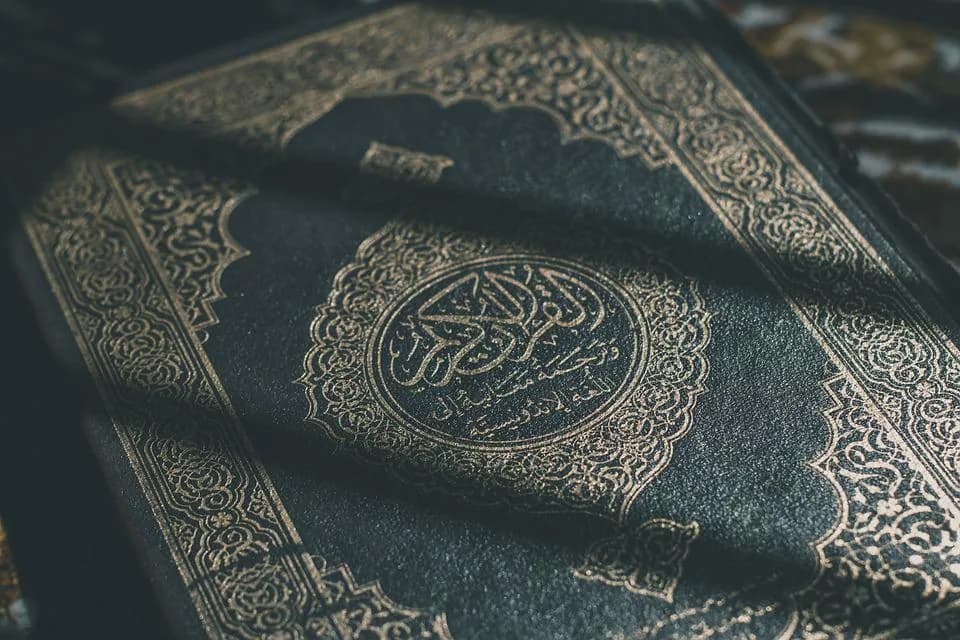
Do you know the ruling on relocating a grave? Islam provides guidance on many aspects of human life, both in our relationship with God and with fellow human beings. Islam is a complete religion, as stated in Surah Al-Ma'idah, verse 3 of the Qur'an.
Everything can be found in the Qur'an, the hadith, ijma' (scholarly consensus), and qiyas (analogical reasoning), including the ruling on a person who moves a grave. This is an important topic, because some people suddenly decide to relocate a grave without understanding what the ruling says.
We hope the information in this article helps you, since the explanations draw on trusted scholars and experts.
A Recent Public Controversy Over a Grave Relocation
So what is the ruling on grave relocation in Islam? Not long ago, a grave relocation became a viral issue. This happened because of a dispute over a plan to move the grave of the late Vanessa Angel.
To recap, Vanessa Angel, her child, and her husband were involved in an accident on the Jombang toll road in early November last year. The plan to relocate the grave was raised by Vanessa's father, Doddy Sudrajat.
Doddy explained that he wanted to move Vanessa's grave closer to her mother's grave.
Before this case, there were certainly many other cases involving grave relocation. Even so, many people still do not understand the ruling, especially for a body that was buried only recently and where some parties want to dig it up.
The Ruling on Relocating a Grave According to Islam
So how does Islam view the act of grave relocation? For Muslims, you should know that moving a grave is considered forbidden (haram), especially when the body has not yet fully decayed.
According to the Maliki school, a person may relocate a grave as long as the body is not damaged and the dignity of the deceased is not diminished.
The relocation must also be carried out for a valid public or practical benefit (maslahah). Such reasons might include making it easier for visitors to pay respects, or wishing to be buried near family graves.
What About Other Schools, Such as the Shafi'i School?
The school with the most followers in Southeast Asia, the Shafi'i school, states that relocating a grave is permissible only in an emergency. Based on the explanation in Fath al-Wahhab by Shaykh Abu Zakariya al-Ansari, it is forbidden to dig up a grave before the body has completely decayed.
This ruling must also be based on the opinions of soil experts after burial, since digging it up could damage the dignity of the deceased.
However, relocating a grave is permissible in an emergency, for example when the body was buried without being properly purified through washing or tayammum, even though the body should have been in a state of purity.
Until the body has completely decayed, relocating the grave remains forbidden. The condition of the body should be determined by experts in the field. In emergencies, such as when the body was not purified, the ruling allows it.
The Hanafi school strictly prohibits relocating a grave, except where it relates to the rights of other people (haqq adami). For example, if jewelry fell into the grave, if property is buried there, or in other similar situations.
Other reasons that permit digging up and relocating a grave include when dirty water seeps into it, or other causes that could cause harm.
The Ruling on Grave Relocation According to Contemporary Scholars
You have already seen the rulings of the four schools. What do contemporary scholars say? One scholar you can refer to is Habib Usman bin Yahya.
He explains that relocating a grave is forbidden. No one may move a grave without a strong and urgent reason. Such urgent conditions include a grave located on a riverbank, a beach, or similar places.
In such cases, the body risks being swept away. From this, the ruling on relocation becomes permissible. Even so, the process must be carried out by people who are experts.
The view of Dr. Ahmad bin Abdul Karim Najib on Grave Relocation
Another contemporary scholar, Dr. Ahmad bin Abdul Karim Najib, also gives a view on whether relocating a grave is permissible. According to him, there are three conditions that make grave relocation permissible.
These three conditions or requirements are:
- For the benefit of the deceased themselves, related to the soil where the body is buried. For example, water seeps up and makes the grave muddy, or a wild animal has dug it up.
- The body was buried on land that does not belong to the burial site, for example when the burial place is not a public cemetery (TPU), and the landowner does not agree to the land being used as a grave. In this case, digging up the grave is permissible.
- For the general public benefit, for example when a grave is located along a road and disrupts public order. In this situation, a person may relocate the grave.
Ustadz Abdul Somad's View on Whether Relocating a Grave Is Permissible
What about the view of Ustadz Abdul Somad, better known as UAS, on the ruling for grave relocation? UAS is a well-known preacher whose knowledge is widely respected.
He is a preacher who specializes in hadith. Whenever he answers questions from the congregation, he bases his answers on the Qur'an, the Sunnah, and the opinions of scholars. On the topic of grave relocation, Ustadz Abdul Somad has also given his answer.
In his lectures, he explains that relocating a grave is permissible if there is a specific reason, such as a river overflowing or coastal erosion. He adds that relocating a grave without an urgent reason is clearly forbidden.
The Importance of Funeral Insurance for the Deceased and Their Heirs
Beyond understanding the ruling on grave relocation, you should also know why funeral insurance matters. As you know, funeral arrangements and costs are not cheap. Many people struggle to arrange a funeral for their family because of high costs.
The same applies to renewing a grave lease. There are many things to prepare, such as complete documents and fees. That is why funeral insurance from Kamboja is a solution you may choose.
Kamboja offers many services to its members. Some of these services include:
- Funeral arrangements handled directly by experts in the field.
- Assistance for mourners and the family.
- Support payments for the family once all funeral costs have been settled.
To discuss your options, you can contact Kamboja.
Now That You Understand the Ruling on Grave Relocation
That is how the ruling on grave relocation works. In short, it is forbidden to relocate someone's grave unless there is a truly urgent reason.
All scholars agree on this prohibition, except in emergencies that require a grave to be dug up or moved.
Apart from urgent conditions, for the benefit of the deceased and the public, relocating a grave is not permitted. We hope this is helpful.
Kamboja stands by you in providing funeral services for you and your family when that day comes.

dev_kamboja
The Kamboja team writes guides on bereavement, funeral arrangements and funeral planning to help families in Indonesia.


