Arranging a Chinese funeral is not only about observing tradition, but also about making sure every logistical detail is well organized so the rites proceed with dignity and without hitches.
Without involving a funeral care service, families can easily become overwhelmed in the midst of grief. For this reason, it is important to know the right logistical steps so that every final act of respect can be carried out calmly, orderly, and in accordance with custom. Read the full explanation here.
Choosing the Coffin
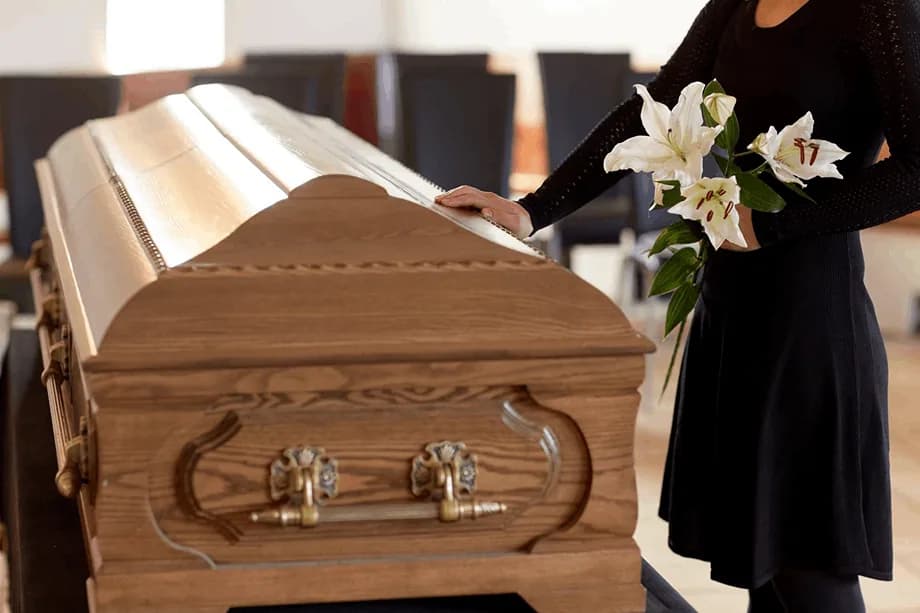
In Chinese tradition, the coffin is not only a vessel for the deceased but also a symbol of honor, of respect for ancestors, and of the belief in the spirit's journey to the afterlife. As noted in the list of equipment for traditional Chinese funerals:
- The coffin is one of the more luxurious items and is regarded as evidence of the family's respect for the deceased.
- Tradition places the deceased's cherished belongings inside the coffin, showing that it also serves a symbolic function in completing the spirit's journey.
- In the procedures for lying in state, the coffin may be placed in the viewing room or funeral home, either open or partially open, as part of the ceremony.
Because of its symbolic meaning, families sometimes choose a higher-quality coffin with a finer design, selected wood, carvings, finishing touches, or even a larger size.
Placement at the Funeral Home / Lying in State
In Chinese tradition, before the body is taken to the grave, there is a period of lying in state at the funeral home or a private residence.
- The body is generally laid out at the family home, but in modern practice many families use a funeral home to make things easier and more orderly.
- During the lying in state, the family is expected to keep watch over the body (including at night) and to perform prayers and rituals around the coffin.
Using a funeral home or lying-in-state service incurs additional costs for the room, decorations, special services, security, facilities for mourners, a complete set of prayer equipment, and even refreshments for guests.
Providing a Complete Prayer Altar
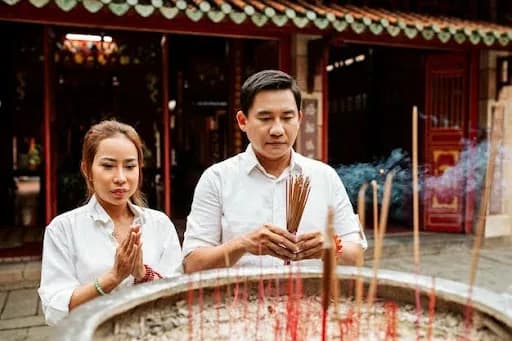
The prayer altar in a Chinese funeral plays an important role as the meeting point between the living family and the spirit of the deceased. The altar is also used to hold offerings, incense, candles, joss paper, and other ritual objects.
Some other important points are:
- Candles, incense (hio), and the incense holder carry strong ritual meaning in Chinese tradition.
- The altar is usually furnished with food offerings, a photograph of the deceased, ritual ornaments, and typically avoids red in clothing or decorations, since red is considered the color of happiness.
- Offerings of paper and replica items are also commonly made.
A complete altar setup may include a dedicated altar table, black or white cloth appropriate to mourning, a photo of the deceased, candles and incense, paper, food offerings, decorations, mourning flowers, and ritual attendants.
Arranging the Hearse to the Cemetery
This aspect is often considered crucial because it directly involves transporting the body to the cemetery or crematorium. In Chinese tradition, the escort of the body to the grave also has its own ritual, for example smashing a watermelon as a symbol that the body's departure will go smoothly.
Arranging the hearse covers the vehicle cost, driver, fuel, possibly additional staff, timing coordination, and sometimes special services (procession, flower car, use of a sound system).
The Value Behind the Investment in a Chinese Funeral Ceremony
Undeniably, behind the grief there are costs to be met. These costs naturally vary depending on each family. However, there are reasons behind the expenses, whatever the amount:
A. Traditional and cultural value
For families who deeply value Chinese customs, performing the rituals in full brings inner satisfaction, fitting respect to ancestors, and preserves the family's honor within the community.
B. Peace of mind
With adequate logistical facilities, the family can focus on the process of mourning and paying respect rather than being burdened by technical matters.
C. Quality of execution
When professional services are chosen (a funeral home, a dignified coffin, a well-arranged altar, a proper hearse), the process runs smoothly, without obstacles, and with fewer risks.
D. Social and symbolic significance
Within the Chinese community, how the funeral procession is carried out can have a lasting impact, symbolizing that the family has done their very best for the departed.
Prepare Your Grief Protection with Kamboja!
In carrying out the final farewell through funeral services, what matters most is that every logistical detail, from the coffin to the altar to the transportation of the body, is carried out with deep respect, cultural awareness, and financial readiness.
When all of these elements are balanced, the expenses incurred can truly be worth it, not merely as a burden, but as an expression of love and respect for those who have passed away.
As a long-term grief protection service, Kamboja offers ease in planning and carrying out funeral arrangements, including handling the body, transportation of the body, burial or cremation, and administrative documents, so that the family left behind is not burdened physically or financially.
By taking preparation steps early, you can ensure that your choice of body care and funeral services is already arranged, your budget is managed, and your family can focus more on the grieving process and the beautiful memories shared with your loved one.
If you have any further questions, you can contact Kamboja Customer Service at CS 1: +6282211111415 and CS 2: +6281513532488.

Kamboja Blog
The Kamboja team writes guides on bereavement, funeral arrangements and funeral planning to help families in Indonesia.