In Islam, the way to honor a person who has passed away is to bury them. However, there is still a lot of uncertainty about the rules for burial, including the building of a grave tomb.
Building a grave tomb is a practice that some people follow as a way of paying their final respects to the deceased. However, there is debate over whether building a grave tomb is in line with Islamic teachings.
In this article, we will discuss further whether or not building a grave tomb is permitted in Islam.
What Is a Grave Tomb?
"Kijing" is a term used to describe a stone or structure that sits above a grave. In the Great Indonesian Dictionary, kijing refers to a type of stone, brick or cement used as a covering for a grave, joined to the headstone.
There is still much debate over whether a kijing may be built, because of the shape of the grave. In reality, however, the ruling on building a kijing is that it is forbidden. There are only a few specific proofs that determine whether a kijing may be built.
Rules on Grave Tombs in Islam
As noted in the previous discussion, the ruling on building a kijing remains widely debated. For that reason, there are several specific rules that you can use as a reference regarding grave tombs. Some of them are as follows:
A. Graves of the Prophets or the Righteous
The first type of grave is that of a prophet or a righteous person. Graves of prophets or other righteous people may have a kijing built on top. Besides serving as a marker so the grave is not lost, a kijing makes it easier for people to visit and to learn from and take example from the prophets or the righteous.
This refers to the rulings or opinions of Al-Imam Barmawi, Imam Bujairimi, Imam Halabi and Imam Rahmani in Hsy. Bujairimi 2/297.
B. Graves on Family-Owned Land
The next rule concerns building a grave tomb on land owned by one's own family. The ruling on this is "makruh," meaning permissible but close to forbidden.
This is based on the hadith of the Prophet that prohibits any kind of structure above a grave because it can disturb the community.
This accords with the ruling of Al-Imam Syarwani, who stated, "If the grave is on land owned by the deceased, then it is permissible to build a grave tomb, because it does not disturb the public interest."
In short, using a kijing is makruh as long as it does not disturb or burden other people.
C. Graves on Public Land
But what about a kijing in a public cemetery? The ruling on building a kijing in a public cemetery is clearly "haram." This accords with the hadith of the Prophet Muhammad (peace be upon him) that prohibits construction above a grave because it can harm the public interest.
And what if there is concern that the grave will be dug up before the body has decayed? In that case, relatives or family members may replace it with a stone headstone or place non-permanent stones around the grave as a marker. Some people also plant trees for shade and as a grave marker.
Rules for Grave Construction in Islam
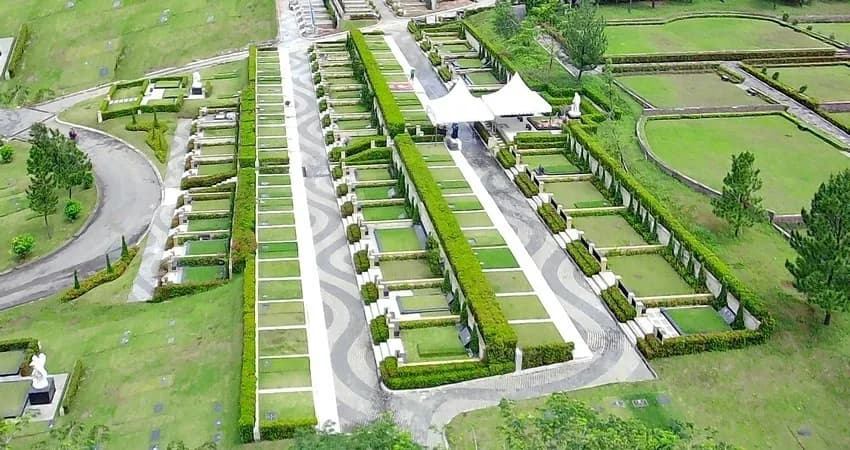
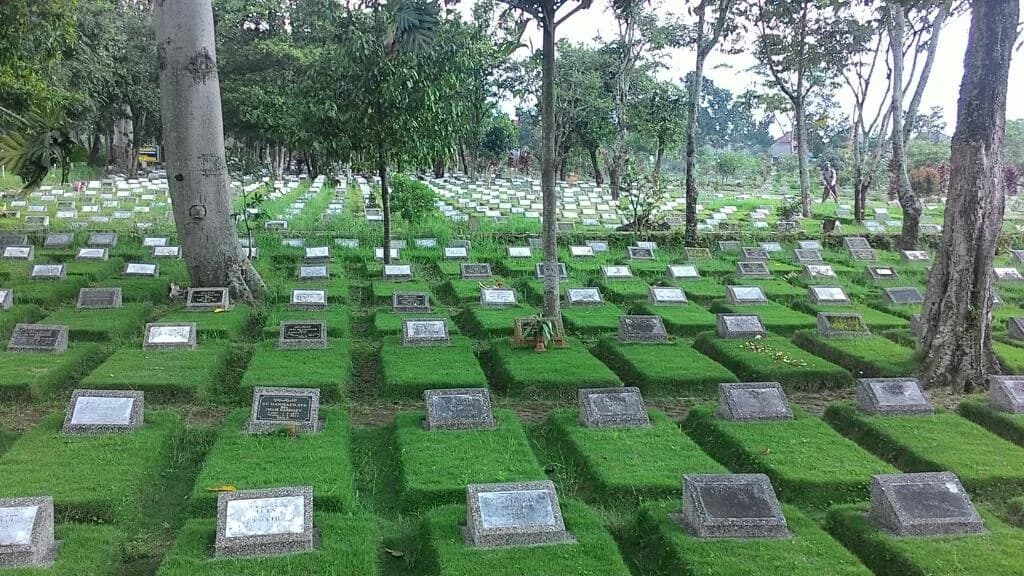
Having studied the ruling on grave tombs, which you can see examples of at the Depok cemetery and the Bandung cemetery, let us now look at the equally important rules for the grave pit in Islam:
1. Having a Lahad (Burial Niche) of a Specific Size
Islam stipulates that the lahad of a grave must be dug large enough to hold the body straight and not bent. The grave pit must also be deep enough. This is recorded in hadiths narrated by An-Nasa'i and At-Tirmidhi.
The hadith describes a man who, while at war and facing insufficient ground, asked the Messenger of God how to bury the dead. The Messenger of God replied, "Dig, deepen the excavation, make the grave good, and bury two or three bodies in it."”.
As for the size of the grave according to the book Syarah Fathul Qorib, it should match the height of an adult with an arm raised. This is roughly 3.5 to 4.5 dzira', where 1 dzira equals 46.2 cm.
2. No Structure Should Be Built Above the Grave
The next rule is that no structure may be built above the grave, which you may know as a grave tomb. As mentioned earlier, there are many opinions about the kijing. Some permit it under certain conditions, while others prohibit it entirely.
This refers to the hadith of the Messenger of God that says building a structure of cement or ceramic above a grave is makruh. It is also related to the difficulty other people would face in finding a burial plot for the next deceased.
3. Placing a Headstone on the Grave
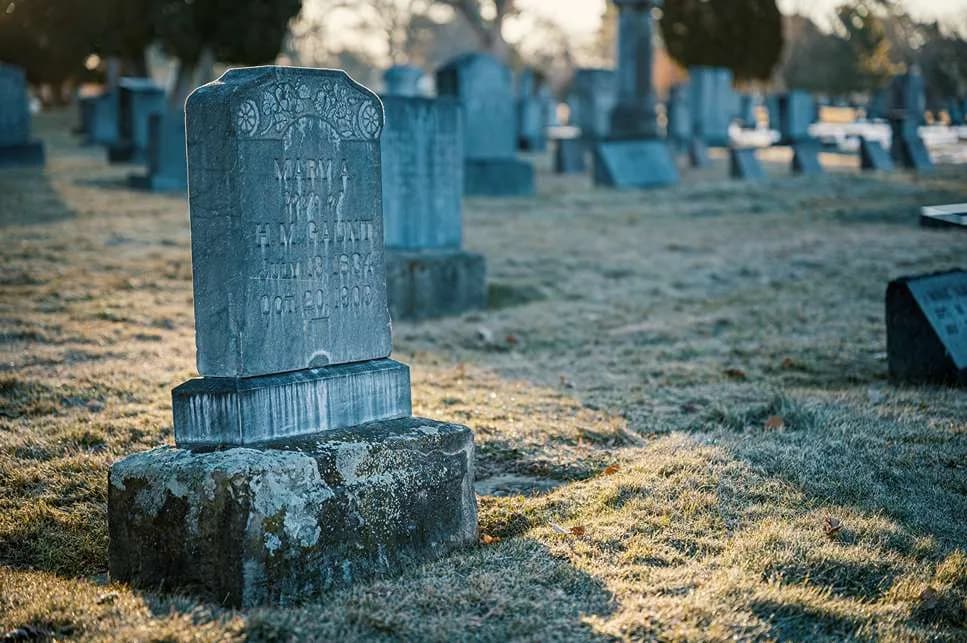
The next guideline is to place a headstone on the grave. This is a common practice, and you will see it at many graves, including in Bekasi cemeteries and Bogor cemeteries. The Hanafi school strongly recommends having a headstone on the grave as a marker for it.
If we look to our role model, the Messenger of Allah S.A.W, he once placed a marker on the grave of his companion Utsman bin Affan, using a wooden marker. This has been narrated in a hadith by Ibn Majah.
4. Raising the Grave to a Modest Height
You may also raise the grave. Besides the headstone, raising the grave helps ensure that it can be recognized and does not get lost. That way, visitors who wish to pray for the deceased can easily identify the grave.
However, when raising the grave, keep it reasonable: about one hand span (jengkal) above the ground, and no higher than that. This follows the opinion of the Shafi'i school, as stated in the book Syarh Shahih Muslim, vol. VII, page 35.
Now That You Understand the Ruling on Building a Grave Structure?
That concludes this discussion of the ruling on building a grave structure (kijing) in Islamic teaching. Honoring those who have passed away is indeed an obligation. However, we must not step outside the rules of Islam. Building a kijing is permissible only in certain circumstances.
If you want the family grave to look beautiful and be easy to recognize without a grave structure, you can use the services of a funeral event organizer from Kamboja. The service provider can help manage the family's burial so you are not burdened, and Kamboja also offers funeral protection for you.

dev_kamboja
The Kamboja team writes guides on bereavement, funeral arrangements and funeral planning to help families in Indonesia.