8 Fascinating Facts About Chinese Graves Many People Don't Know!
- dev_kamboja
- (updated )
- 6 min read
Every culture has its own funeral traditions. One that is quite unique and not widely known is the Chinese grave. Although the Chinese community has blended into society and is easy to find among people.
However, the fascinating facts about their funeral culture remain unknown to many people. Curious about the facts? Here are 8 interesting facts about Chinese grave traditions that you may want to know!
8 Fascinating Facts About Chinese Graves
From size and shape to location and position, the grave carries special meaning. This meaning can even affect the living descendants. For this reason, the culture has been preserved from generation to generation until today. Here are other unique facts worth knowing:
1. Large Size
The first fact is that the size is relatively larger than a typical grave. If you are used to graves measuring 2x1 square meters, this does not apply to Chinese graves.
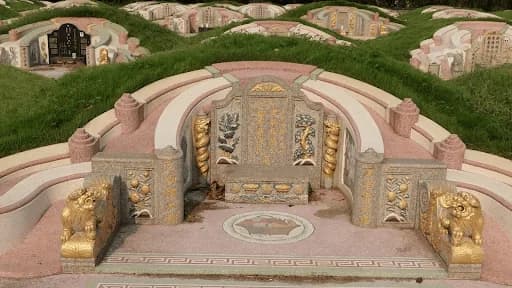
Chinese graves have several components. It is not uncommon for one grave to be shared by two people, a husband and wife. Because of this, these graves are large. Of course, this will also affect the cost of funeral services.
This is not only due to the components and the number of people buried. Social status also affects the size of the grave. The higher the social status, for example a public official, the larger the grave will be.
2. Type of Gravestone
The second fact is the type of gravestone marking the head of the grave. The material of the gravestone and what is written on it carry their own meaning. The gravestone of a person with low social and financial status is made of wood. Meanwhile, the gravestone of a person with high social and financial status is made of stone with magnificent carvings.
Another distinctive feature of Chinese gravestones is the carving of names. The name of the deceased is carved in gold. The names of the living family members are carved in red.
3. Grave Components
As mentioned earlier, Chinese graves have eight components. The first is the Mu Gui, or Tortoise Carapace. This is the mound of earth where the coffin is placed.
The second is the Mu An Qian Kao, a wall structure surrounding the grave itself. The third is the Mu Cheng, a boundary wall on the outer side of the Mu An Qian Kao. This wall symbolizes the separation of the world of spirits from the world of humans.
Next is the Mu Bei, the gravestone bearing the identity inscription of the grave. Following that is the altar, a place for prayer and offerings.
Then there is the Mu Shou, a wall surrounding the front part of the Chinese grave. This wall represents the descendants of the grave owner. There is also an altar for the Earth God, while the final component is the place for burning prayer paper on the right and left sides.
4. Buried With Belongings
The Chinese believe in an afterlife that resembles life before death. Therefore, it is important for the Chinese to choose the best clothing and include the deceased's favorite belongings in the grave.
Examples include jewelry, favorite clothes, and items related to the deceased's hobbies. These items will serve as provisions for the journey into the afterlife. For this reason, families may sometimes consider grave protection services to ensure the safety of these belongings.
5. Feng Shui of the Grave Position
The position of Chinese graves is also not chosen randomly. Chinese culture believes in feng shui for the well-being of the grave and the descendants for up to three generations. At least five considerations are important for families when choosing the location and position.
The first is the dragon, or the hill located behind the grave. This is why Chinese cemeteries are usually located in hilly areas.
The second is sand. A sand hill on the left side symbolizes the green tiger, while the right side symbolizes the white tiger. Both carry deep meaning in Chinese culture.
The third is water, which symbolizes life and wealth. This refers to the plants or vegetation around the grave. The fourth is the cave, meaning the grave soil should absorb the dragon's energy so that the previous three elements can be meaningful.
The last is the direction of the gravestone in the Chinese grave. The chosen direction must also absorb the dragon's energy so that good fortune and wealth may come to the descendants.
6. Condition of the Grave
Another interesting fact is that the condition of a Chinese grave affects the descendants of the grave owner. For example, cracks may appear in certain parts of the grave structure. Cracks or damage in specific areas are believed to carry meaning.
For instance, a crack in the gravestone symbolizes the head. This means the descendants who act as the head of the family may be facing problems. Meanwhile, a crack in the side structure symbolizes obstacles for other family members.
These obstacles may involve physical weakness, financial difficulties, or other problems. For this reason, the Chinese usually pay special attention to grave maintenance.
7. Visiting Tradition
Chinese cemeteries are actually rarely visited before the Lunar New Year celebration, even though it is a special day in Chinese culture. This happens because they have a separate time for visiting cemeteries, namely during Qingming (Ceng Beng).
During Qingming, Chinese people visit the graves of their ancestors to pray, tidy the graves, and bring offerings. Offerings may include food.
Today, the Chinese do not need to bring special food for offerings. Ordinary everyday food is also acceptable. The Qingming tradition also carries the meaning of tracing one's roots. The goal is for younger generations to learn about their origins and ancestors.
8. Not Everyone Is Buried
The final unique fact about Chinese graves is that not everyone is buried. Although burial is considered the better choice, cremation is also widely chosen by the Chinese. Besides family decisions, cremation is sometimes the wish of the deceased.
After cremation, the ashes may be temporarily kept in a columbarium. The Chinese also believe that the position of the urn holding the ashes carries special meaning and fortune. Therefore, choosing the columbarium is also important.
Even though columbaria are available, families should ideally scatter the ashes soon. Keeping the ashes in a columbarium for too long is believed to make the spirit feel confined.
What Other Unique Facts About Chinese Graves Do You Know?
Those are the 8 unique facts about Chinese graves. This funeral tradition remains a firm foundation of identity with deep meaning for the Chinese community today. Especially since Chinese graves can influence the lives of descendants up to the third generation. Quite unique, isn't it?
Kamboja is always by your side and your family in providing funeral protection and emotional support for you.

dev_kamboja
The Kamboja team writes guides on bereavement, funeral arrangements and funeral planning to help families in Indonesia.