As the population grows, the available land for burial becomes increasingly scarce. Because of this, burials are no longer free and must be arranged carefully. You should pay close attention to the steps for arranging a burial, especially if you live in a city.
Vacant land in big cities is very expensive because it is so limited, due to the rapid rise in population, both among city residents and migrants. To avoid making mistakes when arranging a burial and falling into the hands of unscrupulous brokers, here is information you can follow.
The Correct Steps to Arrange a Burial
Arranging a burial, especially in large cities, is not as simple as in a village. You need to understand the procedures and requirements so that the process is easier and you are not taken advantage of by irresponsible individuals.
In addition, you also need to understand the rules set by the government regarding burial land, since it is leased. This may feel like a taboo subject if you live in villages, especially in remote areas.
Land prices in villages are still cheap and the population is not as dense as in big cities. Therefore, the information below may be very useful for you if you have recently moved to a city and have a family member or relative who has passed away. Here are the steps you can follow.
A. Preparing Documents
The first thing to do when arranging a burial is to obtain a Burial Land Use Permit (IPTM). To apply for the IPTM at the sub-district office (kelurahan), you must bring the required documents, such as:
- Family Card (KK) and ID card (KTP) of the heirs / original family, along with photocopies
- Family Card (KK) and ID card (KTP) of the deceased, original and photocopies
- Family Card (KK) and ID card (KTP) of witnesses or close relatives, original and photocopies
- Original Death Certificate from the hospital, and a photocopy
- Introduction letter from the RT / RW (neighborhood and community unit heads)
B. Arranging the Burial at the Sub-district Office
Once the above documents are ready, you should go to the sub-district office to arrange the burial permit. Request a death introduction letter by showing the documents that are required.
C. Visiting the TPU
After obtaining the introduction letter and death certificate from the sub-district office, you should then choose a grave plot by visiting the TPU (public cemetery).
The next step is to arrange the Regional Levy Determination Letter. However, first request an introduction letter.
D. Processing the Burial at the PTSP
To process the IPTM, go to the counter of the One-Stop Integrated Service (PTSP). If this place is not located near where you live, ask the sub-district officials.
When you visit the PTSP counter, you will be directed to pay the levy at the bank according to the instructions. After completing the payment, hand in the validation number you received back to the PTSP counter.
E. Returning to the Sub-district Office
After paying the levy and returning to the PTSP counter, the next step is to return to the sub-district office. Bring the validation number you obtained earlier to receive the IPTM.
F. Free Burial
Once the IPTM has been processed, the next step is to bury the body in the grave in the block that was determined earlier. There is no additional charge for the burial itself.
You may use several burial facilities that are available, such as chairs, tents, a sound system, and so on. Some TPUs even offer grave-digging services at no cost.
IPTM Extension and Levy Costs
The IPTM is not valid forever; it only lasts three years from the date of burial. Once its validity has expired, it must be extended by reapplying at the sub-district office and the TPU.
You can visit the sub-district and TPU officials to arrange the IPTM extension.
-
-
-
Online IPTM
-
-
Applying for a new IPTM or extending one can now be done online in several regions, one of them being DKI Jakarta. By arranging it online, you will not have to go back and forth to obtain a validation number.
You can access information about graves, blocks, units, and locations that are still available through this online facility. This is intended to prevent illegal levies and grave bookings that do not follow the proper procedures.
For this reason, the local government will update its database regularly. Registration and verification can be done online by providing only the deceased's KTP with a DKI Jakarta domicile.
Those who are not domiciled in Jakarta can also bury a body in Jakarta, provided they replace the KTP with a Death Certificate from a hospital outside DKI Jakarta.
-
-
-
Grave Levy Costs
-
-
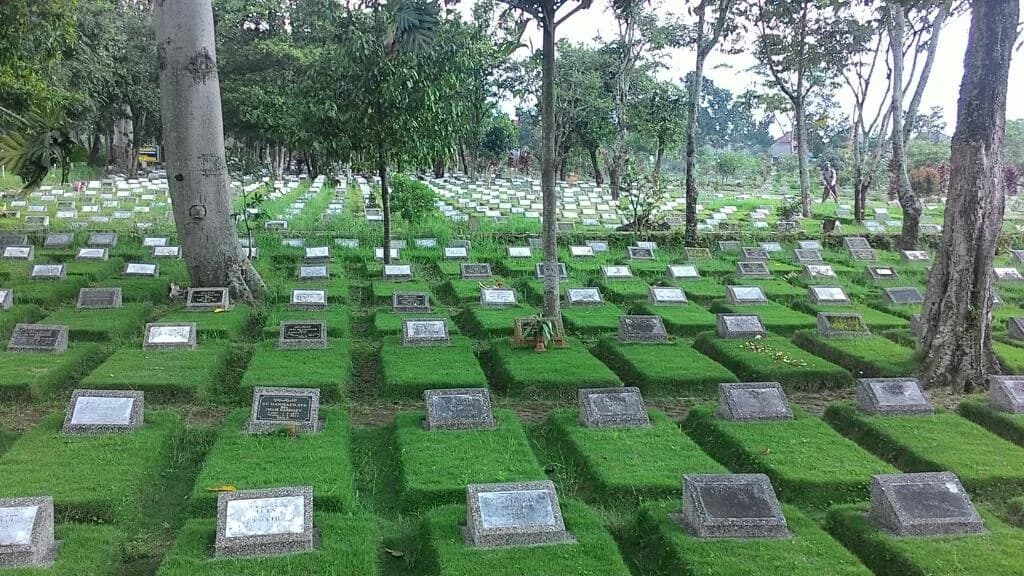
Every person buried in a public cemetery will be charged a retribution fee valid for a period of 3 months. The amount depends on the type of block chosen, as follows:
-
-
- Block AIII: IDR 0.00, i.e. free of charge
- Block AII: IDR 40,000.00
- Block AI: IDR 60,000.00
- Block AAII: IDR 80,000.00
- Block AAI: IDR 100,000.00
-
Grave Rental Fee
-
The next step in arranging a burial is paying the grave rental fee. Because vacant land in Jakarta is very limited, a rental fee applies to every person buried there.
The rental fee is 25% of the retribution fee for the type described above. The rules for extending the lease of a grave plot are as follows.
-
-
- An extension beyond the first 3 years will be charged 50% of the retribution fee for the chosen grave block.
- An extension beyond the first 3 years may also be charged 100% of the retribution fee for the chosen grave block.
- An application to extend the grave lease must be made no later than 3 years after the lease began, and the plot may be used for a reburial.
-
Private Cemetery Fees
-
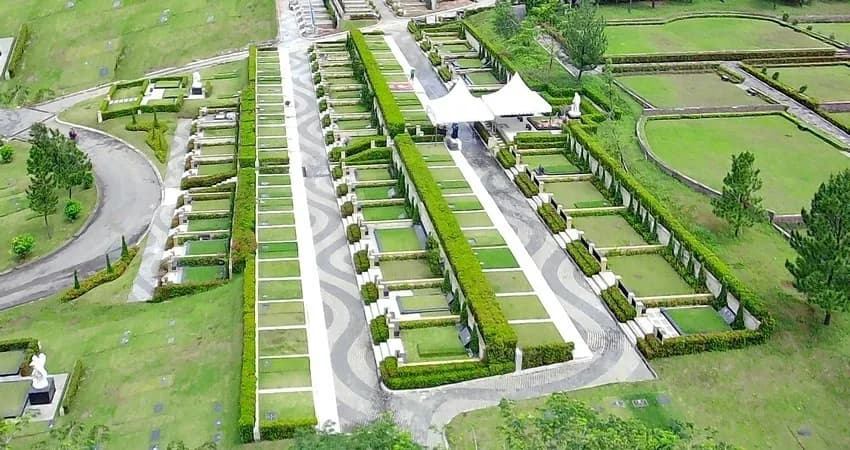
Besides public cemeteries, there are also private cemeteries, which are run by individuals or private companies. Some of the best-known examples of private cemeteries are San Diego Hills Private Cemetery and Al Azhar Memorial Garden Private Cemetery.
Private cemetery fees naturally differ from public cemeteries, because the vacant land used for graves is owned by a private party and is not bound by local government price regulations. Private cemeteries usually provide other facilities besides the burial plot itself.
As the name suggests, private cemeteries typically have a garden-like concept and also offer 24-hour maintenance and security. With this in mind, it is already clear that burial costs at private cemeteries are certainly higher than at public cemeteries. Here are some examples of fees at private cemeteries:
-
-
- A single burial at San Diego Hills can cost up to IDR 115,412,000.00.
- A 1-plot area with 18 slots at San Diego Hills can cost up to IDR 8,257,000,000.00.
- A single-type burial at Al Azhar Memorial Garden can cost up to IDR 21,903,750.00.
- A family-type burial at Al Azhar Memorial Garden can cost up to IDR 199,224,500.00.
-
The information on arranging a burial above will be very useful if your area has burial rules like those described. In some places such rules may not be very important or may not exist at all, especially in rural areas.
Kamboja is always by your side in providing burial arrangement services at private cemeteries and public cemeteries, as well as professional burial protection for your loved ones, helping to provide emotional support.

dev_kamboja
The Kamboja team writes guides on bereavement, funeral arrangements and funeral planning to help families in Indonesia.