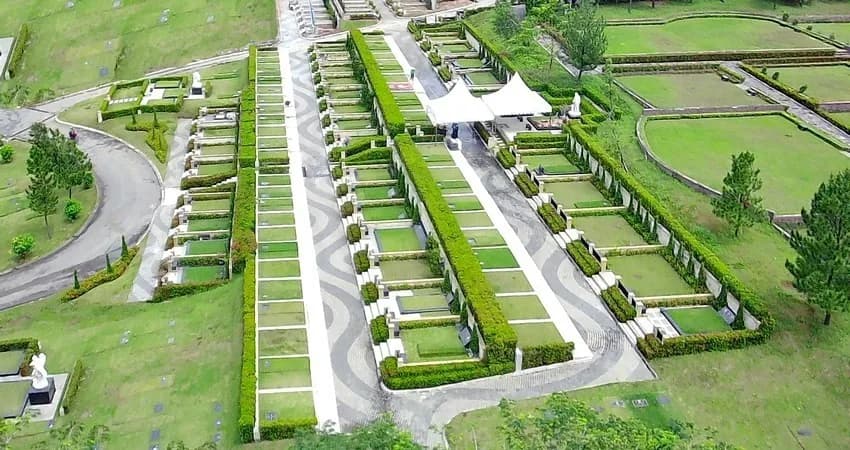
Public cemeteries (TPU) are becoming increasingly limited in big cities as the available burial land keeps shrinking. Many people even resort to dishonest practices, reserving plots and creating fake graves in preparation for their own burial.
Some people are willing to pay millions of rupiah to secure burial land that suits their wishes. This service is usually offered by those who handle burials. However, this booking practice is actually prohibited by government regulations. Read the full information here!
Rules on Fake Graves
Cases of fake graves occur frequently in big cities with limited available land. One example is burial areas in Jakarta. The procedures for permits to use burial land are clearly set out in local government regulations.
DKI Jakarta Provincial Regulation No. 3 of 2007 on Burials states that burial plots are only intended for the deceased. It also prohibits reserving them for orders or stockpiling for people who have not yet passed away.
Government Regulation No. 9 of 1987 also states that a TPU is an area of land provided for burying the deceased for everyone, regardless of religion or group. Its management is carried out by the Level II regional government or the village government.
Penalties for Creating Fake Graves
The capital city government also explains that there are firm penalties for people who create fake burials. These rules are set out in DKI Jakarta Regional Regulation No. 3 of 2007, Article 37.
The article states that the penalty is up to 3 months in prison and a maximum fine of IDR 50,000,000.00 for those who create fake burials. In addition, if the person involved is a civil servant (PNS), the penalty includes removal from their position.
How to Tell Fake Graves from Real Ones
There are several signs that distinguish fraudulent graves from genuine ones, such as twin graves with the same identity, or graves labeled as infants but sized for adults. Here are some other ways you can tell real and fake graves apart:
1. Soil Density of the Grave
If a long iron rod is pushed into the grave and goes all the way to the bottom of the soil, the grave is real and there is a burial pit inside. However, if it cannot go all the way down, the grave can be considered fake. Fake grave soil also feels harder and is difficult for iron to penetrate.
2. Condition of the Grass on the Grave
The grass on many fake graves generally looks neglected, because it is very long and uneven in height. In contrast, the grass on real graves looks neat across the soil.
3. Information on the Headstone
The information on the headstone of a real grave is usually written in full, including the name, date of birth, and date of death. Fake graves usually only state a name, written with an ordinary marker.
4. Administrative Tracing
The final step to tell fake and real burials apart is administrative tracing. You can check the burial land use permit (IPTM) with the local government. Then, contact the heirs or family of the person named on the grave to confirm the legitimacy of the burial land.
Requirements for Obtaining a Burial Land Use Permit (IPTM)
Creating fake graves is a very harmful act. Therefore, as a responsible citizen, there are several requirements and documents you must prepare to legally apply for a burial land permit at the village (kelurahan) office. The documents you need to complete are:
- Family card (KK) and identity card (KTP), originals and photocopies, from the heirs or family.
- KK and KTP, originals and photocopies, of the deceased.
- KK and KTP, originals and photocopies, of the witness or close relative.
- Original and photocopied death certificate issued by the hospital.
- Death referral letter from the RT/RW.
With these requirements in place, you obviously cannot reserve burial land for someone who has not yet passed away, which is also known as a fake burial.
Procedure for Arranging a Burial
The following steps can be taken to arrange a burial at a legal public cemetery (TPU):
- First, you must visit the village office according to the address on your KTP (Identity Card). The purpose is to request a death referral letter by showing the required documents.
- Next, you must go to the public cemetery (TPU) to choose a burial plot and submit the death referral letter from the village office.
- You need to request a referral letter from the village office to process the Regional Levy Determination Letter (SKRD) according to the grave block you are using.
- Then, go to the One-Stop Integrated Service (PTSP) counter to apply for the Burial Land Use Permit (IPTM). You must also pay the levy at a bank according to the rules. After payment, you will receive a validation number that you must hand back to the PTSP counter.
- Next, return to the village office and submit the validation number to receive the IPTM. You may then use facilities such as tents, chairs, sound systems, and grave-digging services free of charge, if they are available at the TPU you have chosen.
- The IPTM you receive is valid for three years from the date of burial. When the validity period ends, you can extend it through village and TPU officers.
In some areas, such as DKI Jakarta, an online system is already in place for processing burial permits. You can even easily access data on available burial plots, including unit, block, and location, through the internet.
Now You Know What a Fake Grave Is?
That concludes our discussion of fake graves and the legal procedures for arranging a burial. To make arranging a burial easier, you can use a comprehensive burial protection service, from handling the deceased to reserving a burial plot through Kamboja.
Kamboja will prepare everything you need, from headstones and coffins to funeral home decoration and all other burial arrangements in full. Kamboja also offers a range of packages that you can adjust to your budget. Let us prepare for the final day together with Kamboja!

dev_kamboja
The Kamboja team writes guides on bereavement, funeral arrangements and funeral planning to help families in Indonesia.