Understanding the Chrysanthemum in Chinese Mourning Traditions
- Kamboja Blog
- (updated )
- 5 min read
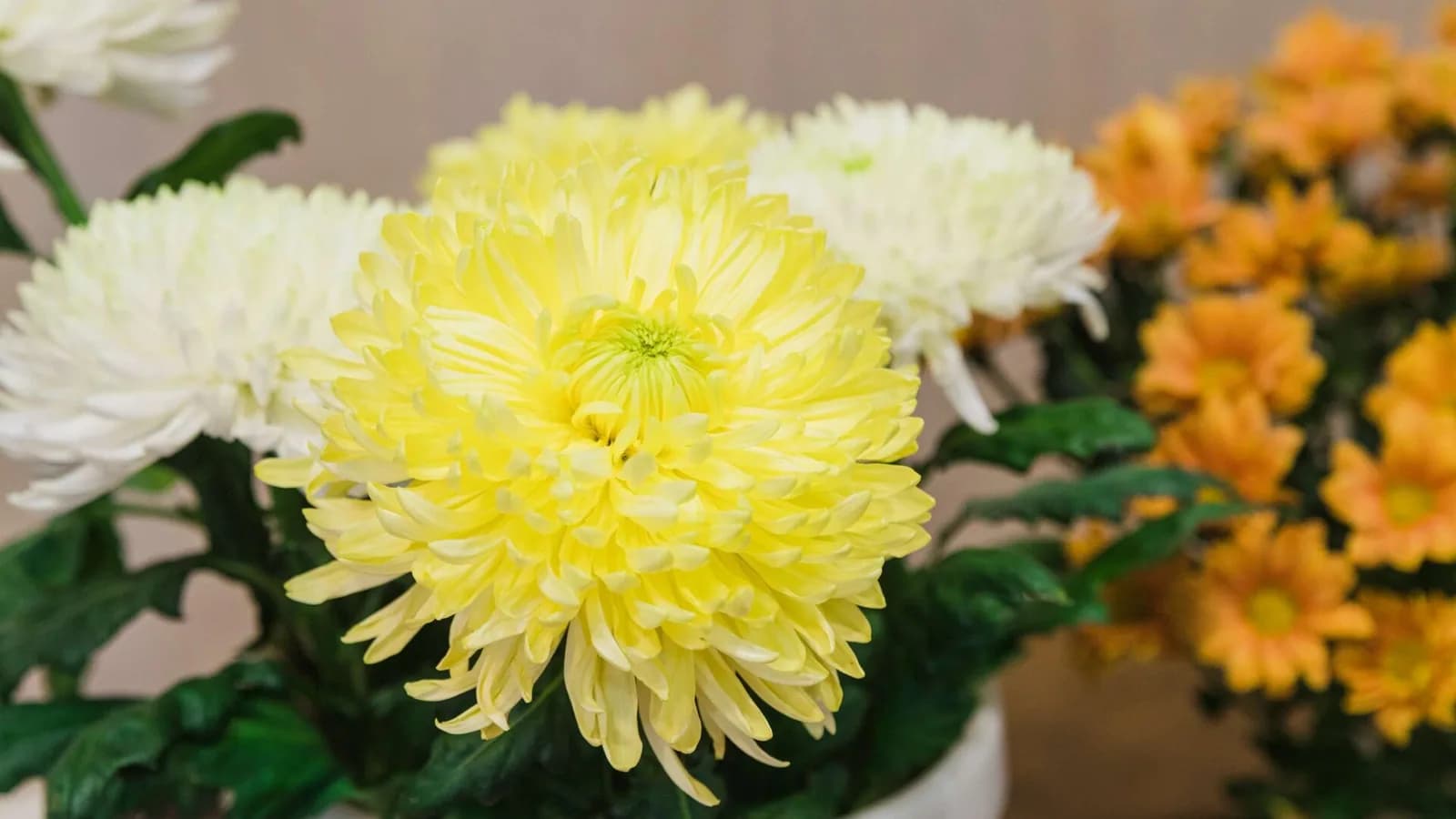
Every flower that blooms beautifully carries deep meaning for a particular ethnic group or culture. The chrysanthemum is no exception, as it is closely tied to Chinese culture. You may find this flower as a houseplant, as decoration, or in flower bouquets.
The chrysanthemum is one of the most popular flowers in the world, including among Chinese people, who also use it as a funeral flower to adorn the home of the bereaved. Read on for a fuller explanation of how chrysanthemums are used in moments of grief.
What Is the Chrysanthemum?
Do you know where the chrysanthemum comes from? This flower is found in East Asia, such as China and Japan. The name chrysanthemum comes from the Greek “chyros” meaning ‘gold’ and “anthemon” meaning ‘flower’.
The name reflects the golden-yellow color of the chrysanthemum, which attracted much attention in earlier times. Furthermore, the flower belongs to the Asteraceae family and is related to the sunflower and dandelion, which are also yellow. The best time to see chrysanthemums in full bloom is during autumn.
Chrysanthemums have been cultivated in China since around the 15th century BCE, more than 2,500 years ago. The flower eventually became one of the noble plants in Chinese culture, alongside the orchid, plum, and bamboo.
In China, the chrysanthemum symbolizes nobility, elegance, and longevity. In Japan, it symbolizes eternity, wisdom, and happiness. Japan even celebrates Chrysanthemum Day, or Chrysanthemum Day , on September 9 each year.
In addition, the chrysanthemum is also associated with funerals and is used in several countries, including China. This is because each color of chrysanthemum carries a different meaning.
White chrysanthemums symbolize grief or condolence, so many people use them in the context of remembrance of death or funerals. Beyond that, giving white chrysanthemums also conveys sympathy and respect for the deceased.
Morphology of the Chrysanthemum
According to a scientific article, the chrysanthemum plant has an upright, soft-structured stem that is green in color.
The chrysanthemum flower has five main forms: single, anemone, pompon, decorative, and large. The leaves of the chrysanthemum plant have serrated or toothed edges and are arranged alternately along the branches or stem.
The chrysanthemum's stamens are about 3–8 mm long and have a fine texture, as do its pistils. The plant also produces fruit that is oblong, small, and enclosed in a fruit membrane.
The chrysanthemum has two types of florets , consisting of ray florets and disc florets. A floret is a small flower that forms the chrysanthemum's compound flower head. The ray florets are found on the outer part, and the disc florets are in the center of the flower.
Types of Chrysanthemum Flowers
Flower with the Latin name Chrysanthemums comes in a wide range of forms and colors. Here are some varieties of chrysanthemum:
1. Reflex Chrysanthemum
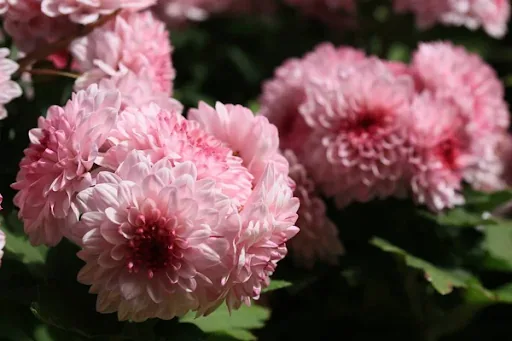
This type has petals that curve downward, overlapping one another so that the flower looks like bird feathers. The flower is medium to large in diameter. Reflex chrysanthemums usually bloom early in the season (September).
2. Decorative Chrysanthemum
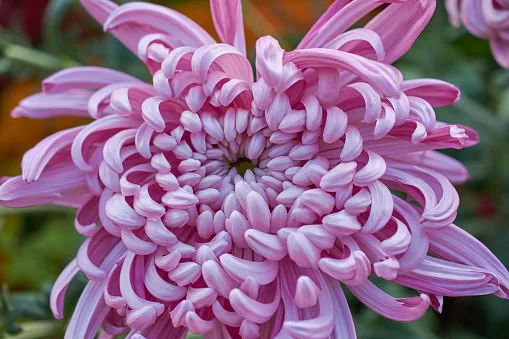
Decorative chrysanthemums are characterized by the upper blooms curving inward. These flowers, which bloom early to mid-season (September–October), are well suited as garden chrysanthemums.
3. Pompon Chrysanthemum
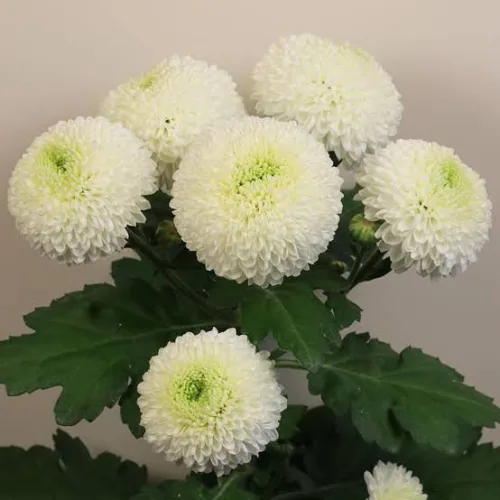
This chrysanthemum blooms in mid-season (October) and has many small, round flowers resembling pompoms. When young, the shape looks somewhat flat, but over time it becomes perfectly round. Pompon chrysanthemums are commonly yellow or white.
4. Spoon Chrysanthemum
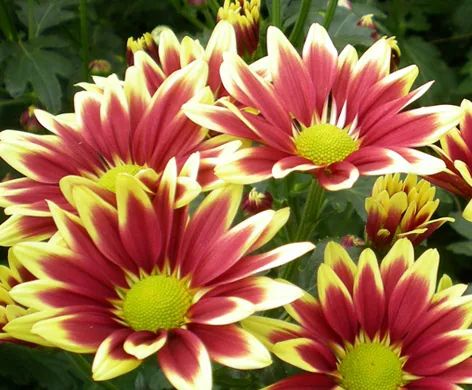
The spoon chrysanthemum or spoon chrysanthemum has petal tips shaped like a spoon. This type blooms in mid-season (October) and produces flowers ranging from small to large. An example of a spoon chrysanthemum is Matchsticks, which has golden-yellow petals with red tips.
5. Spider Chrysanthemum
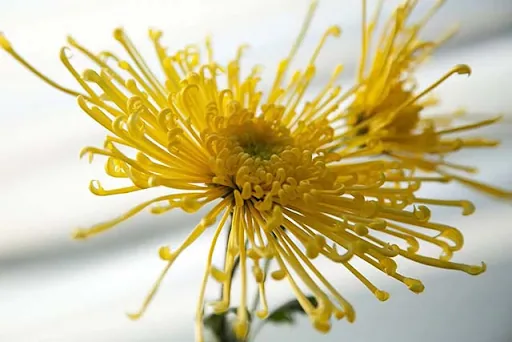
This flower has long, thin petals resembling spider legs, with the tips of the petals curling or hooking. Spider chrysanthemums generally bloom in mid-October and come in beautiful colors, such as white, yellow, and pink.
The Role of Chrysanthemums in Chinese Mourning Traditions
Chinese communities often still observe funerals rich in various traditions. One of them is the presentation of funeral flowers, most commonly white or yellow chrysanthemums. This is closely tied to the meaning of white chrysanthemums, which symbolize sorrow.
However, the color of chrysanthemums used in funerals can vary. For example, for those who lived to 80 years or more, red chrysanthemums are chosen. In addition, family members who attend will also wear mourning flowers in their hair, with the color depending on their relationship to the deceased.
If it is a wife, daughter, or daughter-in-law, the color is white. If it is a grandchild, green is worn; a great-grandchild wears blue, and great-great-grandchildren wear red.
When it comes to chrysanthemums as funeral flowers, please remember not to give them as gifts. It is considered impolite to offer these flowers to others, especially to those who follow the tradition of using chrysanthemums as mourning flowers.
Be careful when giving chrysanthemums as a gift, especially white ones. In Chinese culture, these flowers symbolize mourning in remembrance of the deceased.
Do You Know the Uses of Chrysanthemums in Chinese Customs?
One of the traditions in Chinese funeral ceremonies is the use of chrysanthemums as funeral flowers. This is still often practiced by Chinese communities who hold tightly to their traditions.
When it comes to funerals, every type of procession held during the ceremony is quite complicated. For those who need funeral services to ease all matters related to handling the deceased, you can entrust them to Kamboja.
Besides handling the deceased, Kamboja is also ready to take care of documents, flower arrangements, gravestones/coffins, and refreshments for visitors. With Kamboja, you do not need to feel overwhelmed preparing the mourning procession for your loved one who has passed away.

Kamboja Blog
The Kamboja team writes guides on bereavement, funeral arrangements and funeral planning to help families in Indonesia.