Don't Get It Wrong: Know the Difference Between a Hearse and an Ambulance
- dev_kamboja
- (updated )
- 6 min read
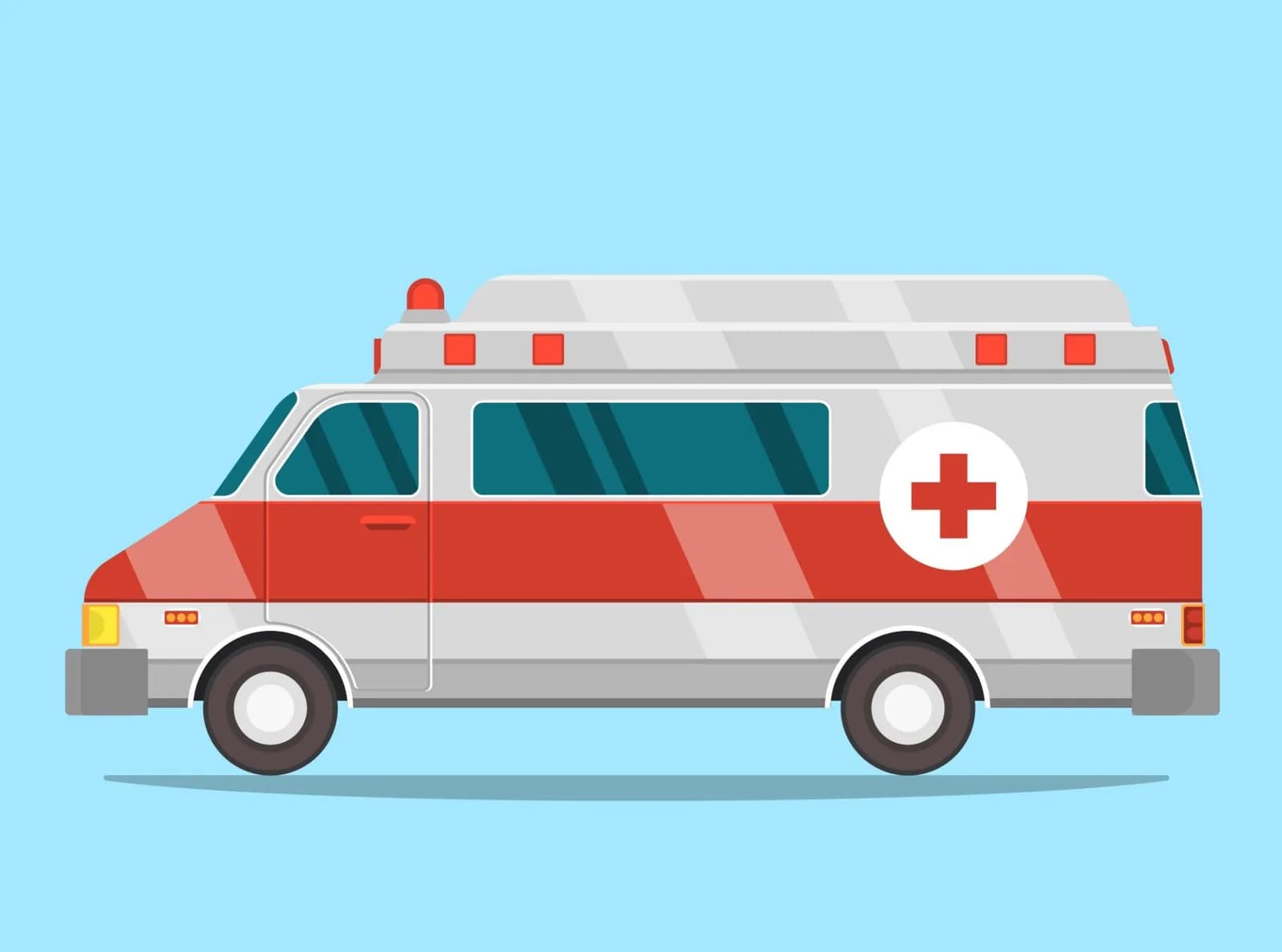
One of the emergency medical vehicles is the ambulance. However, only a few people understand the role of an ambulance and how to use it.
Many hospitals often do not allow families to bring a deceased person to the hospital in an ambulance. It is therefore no surprise that public protests often occur at many hospitals.
In fact, ambulances and hearses serve different purposes. So, what is the difference? To answer that, let's read the full review!
The Basic Differences Between a Hearse and an Ambulance
Here are some of the most fundamental differences between the functions of these two types of vehicles:
1. Vehicle Design and Interior Layout
The main difference lies in the vehicle's design. An ambulance is equipped with medical equipment to support emergency patients, while a hearse only has a coffin and seating for the family.
In addition, there are two types of ambulances used to transport patients: basic ambulances and advanced ambulances.
Basic ambulances are not fully equipped with medical equipment, because their function is to transport patients over short distances in stable condition. Advanced ambulances, on the other hand, are used for long-distance transport in urgent medical conditions.
2. Driving Style and Speed
The difference between an ambulance and a hearse also lies in how the vehicles are driven. The difference is mainly in speed and maneuvering methods, especially when considering the level of urgency of the patient.
Patients with high urgency usually need to be treated as quickly as possible to reach a referral facility. However, patients in more stable condition also need prompt treatment, though at a lower level of priority than emergency patients.
This is very different from driving a hearse carrying a body. From a medical standpoint, the deceased certainly does not need immediate treatment on the way to the destination. Although from a religious standpoint the burial should be carried out promptly, this does not need to be proportional to the speed used when transporting patients, especially in emergencies.
3. Staffing
Usually, a hearse is driven by a single driver. Ambulances, on the other hand, usually have more personnel. Besides the driver, there is usually a driver's assistant or a nurse whose job is to evacuate the patient and care for them on the way to the hospital.
4. Management System
The management systems for ambulances and hearses differ. Private or social organizations are usually the operators of ambulances. On the other hand, some hearses are owned by regional governments or the Park and Cemetery Authority.
The Origins of Tahlil
Having learned the difference between a hearse and an ambulance, it's time to discuss something related to the deceased: tahlil. What are the origins of tahlil? Let's read on!
Historically, the tradition of tahlil carries an element of "Islamization" that was practiced by clerics and religious teachers in the past. Originally, when a family member passed away, on the 1st, 7th, 40th, 100th, and 1000th nights, the family would gather, and there were often people playing dominoes here and there.
Unfortunately, it is said that such practices still exist in some parts of our society. This is where the "friends of God" called them to pray, to read good writings, and to correct wrongdoing by imitating good deeds.
From that point on, the idea was for clerics to produce guides or pocket books containing the readings of Yasin, Tahlil, Tarkin, Prayers, and wirid, which are widely distributed in society today.
From a social perspective, tahlil is part of the social or cultural sphere that binds relationships together, so that good relations are never severed. Within it, people created tahlil as a means of communication.
The Purpose of Tahlil
Tahlil aims to send prayers to the deceased, so that they may receive forgiveness and a better place before the One Almighty God. In the recitations, tahlil is mentioned for one person, but sometimes also for several people who passed away at the same time.
The Benefits of Tahlil
In general, holding tahlilan has many benefits. These include:
1. Strengthening Friendship and Kinship
Reciting tahlil together at the home of the deceased from day 1 to day 7 strengthens bonds between neighbors. Some people ask the deceased's family for forgiveness, so being present and speaking with the family brings comfort to those left behind.
Naturally, grieving families feel supported, and friendships are strengthened here.
2. Reminding Us of Death
Besides visiting the grave, reciting tahlil also reminds us of death. And this makes sense, because reciting tahlil for someone who has passed away at least brings to mind the grave.
Every person who lives will one day die and return. By remembering this, a person will at least choose to repent more often and ask forgiveness from God Almighty.
3. Helps You Read the Quran More Fluently
Most tahlil is based on the Quran. For those who have not yet mastered Quranic tajwid, joining the recitation gets them used to the tajwid that many people read. In this way, a person is trained to read the Quran indirectly.
This is especially true when the deceased's family is Muslim but cannot read the Quran (this is especially common in urban communities). By reciting tahlil together with people who are already fluent, one still earns the same reward.
4. Comforts the Family Left Behind
The presence of the community, neighbors, and even distant family members at the tahlil gathering brings a little comfort to the family left behind by the deceased. In addition, those who attend to express their condolences give emotional strength to the grieving family.
5. Seeks Forgiveness for the Sins of the Deceased
This last benefit is truly remarkable. Usually, tahlil gatherings invite many people, not just close relatives or friends. The more prayers that are offered, God willing, the more forgiveness the deceased will receive.
Do You Know the Difference Between an Ambulance and a Hearse?
Now that you understand the difference between an ambulance and a hearse, you know that a body should not be transported in just any ambulance! On the other hand, if you want on-demand funeral services, you can choose funeral services Kamboja.
Kamboja is Indonesia's first company in the field of protection and bereavement services, headquartered in West Jakarta. One of our services is arranging transport of the deceased throughout Indonesia, from the hospital to the funeral home and on to the burial site.
In addition, Kamboja Funeral Services can help you with all of your funeral needs in a complete and professional way, and you need not doubt the quality of our service, since the average satisfaction rating our clients give us is 4.3/5. This means our service is worth your consideration.
Do not be overwhelmed by the grief that has come upon your family. We promise you will receive the best service.

dev_kamboja
The Kamboja team writes guides on bereavement, funeral arrangements and funeral planning to help families in Indonesia.