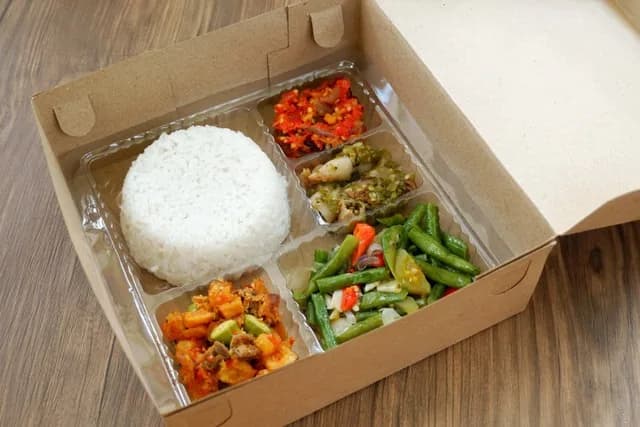
Nasi berkat is a food that is commonly served at many kinds of events. It is often served after a prayer gathering has ended, but some people also share it with guests before the event begins.
Nasi berkat is not simply rice, side dishes, and vegetables. It carries its own philosophy, which will be discussed in full in this article.
Understanding Nasi Berkat
Nasi berkat is a traditional dish that has long been part of Indonesian culture, especially in Java. It is usually served at kenduri, syukuran, or other religious gatherings.
The word “berkat” itself refers to the sustenance or blessing that God provides. The rice is usually packed into portions and shared with the guests who attend, as an expression of gratitude and a form of charity for the blessings God has given.
Generally, this dish consists of yellow or white rice, complete with side dishes and various accompaniments. It is often wrapped in banana leaves, food boxes, or plastic, depending on local tradition and the needs of the event.
Ingredients of Nasi Berkat
The composition of this dish varies depending on the region and type of event. However, the ingredients commonly used are generally as follows.
1. Rice
The rice used may be white or yellow, depending on regional custom and the purpose of the event. Yellow rice is usually served for more special or festive occasions.
2. Side Dishes
- Meat: This may be beef semur or rendang.
- Chicken: Usually fried chicken or chicken opor.
- Egg: Balado egg or pindang egg, which serves as a complement and symbolizes fertility.
3. Accompaniments
- Potato perkedel: Fried patties that are a common accompaniment to nasi berkat.
- Sambal goreng liver or potato: Adds savory and spicy flavor.
- Rempeyek or crackers: Accompaniments that add a crispy sensation.
- Vegetables or urap: Symbolize balance in life.
4. Raw Vegetables and Garnish
- Lalapan: Cucumber, basil leaves, and tomato.
- Garnish: Slices of red chili or celery leaves to beautify the presentation.
How Nasi Berkat Is Served
To make it easier for guests to take home, this dish is usually served in practical containers. Here are some of the ways it is presented:
1. Banana Leaf Wrap
Banana leaves are used to give the rice a fragrant and distinctive aroma. The rice and side dishes are then neatly wrapped in these leaves.
2. Besek or Food Box
At events with a more modern feel, this dish is packed in bamboo besek or cardboard boxes. This packaging tends to be more practical and easier to carry.
3. Plastic or Acrylic Container
Rice packages are generally arranged neatly. The purpose is to keep the rice and side dishes separate so they do not mix before the guests eat them.
When Is Nasi Berkat Given?
Nasi berkat is generally given for the following occasions:
- Circumcision ceremonies (walimatul khitan)
- Weddings (walimatul ursy)
- Tahlilan or kenduri
- Tasyakuran
- Religious study gatherings (pengajian)
- Traditional ceremonies
The Meaning of Nasi Berkat
Nasi berkat carries deep meaning connected to the religious, cultural, and social values that exist in the community. Here is an explanation:
A. An Expression of Gratitude to God
This dish symbolizes gratitude to God for the blessings and sustenance He has given. By sharing it with others, it becomes an act of charity and also a prayer that blessings will keep flowing through life.
B. Strengthening Social Bonds
In the tradition of selamatan or kenduri, nasi berkat is a symbol of strengthened social ties. This tradition brings together family, friends, and neighbors, making it an important moment for maintaining friendship and togetherness.
C. A Symbol of Blessing
The very name “berkat” carries the hope that the food will bring blessings. Both the giver and the receiver of nasi berkat are hoped to receive an abundance of prayers and good wishes.
D. A Representation of Life Philosophy
Each element in nasi berkat, such as the vegetables and side dishes, carries particular philosophical meaning, for example about balance in life and happiness.
Myths Surrounding Nasi Berkat
Society has a number of myths that have developed around nasi berkat, especially the dish served at tahlilan or selamatan gatherings for someone who has passed away. Here are some of them:
1. Bringing Blessings
One widely held myth is that eating this food brings blessings. The dish is considered blessed through the prayers and dhikr recited during the kenduri or tahlilan.
Therefore, eating it is believed to bring good fortune and sustenance. This belief still persists in some circles today.
2. Protection from Misfortune
In some regions, there is a belief that failing to eat the blessed food from a deceased person will bring misfortune or bad luck. Some people even believe the berkat must be finished, as this is considered part of showing respect to the spirit of the departed.
3. Prolonging Life
Another myth holds that eating nasi berkat can prolong one's life. This may stem from the notion that blessed food provides protection against illness or harm, and is therefore believed to grant a long life.
4. Connection with the Spirit
There is also a common belief that blessed food can serve as a means of staying connected with and maintaining a bond with the deceased. Eating the food signals that the departed is being honored.
Some people even believe that this act can bring peace to the family left behind.
5. Maintaining Harmony
Another myth says that eating the blessed food can keep the bereaved family in harmony. If the berkat is not eaten, it is believed the spirit of the departed will feel disrespected, which could then have a negative impact on the lives of the living family.
Now That You Understand Nasi Berkat?
So, nasi berkat is not merely an ordinary dish. It carries deep meaning. Many myths circulate about it, and a considerable number of people still believe in them today. Nevertheless, one thing is certain: providing food is an inseparable part of the process of mourning.
Therefore, for those in need of bereavement services, Kamboja is a trusted and professional choice that can meet these various needs, including providing traditional Indonesian food.
You can order food for guests who visit the house of mourning. In addition, Kamboja also provides funeral services and body preparation services. For more information, please visit Kamboja's official website.

Kamboja Blog
The Kamboja team writes guides on bereavement, funeral arrangements and funeral planning to help families in Indonesia.