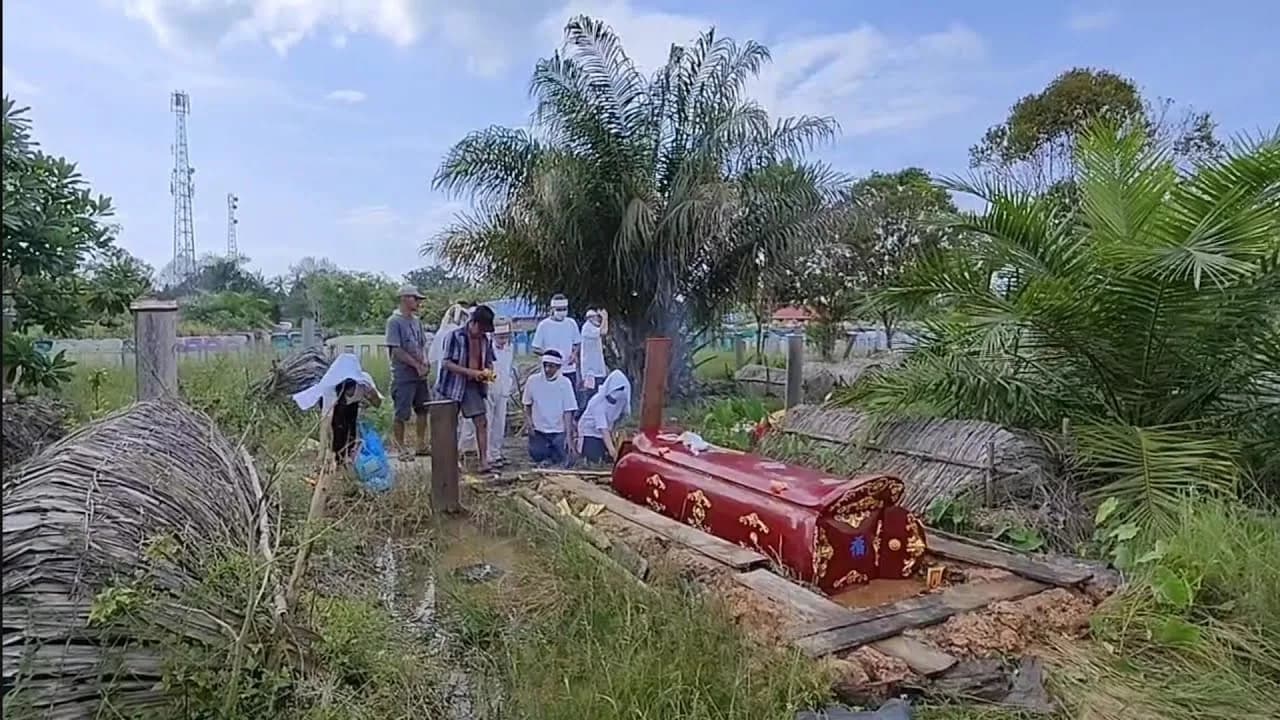
Indonesia is well known for its cultural diversity, which has also given the country many unique funeral traditions. Examples include the Sumba funeral, which involves a lengthy traditional process, and the Asmat traditional ceremony and its reverence for ancestors.
One funeral tradition that draws considerable attention but is rarely discussed is the Bagan Siapi-api burial, which comes from Bagan Siapi-api, Rokan Hilir Regency, Riau Province.
This area, known as one of the main centers of the Chinese community in Sumatra, has a funeral tradition that differs from that of most Indonesian communities.
While bodies are commonly buried underground or cremated, some members of the Chinese community in Bagan Siapi-api instead bury their dead above ground. Let's get to know the Bagan Siapi-api burial tradition through this article!
Understanding the Chinese Funeral Tradition in Bagan Siapi-api
Bagan Siapi-api is one of the old cities with a long history in the development of the Chinese community in Indonesia. For hundreds of years, people of Chinese descent have settled and built their lives in this coastal region.
Over time, many ancestral traditions have been preserved, including funeral practices that can still be found in some Chinese cemeteries today.
At first glance, the cemetery complexes in Bagan Siapi-api look different from ordinary graves. In some locations, coffins are not placed in deep graves but are set on the surface of the ground.
The area is then covered with reeds, grass, or other natural materials until it forms a mound resembling a grave.
Why Are the Dead Buried Above Ground?
Several explanations are often associated with this tradition. One relates to the geography of Bagan Siapi-api, which lies in a coastal area with particular soil characteristics. In the past, digging deep graves was not always easy.
Beyond environmental factors, there is also the influence of Chinese ancestral tradition, which emphasizes the importance of a natural process before the bones are moved to their final resting place.
In this cultural view, the human body returns gradually to nature. For this reason, the body is placed in a coffin and left to undergo a natural process for several years.
The Above-Ground Burial Process
This tradition has a fairly lengthy sequence of stages that differs from common funeral practices.
1. Farewell Ceremony
The first stage begins with a farewell ceremony carried out according to the family's customs and beliefs.
The extended family usually gathers to pay their final respects. Prayers are offered as an expression of devotion to parents and family members who have passed away.
2. Placing the Coffin in the Burial Area
Once all the rites are complete, the coffin is taken to the family burial area. Rather than being placed in a deep grave, it is set on the surface of the ground or in a relatively shallow depression.
The coffin is then covered with soil, reeds, leaves, and various other natural materials. From a distance, it looks like a small hill blending into the surrounding environment.
3. Waiting Period of Three Years
This is the most distinctive part of the Bagan Siapi-api burial tradition. After the burial, the family does not consider the process finished right away. They wait for approximately three years.
During this period, the body undergoes natural decomposition. The family usually continues to visit the grave and maintain it as part of the tradition of honoring ancestors.
4. Exhumation of the Bones
After about three years have passed, the family carries out a process known as bone collection. The grave is reopened and the remains are carefully gathered.
This step is performed with great respect, as it is regarded as an important part of the ancestor's spiritual journey.
5. Bones Placed in an Urn
After being cleaned, the bones are placed in a special urn. The urn is then kept in a location chosen by the family, such as an ancestral hall, a family grave, or another place of remembrance.
For Chinese families who practice this tradition, moving the bones into an urn marks the final stage of a person's physical journey.
Preserving Tradition and Modern Challenges
In the modern era, balancing cultural preservation with practical needs is a challenge in itself. Younger generations often live far from their hometowns, which makes maintaining graves and carrying out traditional rituals more difficult.
In addition, limited burial land in many areas has forced some traditions to adapt. Even so, the core value of this tradition remains intact: honoring parents and ancestors who have gone before us.
Every Region Has Its Own Traditions!
Many families today choose to rely on professional help to make this process easier. Services such as funeral arrangement in Pekanbaru, for example, are increasingly sought after because they help families through an emotional time without burdening them with technical matters.
Kamboja.co.id is a professional funeral service provider that helps families handle all kinds of funeral needs, from burial to cremation.
With the support of an experienced team, families do not need to worry about the technical and logistical aspects and can focus on accompanying their loved ones and paying their final respects. Full information about these services can be found on the Kamboja.co.id Funeral Services page.
For easy questions, you can contact Kamboja.co.id via WhatsApp at +6282211111415.
- #funeral services

Kamboja Blog
The Kamboja team writes guides on bereavement, funeral arrangements and funeral planning to help families in Indonesia.


