You probably know, the Indonesian National Armed Forces known by the abbreviation TNI, has a very high level of discipline. This discipline is naturally applied across many areas, one of which is discipline during meals. Something interesting about this mealtime discipline is that soldiers line up in an orderly way to fetch drinks, with serious expressions and upright posture.
After collecting their water, the soldiers enter the dining area, first paying their respects to their commanding officer. Once each member has their lunch plate, they sit down in an orderly manner. What's most unique is that during the meal, only the hands may move to bring food and drink to the mouth. This means the head should not move much, including turning or lowering it. If a supervisor sees that your head is lowered to pick up food, the soldier will receive a punishment.
Beyond how meals are eaten, discipline also applies strictly to funerals, in this case the funeral process for TNI members. There are strict rules that TNI soldiers must follow, including those who have already retired.
Military funerals
Many of you may assume that military funerals are held for everyone who is a TNI member or who has attained a certain rank in the TNI. In fact, that assumption is incorrect.
Not every person within the TNI, or who is part of the TNI, receives a military funeral. A military funeral ceremony is a final tribute to a soldier who is entitled to receive it. The rules on TNI funerals are of course set out in TNI regulations. A person, or for example you as a soldier, who is declared a hero, who falls on the battlefield, or who dies a natural death but has received an honorary award of the Republic of Indonesia, is entitled to a military funeral.
For example, the late Serka (Ret.) Djaman, who last served at the PK Dislog of Lanud Manuhua, Papua. He received several honors, such as the 8-year Honorary Medal and the 16-year Service Medal. He also received another award, a certificate of recognition for the struggle to liberate West Irian from Dutch colonization. His funeral was therefore entitled to a military funeral ceremony, held within the grounds of Lanud Manuhua itself.
Important
The same applies when a retired Kodim member, in this case the Kodim (Military District Command) 0403/OKU, Peltu (Ret.) Tumpa Sitompul, passes away. This time Kodim 0403/OKU will carry out its garrison function by holding a military funeral ceremony for the retired Army member in question.
The decision to hold a military funeral applies to all TNI units, whether Army (AD), Air Force (AU), or Navy (AL). The military funeral process follows the military ceremonial protocol that applies within the relevant TNI units.
There will certainly be several TNI members within that unit involved in the funeral, from those acting as pallbearers and the ceremony inspector to others. Throughout the funeral, all members wear official uniforms appropriate to their respective units.
Procedures for a military funeral
Military funeral procedures naturally differ from general funeral procedures, as the deceased may be laid to rest at the Indonesian Heroes' CemeteryThere will be a formal parade as part of the TNI funeral process. Broadly speaking, the funeral procedures carried out by the Navy, Air Force and Army are generally the same, with the differences lying in the protocols and the TNI officials serving in each region. Below is an example of a military funeral held in the Air Force region in Papua, namely Lanud Manuhua, and at Kodim 0403/OKU in Kalimantan:
1. Wake ceremony at the deceased's residence
Before a TNI member is buried, the first step is a wake ceremony, held at the deceased's own residence.
For example, the late Serka (Ret.) Djaman, an Air Force member entitled to a military funeral. The ceremony inspector this time was Lt. Col. Tek Dedem Ahmad Dimyati A.Md. In this role, the ceremony inspector receives the body on behalf of the nation and the people from the family, for military burial.
Likewise, for the retired Kodim 0403/OKU member Peltu (Ret.) Tumpak Sitompul, who died of illness at the family home. As before, a wake ceremony and the departure of the body from the family home to the burial site will also be held, this time at a public cemetery (TPU).
2. Departure for the burial site
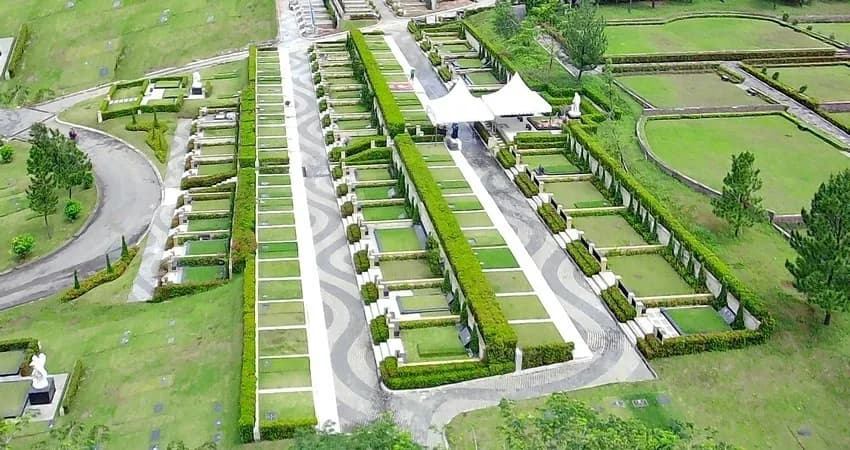
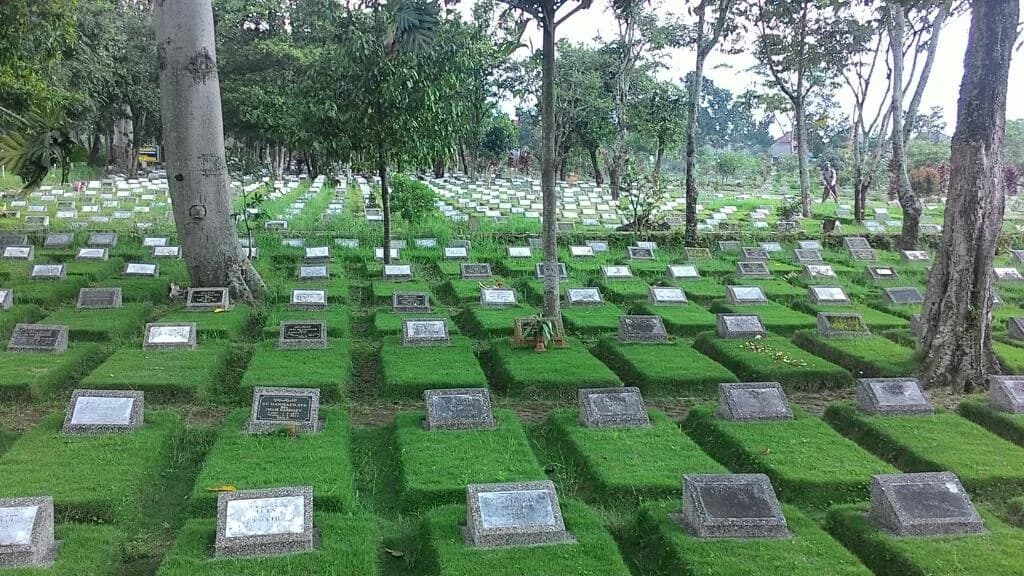
Once the wake ceremony at the deceased's residence is complete, the handover between the family and the TNI is also finished. The TNI member's body is then taken to its final resting place, either a public cemetery or the Heroes' Cemetery in that city.
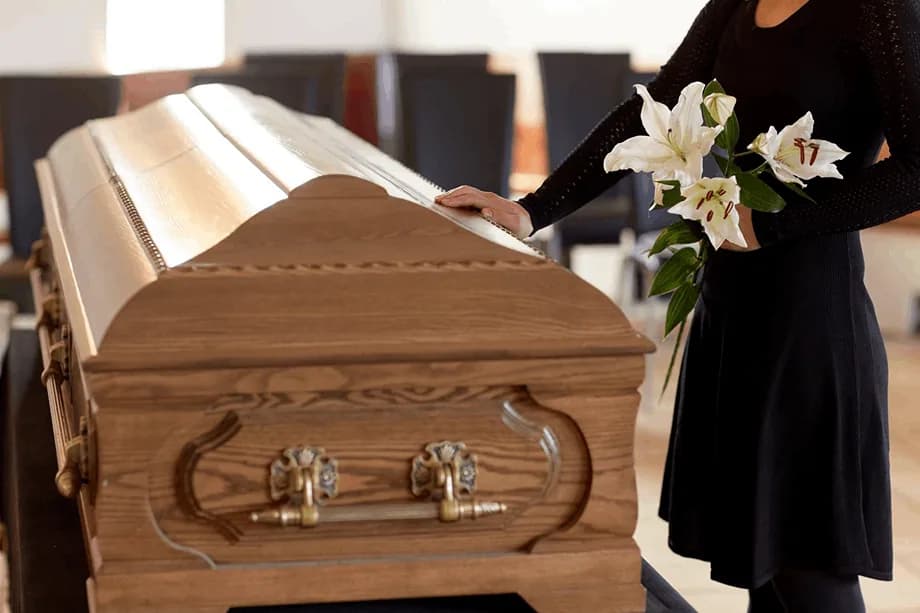
This time the body will be carried by several TNI members in full uniform of their respective units. The body will be placed in a coffin, covered with the Indonesian flag, laid directly on top of the coffin. All of this follows the existing protocols and rules for transporting a body.
3. Military funeral ceremony
After arriving at the cemetery, the core of the TNI funeral process begins.
- The funeral ceremony is held again, led by a ceremony inspector. Usually the ceremony inspector differs from the earlier one, typically handed to a TNI member of higher rank or position.
For example, at the funeral of the late Serka (Ret.) Djaman, an Air Force member, the ceremony was led directly by the Head of Dislog Lanud Manuhua, Lt. Col. Tek Badra, S.E., M.Si.
For the funeral of the retired Kodim 0403/OKU member Peltu (Ret.) Tumpak Sitompul, the ceremony inspector this time was the Danramil 403-03/Martapura, Capt. Inf. Mukhyar, representing the Dandim 0403/OKU. - Next, the inspector reads the address, whether from the family or from the wider TNI family, on behalf of the nation and the people of Indonesia.
From the explanation above, it can be concluded that not every TNI member is entitled to a TNI funeral. Only TNI members who are declared heroes, who hold honorary awards, or who fall in battle are entitled to receive this final tribute, a military funeral ceremony.
Kamboja always stands by you in providing emotional support. Kamboja provides planning with funeral protection services as well as services on-demand service burial when that day arrives.

dev_kamboja
The Kamboja team writes guides on bereavement, funeral arrangements and funeral planning to help families in Indonesia.