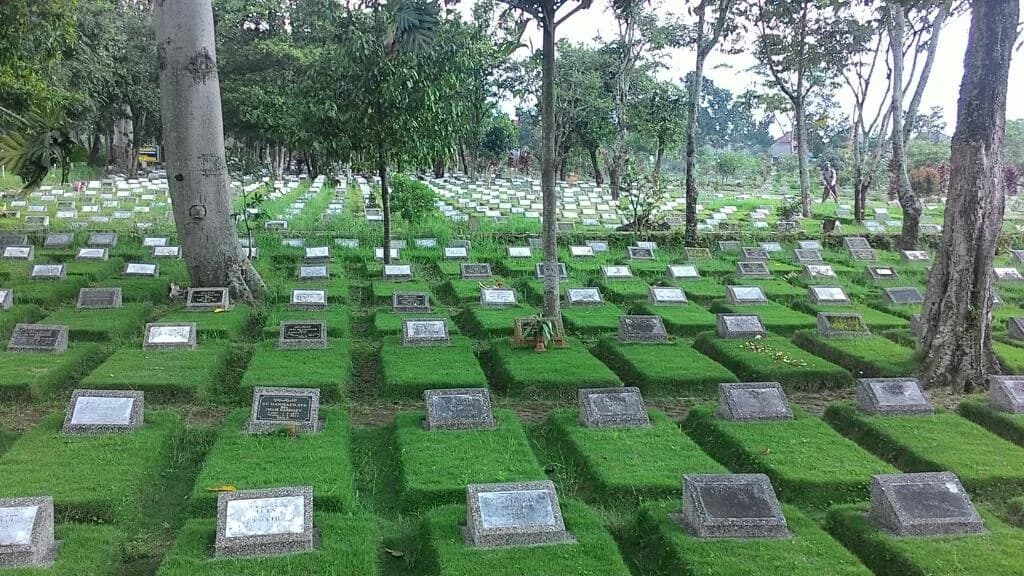
Across most religions, burying a person who has passed away is considered the best way to honor their departure, especially in Indonesia, where the majority of people follow this practice. The government itself also regulates the size and shape of graves that apply in Indonesia.
Basically, measuring graves is intended to support funeral needs, or more precisely, to adjust the size of the burial pit to the body.
Why Are There Grave Size Regulations?
There are several purposes behind grave size regulations, including:
A. Making the Burial Process Easier
When someone passes away, grave workers, more specifically gravediggers, adjust the size of the burial pit to the body. The hope is that by the time the preparations are complete, the digging of the grave is also finished.
Measuring the burial pit and matching it to the height of the body reduces the risk that the body will not fit in the grave. Measuring beforehand therefore avoids doing the work twice and speeds up the burial process.
B. Making the Most of Natural Resources
Besides making burial easier, these measurements also play an important role in controlling the use of a natural resource, namely land. This also applies to bodies buried in TPU (public cemeteries).
Through measurement, village governments can at least control how land is used for burials, based on certain standards such as spatial and urban planning, culture, religion, and several other provisions.
Grave Sizes Applicable in Indonesia
Between public cemeteries and religious cemeteries there are certainly some differences, including grave size. In Indonesia in particular, which recognizes several religions and beliefs, each has its own rules for grave dimensions.
1. Grave Plot Provisions Under Government Rules
If you live in a village, you may not relate to these government rules, because TPU land there is still fairly spacious. But what about grave sizes in densely populated Jakarta? The grave size rules are certainly applied more strictly there.
The size the government sets for each body to be buried is usually uniform. Its purpose is to make the most of the land and to keep the cemetery layout orderly.
The land used for a burial in a TPU should be no more than 2.5 meters by 1.5 meters, with a minimum depth of 1.5 meters. In practice, however, gravediggers adjust the grave size to the body itself.
It is therefore no surprise that in big cities like Jakarta you will often find graves that differ in size from these rules. In fact, the average land used for burials there is only 1.8 meters by 0.8 meters. So it can be concluded that conditions on the ground do not always match the government rules in force.
2. Grave Size Provisions Under Islam
Islam itself does not set out detailed grave dimensions for burying its followers. From all the traditions that have been traced, it is only recorded that the Prophet Muhammad SAW commanded that graves be leveled.
The Prophet Muhammad SAW also forbade the living from sitting on graves and from any other act that shows disrespect toward them. This prohibition rests on one of the Prophet's hadith, which reads:
"From Abu Hurairah RA, who said that the Messenger of Allah SAW said, 'If one of you sits on a burning ember until it burns through his clothes and skin, that is better for him than sitting on a grave.'"
However, in the book Syarah Fathul Qorib Wacana Ubudiyah Volume I, it is recommended in Islam that the grave pit be dug to the height of an adult standing with a raised hand. That comes to roughly 3.5 to 4.5 dhira', where 1 dhira' equals 46.2 cm, or about 1.62 to 2.1 meters.
3. Grave Size Provisions Under Christianity
As with Islam, Christianity likewise has no specific rules setting grave dimensions. Christian grave sizes usually follow government regulations or the authorities who manage burials.
The difference is that Christians usually use a coffin before the body is placed in the burial pit. The size of the coffin is often a particular concern, because a larger coffin can make it difficult to lower into the grave.
For example, to prevent this from happening, the management of San Diego cemetery (a modern Christian burial area in Karawang, West Java) has set its own rules regarding coffin sizes.
4. Chinese Grave Sizes
Graves of Chinese people can easily be recognized by the shape of the tomb, the headstone, and the distinctive protective structure over the grave (mausoleum) with its unique architectural style. If you look closely, most grave sizes Chinese is also quite large.
This is because the traditional Chinese funeral procession includes placing all of the deceased's favorite belongings in the grave. In fact, the deceased will also wear their finest clothes before being placed in the coffin.
They believe that the soul of a person who has passed away still needs everything they owned in this world (such as money, a house, or a TV) as provisions for the afterlife. That is why the sizes of graves and the architecture of bongpai (large tombs) vary greatly.
But usually, the size of a grave Chinese can be distinguished according to the person's social status while they were alive. So, if you have ever seen a very large Chinese grave, it means that the person's rank and status were once very high.
Do You Now Understand the Rules on Grave Sizes Better?
That concludes the information on grave size regulations, whether according to Islam, Christianity, Chinesecustoms, or government rules. We hope this explanation helps us become more compliant with the rules, especially regarding funeral arrangements. Kamboja provides funeral arrangement services and funeral insurance for your peace of mind and that of your family.

dev_kamboja
The Kamboja team writes guides on bereavement, funeral arrangements and funeral planning to help families in Indonesia.