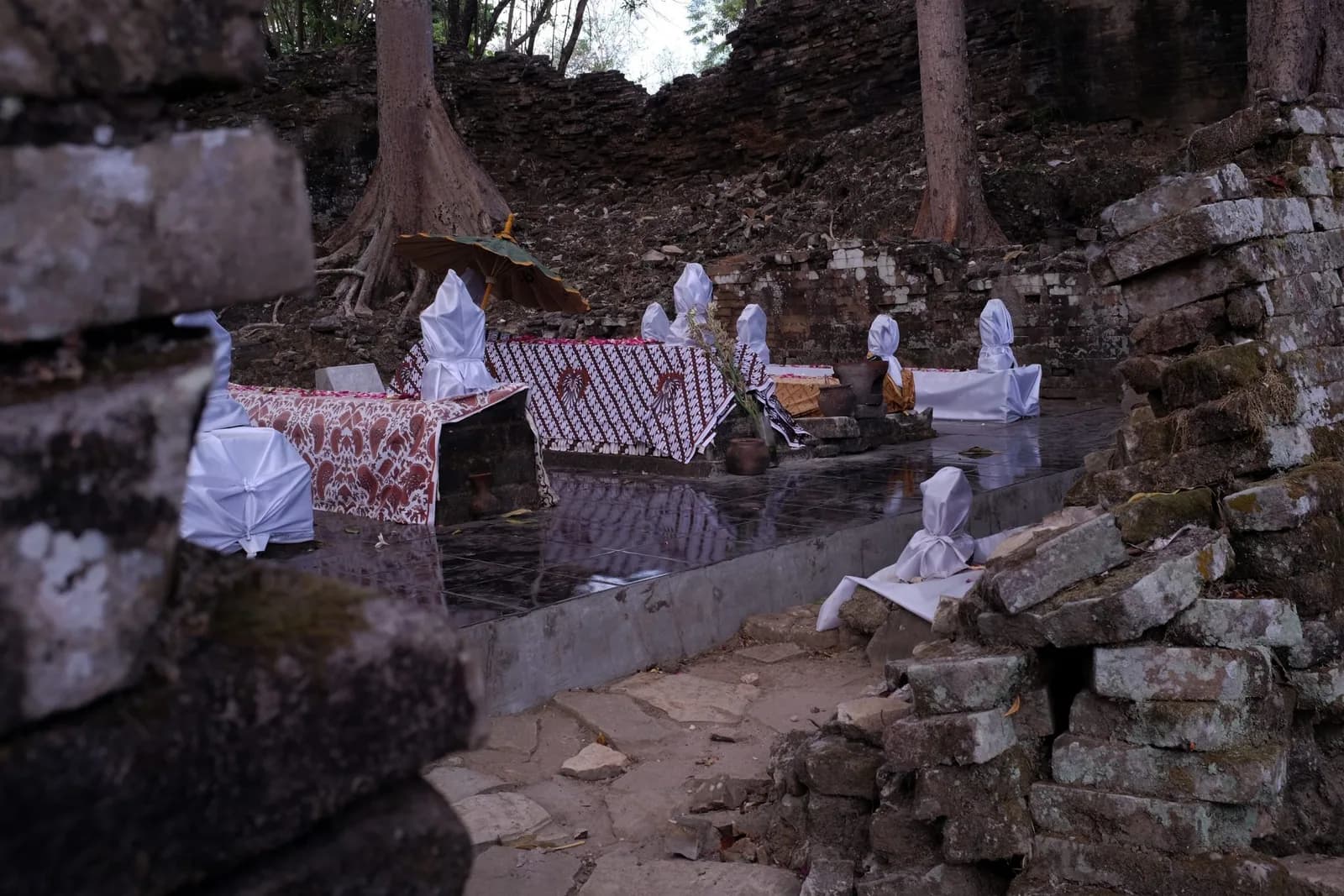
Indonesia is a country rich in customs, culture, ethnic groups, and languages. As the heirs of independence passed down by our predecessors, many traditions and cultural practices are still preserved today, one of which is the culture of funeral ceremonies. Generally, a person's death is simply followed by burial, but in several regions of Indonesia there are funeral ceremonies carried out with great solemnity.
Besides preserving cultural heritage, funeral ceremonies also serve as a final tribute to a person who has passed away, especially if that person made great contributions to the beloved nation or to the local community. Just like the flag ceremony held every Monday, the funeral ritual also has its own procedures and uniqueness. So, which regions of Indonesia have these funeral ceremonies?
1. Rambu Solo' Ceremony from South Toraja
This funeral culture comes from the Toraja region, where when someone passes away, the family left behind is obliged to hold a funeral procession as a sign of final respect. Rambu Solo' itself is formed from the words aluk (belief), rambu (smoke), and solo' (descend/downward). Thus, Rambu Solo' can also be understood as an offering to the dead, carried out when the sun has gone down (after noon).
The Rambu Solo' ceremony is accompanied by the slaughter of livestock, especially buffalo. The number of buffalo slaughtered naturally depends on the social status of the family; the more esteemed the family, the more livestock are slaughtered. Given this, the ceremony certainly requires costs that are considered quite high.
There are also several types of Rambu Solo' funeral ceremonies, depending on social class or Tana'. The types of ceremonies held for the death of children are Didedekan palungan and Disilli'. Ceremonies for the death of slaves are Dibai Tungga' and 'Dibai a'pa', and Tedong tungga' for all classes, provided the costs can be met. Several other types of ceremonies, such as Tedong tallu, Tedong pitu, Tedong kasera, and Rapasan, are exclusive to certain circles.
2. Brobosan Ceremony from East Java
This funeral tradition comes from East Java. As its name suggests, Brobosan means to pass through. The procession involves people passing alternately three times beneath the coffin while it is lifted high. Usually the movement goes from the right side to the left, then forward, and back to the right.
Relatives and neighbors usually help prepare the offerings or sajen. Once the offerings are ready, a representative of the bereaved family gives a speech or speaks to ask forgiveness in case the deceased made any mistakes during their lifetime. After that, the ceremony concludes with prayer and the brobosan procession.
The Javanese believe that this funeral tradition can bring blessings to those left behind. The ceremony is usually held in front of the bereaved family's house, before the body is finally laid to rest at the cemetery.
3. Ngaben Ceremony from Bali
Unlike the funeral traditions above, the Ngaben ceremony involves the cremation of the body. Why is this so? They believe that cremation purifies the soul of the deceased. This ceremony is usually carried out promptly by the bereaved, especially if they come from a higher caste.
Meanwhile, for families from lower castes, the ceremony is held some time after the body has been temporarily buried. This tradition has been passed down through generations among the Hindu community in Bali and is believed to free the soul of the deceased from the wrongdoings committed during their life in this world.
The funeral ceremony consists of several stages, namely bathing the body, the placement of the wooden bull, and the process of cremation. In addition, the procession is enlivened with various cultural rituals and traditional dances.
4. Saur Matua Ceremony from North Sumatra
This type of funeral ceremony comes from North Sumatra. Unlike the others, this tradition is only carried out for a person who passes away in a state of completeness, namely when the deceased's children are married and have their own children. Thus, to this day, if a family member passes away in such a state, this ceremony is required.
Among the Batak Toba people, the Saur Matua ceremony requires thorough preparation, especially in terms of material resources. This is because they must sacrifice a buffalo for slaughter, as a symbol that the deceased has reached completeness. The meat from the slaughter is then distributed, each part of the buffalo's body going to specific parties that have been determined.
5. Trunyan Ceremony from Bali
Like the Ngaben ceremony, the Trunyan funeral culture also comes from Bali. The Trunyan custom is quite different from others: the body of the deceased is neither buried nor cremated. Instead, the body is placed beneath a taru menyan tree and covered with a bamboo sungkup.
Several special items belonging to the deceased are placed around the body, whatever form the items or the favorite belongings may take. Although the body is neither buried nor cremated, the place does not emit a foul smell. This is believed to be because the taru menyan tree eliminates these odors and shades the site.
6. Marapu Ceremony from Sumba
The Marapu funeral culture comes from the Sumba region, and more than half of its population adheres to this belief. The Marapu religion also holds the worship of ancestors. As with customs in other regions, the Marapu ceremony involves the slaughter of livestock such as buffalo and horses.
They believe that the spirits of ancestors take part in the Marapu ceremony, so livestock are offered to them, and the meat is eaten by the bereaved. Their graves are also unique, built from stone arranged in a special pattern.
7. Waruga Ceremony from Minahasa
This funeral tradition comes from the Minahasa people of North Sulawesi. The word Waruga itself derives from "waru," meaning house, and "ruga," meaning body. Another interpretation is that Waruga is a place where the body returns to heaven. The burial is distinctive: the body is placed in a hollow, box-shaped stone and covered with a stone shaped like a triangular pyramid.
8. Mummification Ceremony from the Asmat People of Papua
This mummification funeral tradition is very different from the others, as the body is treated to become a mummy. Interestingly, it is not only in Egypt that mummification occurs; Indonesia also has such funeral practices. However, not every deceased Asmat person is mummified; it applies only to certain individuals, such as tribal chiefs or war leaders.
9. Iki Palek Ceremony from the Dani People of Papua
This funeral ceremony also comes from Papua, specifically from the Dani people. Unlike the others, this ceremony concerns the family members left behind. When a family member passes away, the bereaved must cut off a finger joint as a symbol of grief.
10. Tiwah Ceremony from the Dayak People of Central Kalimantan
The Tiwah ceremony is performed by adherents of the Kaharingan religion among the Dayak people. The process involves exhuming the remains that have been buried and purifying the bones through a special procession or ceremony. The ceremony is also accompanied by the spearing of livestock.
So there you have it, the 10 funeral ceremonies in Indonesia, each with its own uniqueness and characteristics. As good citizens, let us continue to respect and preserve the cultures that exist. Of these various ceremonies, which have you witnessed?
Kamboja serves as a bereavement service management and funeral service insurance provider for families left behind by loved ones, offering peace of mind and emotional support to the family.

dev_kamboja
The Kamboja team writes guides on bereavement, funeral arrangements and funeral planning to help families in Indonesia.


