5 of Indonesia's Most Expensive Funeral Ceremonies, Costing a Great Deal of Money!
- dev_kamboja
- (updated )
- 5 min read
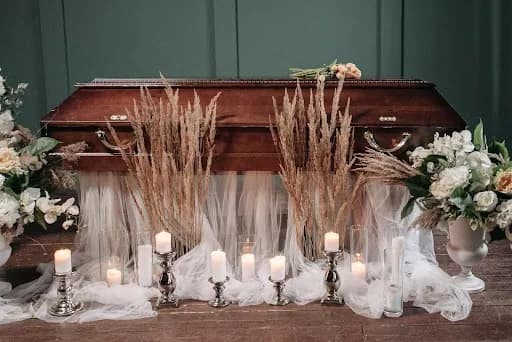
Funeral ceremonies in Indonesia are usually carried out with unique, lavish, and grand customs. The costs involved can even reach hundreds of millions of rupiah. Indonesia is one of the countries that still holds firmly to its beliefs and strongly preserves the customs of its ancestors.
For this reason, these rituals serve as the final process of escorting a person who has passed away to their last resting place. Curious about the most expensive funeral ceremonies in Indonesia? Read on!
Funeral Ceremonies in Indonesia with Extraordinary Costs
Several regions of Indonesia have customs for holding mourning ceremonies specifically to release the spirit of the deceased. Did you know that some funeral ceremonies are extremely lavish and cost a great deal? Here are the 5 most expensive mourning ceremonies in Indonesia:
1. Balinese Custom, Ngaben
The range of mourning ceremonies held on the island of Bali is mostly believed in and practiced by its Hindu residents. You should know that Ngaben is a cremation ceremony intended to send the spirit on to its next life.
Families who wish to hold this mourning ceremony usually adjust it according to the Saka calendar. The grieving family also needs to prepare a considerable amount of money to pay for the making of the coffin. In fact, the cost of Ngaben in Bali can reach tens of millions of rupiah.
Later, the body will be burned inside a statue shaped like a bull. In addition, the family must also prepare offerings and other items required for the Ngaben ceremony.
So, it is not only the body that is burned, but also flowers and various other offerings. It is therefore not surprising that many people hold Ngaben ceremonies together, pooling their funds, which can ease the burden of funeral costs.
2. Tana Toraja, Rambu Solo
The next Indonesian funeral ceremony that costs a huge amount of money is Rambu Solo. You should know that the Toraja people believe that without this Rambu Solo ceremony, the spirit of the deceased will bring sorrow upon their family.
This Toraja mourning ceremony serves as a final tribute and as the escort of the deceased's spirit to the realm of spirits.
This ceremony is the completion of mourning for a person. In the Rambu Solo funeral ceremony, there are many requirements that the family of the deceased must fulfill.
One requirement of funeral ceremonies in Toraja is providing buffalo and pigs as sacrificial animals. For the Toraja people, the buffalo is a sacred animal that can carry the spirit to puya, or paradise.
They call these offering animals tedong bonga, or mud buffalo. As the name suggests, tedong bonga have a patched skin color.
The number of buffalo sacrificed at this mourning ceremony depends on the social rank of the deceased's family. The higher the social rank, the greater the number of sacrifices.
3. Dayak People, Tiwah
The Dayak people are well known for their rich and deeply rooted culture. The Dayak are even famous for the beauty of their women, yet they are also very mysterious.
When it comes to Dayak funeral ceremonies, their culture in this regard is no less astonishing. This ceremony is a blend of the Rambu Solo of Tana Toraja and Mangokal Holi.
Some people commonly call it Tiwah, Tiwah Lale, or Magah Salumpuk Liau Uluh Matei. This ceremony is the greatest sacred ceremony among the Ngaju Dayak in Central Kalimantan.
The Tiwah ceremony is held to escort the body to a special place. Tiwah itself is held when a person who has been buried in the grave has left only their bones. These bones are later moved by the family to a place called Sandung.
To hold a Tiwah mourning ceremony, the family of the deceased must slaughter livestock, such as pigs, buffalo, or cattle, as offerings for a person who passed away long ago. The costs the family must bear are also considerable, given the number of livestock they must slaughter.
4. Sumba Custom, Marapu
You should know that Marapu is a local belief system that venerates ancestors and forebears. Adherents of this belief make up more than half of the population of Sumba Island. Marapu ceremonies always involve the slaughter of sacrificial animals, either buffalo or horses.
Naturally, a Marapu mourning ceremony requires a considerable budget. The Sumba people believe that the spirits of their ancestors also attend the ceremonies they hold.
5. Batak Custom, Mangkoli Holi
One of the last of Indonesia's most expensive funeral ceremonies is the Batak Mangkoli Holi. This ceremony is divided into two sequences: one at the time of death, and one during the Mangkoli Holi itself.
The family of the deceased will hold celebrations for roughly three days. The ceremony is accompanied by the slaughter of livestock. In addition, a sound system is rented to play special songs for the family of the deceased as a final tribute.
Many years later, the family carries out Mangkoli Holi, the relocation of the bones. The remains, now only bones, will be buried again by the family. They will then build a monument or stone tomb, which also costs no small amount.
Usually, when holding this Mangkoli Holi ceremony, a group of clans erects a monument-shaped stone tomb as a marker of their ancestral origins. This ceremony also involves the slaughter of livestock, such as buffalo, to entertain guests.
In addition, the ceremony also requires animals that the family will sacrifice. It is not uncommon for people to use horses as sacrificial animals. However, do not think that animals alone are enough to carry out this ceremony.
The family must also prepare ulos cloth as a symbol of the hope that blessings will always accompany the descendants of the deceased.
Which Funeral Ceremony Have You Witnessed?
These are the series of funeral ceremonies in Indonesia that can cost a great deal. Given the various processes and costs involved, the philosophical value contained in each of these mourning ceremonies is truly immense.
It is therefore no surprise that these cultures and customs must continue to be preserved by Indonesians for future generations so they are not eroded by time. In fact, people around the world often regard these traditions as fascinating tourist attractions, for both domestic and international visitors.
Kamboja is always by your side, providing funeral insurance packages and professional funeral management services for you and your loved ones, offering emotional support and financial planning.

dev_kamboja
The Kamboja team writes guides on bereavement, funeral arrangements and funeral planning to help families in Indonesia.