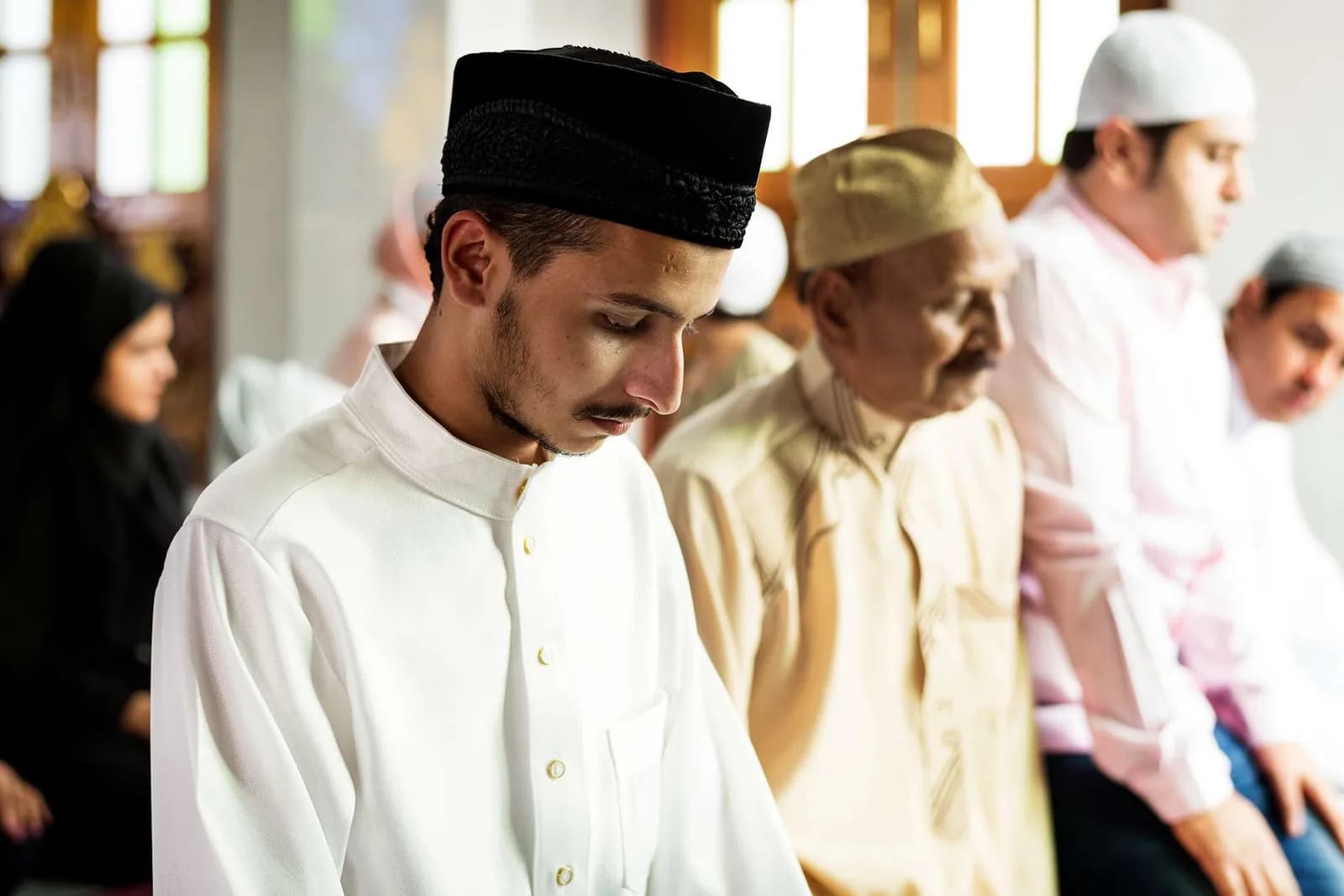
Every religion has its own customs and rules in many matters, whether marriage, prohibitions in daily life, and much more. Religion is beautiful, and each faith teaches positive things to save humankind in the hereafter.
Religion gives people something to hold on to and a sense of faith. In Islam, even after a person has passed away, we are required to perform Fardhu Kifayah. Here we will discuss more deeply what fardhu kifayah is and how it is carried out.
What is Fardhu Kifayah?
Fardhu kifayah is an obligation that must be carried out by some members of the Muslim community. If some people have fulfilled it, the obligation is considered met for the whole community. However, if no one carries it out, everyone in that community is considered at fault.
An example of fardhu kifayah is the funeral prayer (salat jenazah). If some people in a community have performed the funeral prayer for someone who has died, the obligation is considered fulfilled for the whole community. But if no one performs it, the whole community is considered at fault for failing to carry out this obligation.
The Purpose of Fardhu Kifayah
The purpose of fardhu kifayah is to ensure that certain obligations in religion or society can be fulfilled by some members of the community or of humankind.
With fardhu kifayah, not every individual is required to carry out these duties. Instead, if a small part of the community carries out the obligation, it is considered fulfilled for the entire group.
This purpose reflects the principles of cooperation and togetherness in society. Fardhu kifayah helps prevent excessive burdens on individuals and ensures that certain obligations are still carried out even though not everyone can or needs to perform them.
How to Perform Fardhu Kifayah for a Muslim Deceased
In Islam, fardhu kifayah is obligatory and can be seen as a symbol of cooperation among fellow Muslims. Here is how to perform fardhu kifayah for a deceased person in Islam:
1. Preparing the Body
Make sure the body has been prepared according to Islamic funeral rites, such as washing and bathing the body, shrouding the body, and applying fragrance where possible.
There are specific steps for bathing: use gloves, and place the body on a raised surface so that water can flow easily. Then cover the body with cloth to cover the awrah, except in the case of a young child.
Gently press the abdomen to expel waste, except in the case of a pregnant woman. Wash the body evenly, in odd numbers (three times, five times, and so on). Finally, pour over a solution of camphor or sandalwood.
2. The Funeral Prayer
After the body has been shrouded, place it in a suitable location for the funeral prayer, such as an open field, a mosque, or a prayer room (musholla).
3. Intention (Niyyah)
Before beginning the funeral prayer, make the intention in your heart to perform this fardhu kifayah with a sincere and earnest intention. One example of the pillar (rukun) of the funeral prayer is as follows:
اُصَلِّى عَلَى هَذِهِ الْمَيِّتَةِ اَرْبَعَ تَكْبِرَاتٍ فَرْضَ كِفَايَةِ اِمَامًا| مَأْمُوْمًا ِللهِ تَعَالَى
Meaning: 'I intend to pray over this deceased person with four takbirs as a fardhu kifayah, as an imam/follower, for the sake of Allah Ta'ala’
For a deceased woman, the words 'hadzal mayyiti' are replaced with 'hadzihil mayyitati'; and if the deceased is absent (ghaib), add the word 'ghaiban' after 'hadzal mayyiti'.
4. Reciting the Takbirs
Begin the funeral prayer by saying the takbir four times. Each takbir is followed by a specific prayer. After the first takbir, recite Surah al-Fatihah; after the second takbir, recite the salawat upon the Prophet. Pray for the deceased after the third and fourth takbirs.
5. Giving the Salam
After reciting the prayers, give the salam twice, to the right and to the left.
6. The Burial Process
Proceed with burying the body according to Islamic burial procedures. The body is placed in the lahd (burial niche), and earth is then covered over it.
Make sure the grave is dug deep enough so that no odor escapes and birds or other scavenging animals cannot reach the body. The best way to place the body in the grave is to lower the head first.
When placing the body into the grave and laying it down, it is recommended to recite this prayer:
باسم الله وعلى ملة رسول الله
Meaning: 'In the name of Allah, and in accordance with the faith of the Messenger of Allah’.
7. Prayer for the Deceased
Offer prayers for the forgiveness and peace of the departed after the burial.
8. Taking Part in the Collective Duty
Understand that carrying out fardhu kifayah is a shared responsibility, and the presence and participation of every individual is deeply valued.
9. Education and Reminders
For those who have the knowledge, share with others the proper procedures for the funeral prayer and burial in Islam. This can help grow understanding and awareness within the community.
Fardhu Kifayah: An Obligation Every Muslim Should Know!
In fulfilling fardhu kifayah, each individual has a responsibility to help ensure that the community's basic needs are met, whether in education, health, or safety.
When arranging a burial, you may use body care services by Kamboja. Kamboja is a funeral service provider with many years of experience. Kamboja also offers body preparation services.
In addition, Kamboja provides 24-hour services ready to help you through the most difficult times, such as professional funeral services and trusted funeral insurance. Get more important information and talk with a member of the Kamboja team by contacting Kamboja.

dev_kamboja
The Kamboja team writes guides on bereavement, funeral arrangements and funeral planning to help families in Indonesia.