Standing death is one of the rarely occurring phenomena surrounding a person's passing. The phenomenon is real, and you should not associate it with anything mystical. Here is an explanation of standing death from a medical perspective!
What Is Standing Death?
Many people may find it hard to believe that standing death exists, since normally a person will fall immediately upon dying because of the pull of Earth's gravity.
However, medicine recognizes a kind of death in which the body becomes rigid, so that the person dies while still standing. Rigor mortis is the term for the stiffening of the body after a person dies.
According to the National Library of Medicine, rigor mortis is a postmortem change postmortem that stiffens the body's muscles due to chemical changes in the myofibrils (proteins found in the threads of human muscle tissue).
International Journal of Applied and Basic Medical Research (2011) also states that rigor mortis is a change in the condition of organs and chemical reactions within the body, causing the muscles to contract and become stiff at death.
Meanwhile, according to the Cambridge digital dictionary, rigor mortis is a condition in which the joints and muscles of a corpse become stiff.
It is important to know that the body's position during rigor mortis reflects the actual position the person was in at death, including standing. Rigor mortis usually sets in two to four hours after death.
Causes of Standing Death
According to Yale Scientific Medicine, the cause of standing death through rigor mortis is a combination of two signs that a person has died: the heartbeat and breathing have stopped.
If one or both of the body's vital functions stop, the body's cells lose their oxygen supply and are unable to carry out aerobic respiration (respiration that requires oxygen).
Without oxygen in the human body, the chemical compound ATP (adenosine triphosphate) cannot work or may stop working altogether. ATP is one of the body's energy sources, functioning to help muscles contract when used and relax during rest.
When the body does not receive oxygen, the muscles remain contracted until ATP and myosin bind together and release the myosin and actin filaments from one another.
If the muscles are unable to relax after contracting, the whole muscle remains tense, and this causes rigor mortis.
Another cause of standing death, according to the Journal of Forensic Sciences and Criminal Investigation (2018), is that a drop in the amount of ATP in the muscles at death can also cause the muscles to become rigid.
ATP also helps regenerate damaged muscle cells, so when oxygen and ATP run low, the body's metabolism stops automatically, causing the body to stiffen.
Risk Factors for Standing Death
A person is at high risk of dying in a standing, rigid position if, just before death, their body has used up a large amount of ATP. This could happen to someone engaged in intense physical exercise while exhausted, or someone in a highly exhausting battle situation.
In such conditions, the body quickly runs short of oxygen, so the ATP stored in the body is also depleted rapidly. In addition, a person with a serious internal injury lodged in the body, such as one caused by an arrow, may also experience standing death.
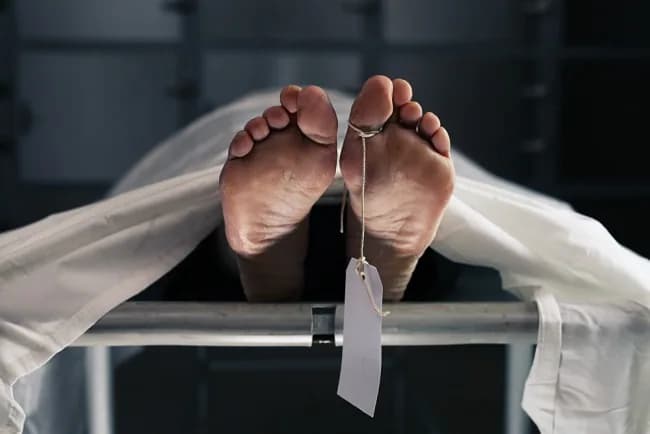
The Condition of a Body After Death
Every human being on earth will experience death. According to the Cleveland Clinicwebsite, the following changes occur in a person's body after death, whether lying down, standing, or in any other position.
1. Muscles Become Limp
After a person dies, the muscles in the body automatically relax, including those of the intestines and bladder. As a result, many people who die, whether standing or in any other position, release waste such as feces or urine.
2. Body Temperature Drops
When a person dies, their body temperature gradually falls. Generally, a deceased person's body temperature drops by about 16 degrees Celsius per hour until it reaches the ambient temperature, which is around 21.3 to 29.7 degrees Celsius.
3. The Whole Body Becomes Stiff
As you may often have heard in news reports of bodies found already stiff, the body of a person who has died tends to stiffen not long after the dying process, right up until after death.
This stiffness in a deceased person's body begins in the upper parts, namely the face and neck, and gradually spreads to other parts of the body, such as the arms, fingers, and legs.
4. Blood Pools and Clots
After a person dies, brain activity and breathing stop. The blood that once flowed through the body will also pool and clot in certain areas.
Organs such as the heart, kidneys, and liver also stop functioning. However, some cells and tissues do not die immediately. These parts of the body may remain alive for several minutes after death.
For this reason, this window can open up the possibility of organ donation, such as corneas, depending on a person's physical condition before death.
5. Skin Dries and Changes Color
A few hours after death, the skin of the deceased will automatically dry out and change color. The skin will shrink, and the fingernails and toenails may appear to grow as the skin contracts and retracts.
Then, gravity pulling the blood downward causes a change in skin color to a purplish-red or bruise-like appearance after death, especially in the areas where the blood has pooled.
6. The Body Becomes Limp Again
In the days following death, the body that was previously stiff will become limp again. This is due to damaged body tissue, so the stiff parts of the body relax once more.
This softening of the body will release residual toxins and fluids from the body, much like when you urinate. After that, a few days after death, the body will begin to decompose.
Do You Understand Standing Death?
Rigor mortis is the cause of the phenomenon known as standing death, as a result of muscle stiffness. Not everyone is ready to face their own death or the death of others, and everyone surely hopes to live a long life with the people they love.
Sadly, however, everyone will face death without exception. Knowing the signs of approaching death and using funeral services you can trust from Kamboja can be one way of preparing yourself for that moment. You can talk with a member of the Kamboja team by contacting Kamboja contact and get other important information!

Kamboja Blog
The Kamboja team writes guides on bereavement, funeral arrangements and funeral planning to help families in Indonesia.