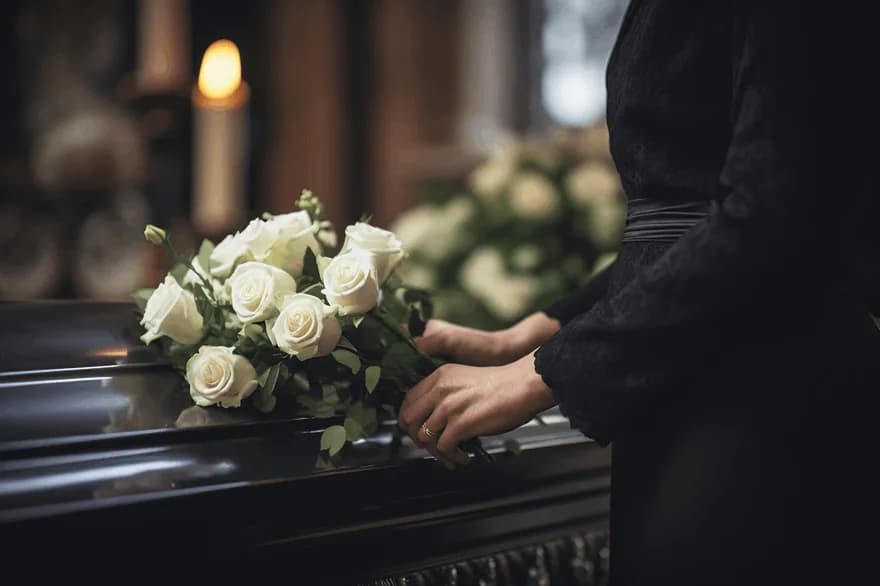
The differences between Catholic and Protestant funerals are often a question for many people, especially when attending a funeral procession or planning a family funeral. Although both come from the Christian tradition, the Catholic Church and Protestant churches differ in their beliefs, processes, and funeral customs.
Understanding these differences is not only about knowledge, but also a way of honoring each tradition's beliefs and customs. So, to make things clearer, let's go through them one by one here.
5 Significant Differences Between Catholic and Protestant Funerals
Although they may seem similar at first glance, there are some important differences between Catholic and Protestant funerals that cover aspects of belief, the ceremony process, and burial rules.
Let's look at the five main differences so you can better understand and respect each tradition.
1. Differences in Theological Views on Death
The first, and quite fundamental, difference lies in how death and the afterlife are viewed. In Catholic teaching, death is understood as a journey toward eternal life, which includes the concepts of heaven, hell, and purgatory.
Because of this belief in purgatory, prayers for the deceased are very important, as they are believed to help the soul in the process of purification before reaching heaven.
In the Protestant tradition, the concept of purgatory is not recognized. Salvation is believed to be determined by faith in God, so the focus of the funeral is directed more toward comforting the grieving family, rather than praying to help the soul of the deceased on their journey.
Put simply, in the Catholic tradition prayers are more directed toward the departed soul, while in Protestantism they are more directed toward strengthening the grieving family.
2. Differences in the Process and Sequence of Funeral Ceremonies
The next difference is clearly seen in the stages of the funeral procession. Catholic funerals generally have a more complete and structured sequence. It usually begins with a vigil or evening prayer as a final act of respect, held at the funeral home or church.
This is then followed by the Requiem Mass as the main part, officially held in the church with a prescribed liturgical order. After that, the body is taken to the cemetery in a procession, and concluded with the burial ceremony at the grave, led by a priest.
On the other hand, Christian funerals tend to be simpler and more flexible. The service of comfort can be held in various places, whether at the funeral home, the church, or directly at the cemetery.
The main part is usually a sermon or the proclamation of God's word to strengthen the family, followed by a short prayer at the burial. Broadly speaking, Catholic funerals are more liturgical and formal, while Protestant funerals are simpler and more flexible.
3. Differences in Customs and Symbols in Funerals
Symbols and customs are also quite striking differences between these two traditions. In Catholic funeral customs, there are various symbols with deep spiritual meaning, such as holy water to bless the body, incense that symbolizes prayers rising to heaven, and the use of the cross, rosary, and candles.
This whole set of rituals is usually carried out regularly according to church rules. Meanwhile, in Protestant funerals, the symbols used tend to be simpler, such as the cross, the Bible, and hymns of praise.
In most Protestant denominations, holy water and incense are generally not used. This difference is clearly visible: for example, in Catholic funerals holy water is often sprinkled on the casket, whereas such a ritual is usually not performed in Protestant funerals.
4. Differences in Etiquette and Atmosphere of the Funeral
In terms of etiquette and atmosphere, Catholic and Protestant funerals also have different tones. Catholic funerals usually take place in a more solemn and sacred atmosphere, with many prayers recited repeatedly and the congregation following the order of worship in an orderly way.
This atmosphere tends to be quiet and reflective. In contrast, Protestant funerals often feel warmer and more encouraging. Hymns are sung together, and the sermon is delivered in language that touches the heart to give strength to the grieving family.
In summary, Catholic funerals tend to be quieter and more reflective, while Protestant funerals remain reflective but are more expressive in offering comfort.
5. Differences in Burial Rules (Including Grave Matters)
The final difference, which often raises questions, concerns burial rules, particularly the use of cemetery land. In general, Catholic cemeteries are usually reserved for Catholics, so the rules tend to be stricter.
However, under certain conditions, non-Catholics may still be buried in a Catholic cemetery, for example if they have a family relationship with a Catholic or receive special permission from the church.
Protestant burials, meanwhile, are generally more flexible. Many Protestant or public cemeteries accept anyone regardless of denominational background.
Even so, decisions still depend on the policies of the cemetery management and the traditions of the local church.
Now That You Know the Differences? Time to Use the Right Funeral Service
In closing, understanding the differences between Catholic and Protestant funerals not only broadens our knowledge, but also helps us respect every tradition and belief.
Every funeral holds deep meaning for the family left behind, so it is important for us to be wise and full of empathy. In times of grief, families certainly need support, including with arranging the deceased's affairs, which are often quite complex and time-consuming.
For this reason, Kamboja offers professional services in the form of funeral arrangement services and comprehensive funeral services. From handling administration and preparing the procession to transporting the body to the destination, everything can be managed well so the family does not have to be burdened with the many technical details in the midst of grief.
If you need more information or would like to use these services, please contact our customer service directly via WhatsApp at the following number: +6282211111415.
- #funeral services

Kamboja Blog
The Kamboja team writes guides on bereavement, funeral arrangements and funeral planning to help families in Indonesia.


