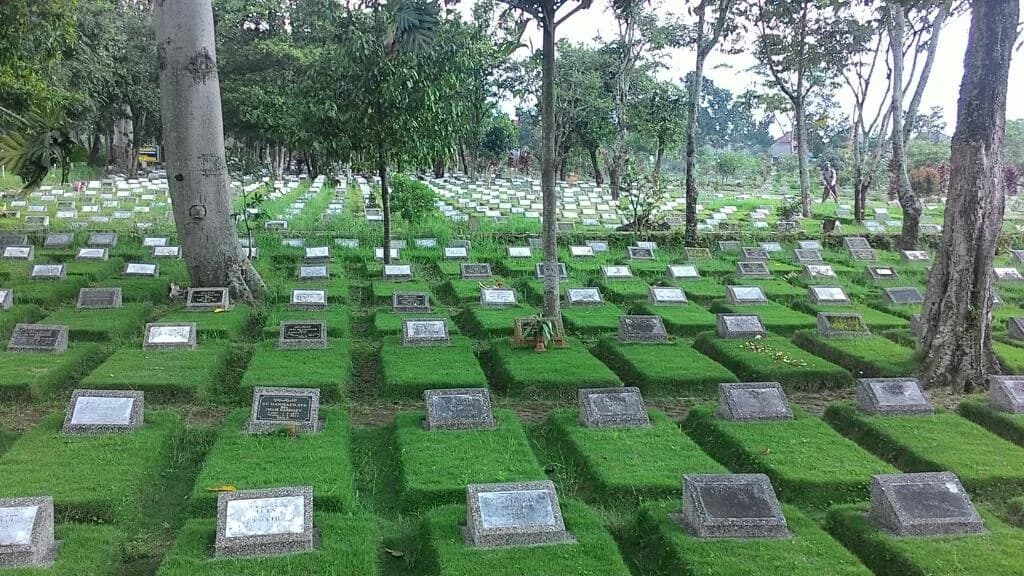
Grief truly comes at any time, and no one in the world knows when. When that day arrives, those left behind must not only grieve but also prepare for everything related to the funeral process.
As a Muslim, it is better to ease the burden of fellow Muslims. This applies both while you are alive and after you have passed away. One way to ease the burden on your loved ones when you die is to prepare a burial plot before your time comes.
Is It Necessary to Prepare a Burial Plot Before You Pass Away?
No one knows how long a person will live, and no one knows when death will come. When grief arrives, families are often confused about where to bury the body of their loved one.
That is why it is best for you to prepare your own funeral arrangements. You can leave a will to your family regarding your burial. Here are some important tips for those who want to prepare a family grave:
1. Prepare Before You Pass Away
One of the Prophet's companions who was promised Paradise, Uthman bin Affan, stated in his will that he wished to be buried in a specific place. In addition, one of the wives of the Prophet Muhammad peace be upon him namely Aisha, also made a similar will.
Therefore, there is no harm in making a will in advance. In this way, your family will have a plan and preparation ready when you have passed away.
2. Make Sure the Burial Plot Complies with Islamic Law
Even if you have made a will, family members also need to check whether the burial site complies with Islamic law. Although it is the result of a will, if the burial does not comply with Islamic law, then the will does not have to be fulfilled.
Several important criteria relating to a burial that complies with Islamic law include:
- Facing the qibla.
- Muslim and non-Muslim graves must not be mixed together.
- The grave has a depth of 1.5 meters.
- A gravestone may be placed as a marker.
- A grave whose location does not make it difficult for family members to carry out the burial or to visit.
- Based on the Indonesian Ulema Council (MUI) Fatwa Number 9 of 2014, buying a grave that involves israf and tabzir is haram.
- Israf, involves exceeding one's needs beyond what is appropriate.
- Tabzir, using wealth for unnecessary purposes (wastefulness).
3. Choose a Burial Plot Free of Annual Rental and Maintenance Fees
The next tip is that the plot should also be free of annual fees and maintenance costs. When you have to pay annual rental and maintenance fees, this becomes a burden.
Every year you would have to set aside certain funds for the grave. Yet you could use that money for other needs that are more beneficial.
Therefore, it is better to buy a certified grave. Make sure the grave manager does not require you to pay annual fees.
4. Buy a Grave According to Your Means
Equally important, buying a burial plot also should not be excessive. Do not force yourself to do something that is israf or tabzir. These two things are forbidden.
You can consult a scholar or someone who understands these two matters. Then you can get an idea of where you might buy a grave that also helps you avoid israf and tabzir tersebut.
5. Prepare a Grave for Your Parents
So that your devotion does not end even after your parents have passed away, you can prepare a burial place for them. The goal is to make it easier for family members to visit whenever they wish.
This also helps the visits feel more peaceful and reverent. Choose a cemetery plot that does not make it difficult to pray for your parents. It is also good to bring your children along on visits, since visiting graves is recommended (sunnah) in Islam.
Tips for Preparing the Kafan
Apart from preparing a grave plot, there is another essential requirement: preparing the kafan, the burial shroud. Every Muslim who passes away is wrapped in a kafan as their final garment.
Shrouding the deceased is obligatory. It is also preferable for the kafan to be paid for from the deceased's own wealth. The kafan should be purchased before the estate is divided among heirs
or any bequests of the deceased are carried out.
This means the kafan is extremely important and should be a top priority. But what if the deceased has no wealth to buy a kafan? In that case, the responsibility falls to the heirs.
The task of buying the kafan and setting aside the funds is the responsibility of the family members. If they are also unable to afford it, the solution is to take funds from the baitul mal (the Islamic public treasury).
And what if the baitul mal is empty too? Then it is the duty of fellow Muslims to ease their brother or sister's burden by helping to buy the kafan. This can be done through collective contributions or by individuals purchasing it directly.
Understand the Importance of Preparing a Burial Plot?
Those are some important tips regarding preparing a burial plot and kafan for the deceased. To make the burial process easier for you, you can sign up for death insurance with Kamboja.
Kamboja is a funeral service you can trust. A solution for you and your family when that day comes. Kamboja takes care of the various funeral arrangements directly, through professionals in their field.
In addition, Kamboja also provides emotional support and financial planning so that you are not burdened when the day arrives. Equally important, Kamboja also offers TPS San Diego Hills and Al-Azhar Memorial Garden or other public cemeteries for your needs. This is what makes Kamboja the best place for grave arrangements, and it is fully 100% in accordance with Islamic law.

dev_kamboja
The Kamboja team writes guides on bereavement, funeral arrangements and funeral planning to help families in Indonesia.