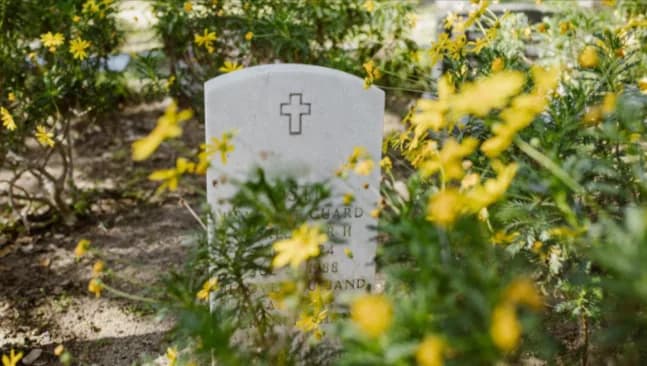
In Indonesia, many people plant flowers and trees near the graves of their loved ones or in the surrounding area. Over time, this has become a distinctive tradition among Indonesian communities.
But what exactly is the function of plants in graveyards? And which types of plants or flowers are suitable for planting in cemetery areas? Read on for the information below.
The Function of Plants in Graveyards
The majority of Muslims believe that planting a tree in someone's grave can help lighten the punishment of the deceased.
Every person believes that after death, each will face their own fate in the grave. Of course, people should keep increasing their acts of worship to help ease the trials of the grave.
One practice that Muslim families often follow for the deceased is planting trees in the grave.
In a hadith narrated by Bukhari, the Prophet Muhammad (peace be upon him) said:
"No Muslim plants a tree or sows seeds, and then a bird, a person, or an animal eats from it, except that it is counted as charity for him."
From the wording of this hadith, it is clear that in Islam, planting trees is a form of charity.
In short, by planting trees anywhere, including in graveyards, a person does a good deed that they will carry until the Day of Judgment.
However, there are specific criteria regarding the types of grave plants that you can plant.
In Islam, if the roots and branches of a tree can reach the deceased, it is considered unlawful (haram) to plant it.
Meanwhile, if the plant is a flowering type with small branches and roots, it is considered recommended (sunnah) or permissible to plant.
Apart from the religious perspective, planting in graveyards also serves an aesthetic function. A grave surrounded by flowers or plants will certainly look more peaceful and beautiful.
This is why many people often plant greenery at the graves of their family members.
Types of Grave Plants That Can Be Planted
After understanding the function of plants for graves, here are various types of plants you can plant in graveyards:
1. Jasmine (Melati)
This white flower is often found around cemeteries or on top of graves as decoration. Its dense, bushy growth is often used to decorate graves.
So when you visit a family member's grave, you can simply pick blossoms directly from the plant.
Jasmine also grows easily in many places at a modest size. Its care is relatively simple and it does not need to be watered every day.
2. Hanjuang (Cordyline)
Hanjuang, or cordyline, is an ornamental plant often found in gardens, along roadsides, or in graveyards. It is an easy plant to maintain.
Interestingly, hanjuang can also survive in dry and hot areas. That is why it is often chosen as a grave plant.
3. Rose (Mawar)
The rose is a very popular ornamental plant that can be used for many purposes, including making a grave look beautiful and inviting.
Many people now choose roses for graves because of their lovely blooms and distinctive fragrance. You can also scatter rose petals over the grave when you go on pilgrimage.
4. Pacar Air
Pacar air is an ornamental plant that does not grow very tall but produces dense blooms along its stems. Its varied colors, such as white, purple, and violet, make it a good fit for graveyards.
Its seeds are also small, so it will not take up much space around the grave.
5. Frangipani (Kamboja)
Frangipani, which many people also call semboja, is a plant you will almost always find in graveyards. Frangipani trees are widely planted in cemeteries because they adapt well to their surroundings and grow vigorously.
Not only that, frangipani trees do not form thick undergrowth, and their flowers make a beautiful decoration for the grave area.
6. Lily (Bakung)
Bakung plants are generally similar to lilies, as they belong to the Lilium genus. Today, there are many types of bakung flowers that you can easily find.
Interestingly, each type of bakung has a distinctive and very attractive appearance when in bloom.
Unfortunately, bakung does not suit hot and arid areas. Therefore, if you intend to use bakung as a grave plant, make sure the surrounding area is cool and the soil is moist.
7. Ylang-ylang (Kenanga)
Ylang-ylang is a plant with a strong and very fragrant scent, especially when in bloom. It is no surprise that it is an excellent choice for planting in cemetery areas.
Its fragrant flowers are also sought after by many people for certain traditional remedies and as flowers to scatter over graves.
8. Tuberose (Sedap Malam)
Tuberose is a green plant with a pleasant fragrance and very beautiful blooms when in flower. Some people also use these flowers as room fresheners, aromatherapy, and bridal decorations.
However, tuberose can also be used as a grave plant. Its only drawback is that it tends not to grow well in hot and overly dry areas.
9. Carnation (Anyelir)
Carnation is a short-stemmed flowering plant often found in cemetery areas. It has very beautiful flowers with frilled petals when in bloom.
So, besides being an attractive plant for graveyards, you can also use these flowers as offerings during pilgrimage.
10. White Champaca (Cempaka Putih)
White champaca, or kantil flower, is a plant often found in cemetery areas. Local folklore holds that white champaca is often considered a dwelling place for spirits.
That is why white champaca trees are more commonly found in sacred areas such as graveyards.
11. Angel's Trumpet (Bunga Terompet)
Angel's trumpet can be found not only in home gardens but also in cemetery areas.
This ornamental plant is often used as a grave plant because of its beautiful shape and pleasant fragrance.
Angel's trumpet planted in cemetery areas not only makes graves look more serene, but also enhances the atmosphere of the surroundings.
Which Grave Plants Do You Often Come Across?
That concludes this brief overview of the function and various types of plants for graves. When it comes to funerals, there are of course the funeral service costs that families must prepare for.
However, if you wish to plan your own funeral early so that you do not burden your loved ones, it is worth considering funeral protection such as the one Kamboja offers. You can consult our funeral manager.
- #grave relocation service
- #funeral service
- #body relocation

dev_kamboja
The Kamboja team writes guides on bereavement, funeral arrangements and funeral planning to help families in Indonesia.