Chinese Funeral Attire: Differences for Children, Grandchildren, and Great-Grandchildren
- Kamboja Blog
- (updated )
- 5 min read
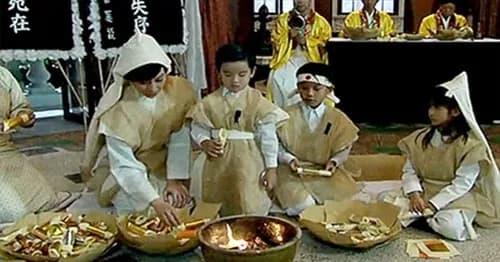
In Chinese tradition, a funeral procession is about more than escorting the deceased to their final resting place. There are many symbols, customs, and rituals with deep meaning, including the mourning attire worn by family members.
For some people attending a Chinese funeralfor the first time, it may be confusing to see family members wearing different clothing. Some wear hemp cloth, some wear ribbons of a particular color, while others only wear a small marker on the sleeve or chest.
These differences are not without reason. In Chinese culture, mourning clothing is used to show a family member's relationship to the deceased. The closer the family relationship, the simpler and "heavier" the mourning clothing usually is.
So, how do the funeral attire differ for children, grandchildren, and great-grandchildren? What is the meaning behind these differences? Let us discuss this in full.
Why Do Chinese Funeral Garments Differ?
In Chinese philosophy, respect for parents and ancestors is an important part of filial piety, or devotion to family.
When someone passes away, the family left behind shows respect, loss, and closeness of relationship through the clothing worn during the mourning period.
Because levels of family relationship vary, the mourning symbols used also vary.
The main purposes of wearing this mourning attire are:
- To show the family relationship with the deceased.
- To indicate the level of grief and respect.
- To help guests recognize a person's position in the family lineage.
- To preserve ancestral traditions passed down through generations.
- To serve as a final gesture of devotion to a family member who has passed away.
The Concept of Rank in Chinese Mourning Traditions
In Chinese culture, the concept of generation is very strong. In general, family members are distinguished as:
- Biological children
- Daughters-in-law
- Grandchildren
- Great-grandchildren
- Siblings
- Nephews and nieces
- Distant relatives
Each group has different mourning attributes.
Although the details may differ depending on the family's dialect group (Hokkien, Teochew, Cantonese, Hakka, and others), the general principle remains the same: the closer the relationship to the deceased, the greater the mourning symbols.
Differences in Rank in Chinese Funeral Attire for Children, Grandchildren, and Great-Grandchildren
Besides the use of white and mourning accessories, some Chinese funeral traditions in Indonesia have a system known as mourning rank. This rank is used to show a family relationship with the deceased and is usually worn on the sleeve, chest, hat, or mourning clothing.
In general, the following is a rank system that is quite commonly found in Indonesian Chinese traditions.
1. Sons and Daughters-in-Law
Biological sons and daughters-in-law usually receive a rank in the form of a piece of coarse hemp cloth.
In Chinese tradition, sons are regarded as the continuers of the family line and therefore carry the greatest mourning responsibility. Coarse hemp cloth is chosen for its uncomfortable texture, as a symbol of deep sorrow over the passing of a parent.
Meanwhile, a married daughter-in-law is considered to have become part of her husband's family, so she usually follows the same mourning rules as the sons.
Meaning:
- The closest family relationship.
- A symbol of devotion to one's parents.
- Shows primary responsibility in the funeral procession.
2. Married Daughters
Married daughters generally wear fine hemp trim.
This is because, in classical Chinese tradition, a married daughter is considered to have become part of her husband's family. Although she remains blood-related to her birth parents, her mourning position is distinguished from that of sons.
Meaning:
- Still shows respect to her birth parents.
- Has a direct blood relationship with the deceased.
- Signifies that she has joined another family through marriage.
3. Grandchildren from a Son
Grandchildren descending from the son's line, often referred to as grandchildren "in," usually wear dark blue cloth or insignia.
In traditional Chinese family systems, the male line is considered the continuation of the family surname. Therefore, their mourning attire is distinguished from that of grandchildren from a daughter's line.
Meaning:
- Still within the main family lineage.
- A symbol of the continuation of the family name.
- Shows their position as the third generation.
4. Grandchildren from a Daughter
Grandchildren from a daughter generally wear light blue insignia.
They still have a blood relationship with the deceased, but by custom they are considered outside the main family line because they follow their father's family.
Meaning:
- Still shows a close family relationship.
- Marks the difference in lineage according to traditional custom.
- A symbol of respect for the grandparent who has passed away.
5. Great-Grandchildren from a Son
If the deceased has great-grandchildren, those from the son's line usually wear yellow insignia or shirts.
In some families, the presence of great-grandchildren is even seen as a symbol of success and blessing in life, because it shows that the deceased has descendants up to the fourth generation.
Meaning:
- Represents the continuation of the family.
- A symbol of longevity and a flourishing lineage.
- Shows their position as the fourth generation in the family tree.
6. Great-Grandchildren from a Daughter
Meanwhile, great-grandchildren from a daughter's line usually wear shirts or attire in pink.
This distinction again follows the concept of lineage in traditional Chinese culture.
Meaning:
- Shows the blood relationship that still exists with the deceased.
- Distinguishes between the son's and daughter's lines of descent.
- A symbol of respect from the younger generation.
What If You Don't Know What to Wear?
If you are a family member, the party arranging the funeral procession will usually distribute mourning attire according to each person's position in the family.
However, if you are a guest attending the wake, simply observe the following:
- Modest clothing.
- Neutral or dark colors.
- Avoid bright red.
- Avoid overly flashy clothing.
- Avoid excessive accessories.
In Chinese culture, red is associated with happiness and celebration, so it is considered unsuitable for mourning and is generally included among the taboos for Chinese funerals.
Need Help with a Chinese Funeral?
If you need assistance with arranging a Buddhist funeral, a Chinese funeral, cremation, bereavement administration, or support throughout the procession from experienced funeral managers, you can contact Kamboja.co.id Funeral Management at the number 082211111415.
The funeral management team at Kamboja.co.id provides professional Buddhist funeral and cremation arrangement services, including bereavement administration assistance and support for the family throughout the process.
For more information about Chinese funeral arrangement services, Buddhist funerals, cremation, or any other bereavement consultation needs, please don't hesitate to contact the Kamboja.co.id hotline, ready to help you and your family.
- #funeral services
- #jasa kedukaan
- #manajemen pemakaman
- #pemakaman Tionghoa

Kamboja Blog
The Kamboja team writes guides on bereavement, funeral arrangements and funeral planning to help families in Indonesia.