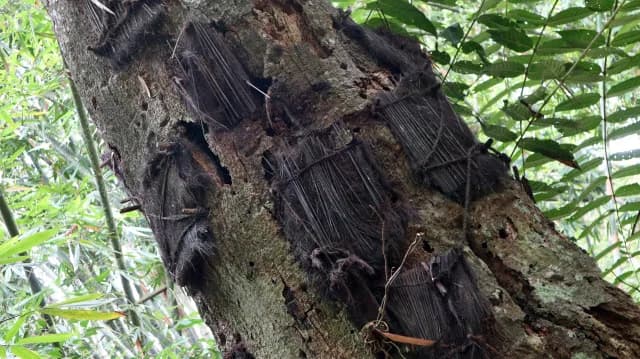
While many burial sites carry an eerie atmosphere, the Passiliran infant graves in Toraja offer a very different impression. This burial site has become a special draw for first-time visitors to Toraja, and the tradition has since become a well-known tourist attraction there.
How did these infant graves from Kambira Village, Tana Toraja, South Sulawesi, come to be? What are the rules of this infant burial ceremony? Let's get to know more about this unique Toraja funeral rite through the full explanation below!
Passiliran Infant Burial
As you may already know, Indonesia has many kinds of burial practices. Burials are not only carried out by placing the body in a coffin. There is also a method of placing an infant inside a tarra tree trunk, as in this Toraja tradition.
Why does the Toraja community follow this tradition? There are, in fact, interesting reasons behind it. Even the way the infant is placed inside the tarra tree is specific. So the burial procedure cannot be carried out carelessly.
The Meaning of Passiliran
The death of a child, especially an infant, is certainly the deepest wound for parents, who have not even had the chance to watch the baby they longed for grow up. Because of this feeling, the Toraja people hold a burial tradition specifically for infants.
The Toraja community believes that a newborn is a human being whose purity is still intact. That is why you can see a significant difference between Passiliran and the Batu Lemo burial ceremony, a burial tradition for adults that is also well known in Toraja.
Therefore, the Toraja people deeply respect infants who pass away and bury them in the tarra tree trunk. This burial is understood as returning the infant to its mother's womb. Such a ritual also carries a hidden hope: to protect the infants who will be born in the future.
Another meaning of this tradition lies in the standing position of the infant inside the tarra tree trunk. This arrangement offers the hope that the infant will grow within the tree. Meanwhile, the tarra tree was chosen as a grave because this type of tree produces a lot of sap, which serves as a "substitute" for breast milk.
Rules for Graves in the Tarra Tree
The graves in the tarra tree trunk have a diameter of 80 to 100 centimeters. The opening must be made to match the typical size of an infant so the body can be placed in a standing position.
The infant is not dressed in clothing or a burial shroud. Generally, the infant's body faces the direction of the parents' home and is covered with palm fiber. In addition, only infants who have not yet grown teeth are buried in this tree. Infants who have already grown teeth are buried in stone graves.
Furthermore, the position of the opening for the grave in the tarra tree must also be adjusted to the social status of the infant's family. The higher the family's social status, the higher the opening on the tarra tree. Such burial practices are generally carried out by adherents of ancestral beliefs.
Meanwhile, the funeral ceremonies in Toraja are also usually held in a very simple way. Passiliran is carried out as it is, without any embalming rituals. The community truly regards the infant placed inside the tree trunk as if it were still in the mother's womb.
There is also a strict rule that the mother is not permitted to look at the infant's grave for one year. The community believes that if the mother sees the infant's grave, her chances of having a healthy baby in the future will diminish.
Eventually, the opening in the tarra tree will close on its own, and all the infants' bodies inside will remain there. The tarra tree itself stays alive, and the community never cuts it down. This is because felling a tarra tree is believed to sever the infants' continued journey to the afterlife.
The Uniqueness of the Passiliran Graves
Although the tarra tree holds many infants' bodies within it, visitors to Kambira Village do not notice any foul smell. Remarkably, the tarra tree trunk never runs out of space to serve as a grave for other infants. As a result, the Toraja community never has difficulty finding a burial place.
Because of this unique Passiliran tradition, the infant burial site in Kambira (also known as the baby grave) has now become an interesting destination for tourists. The site shows no sign of eeriness at all, so tourists often visit it as a nature trip.
To keep the natural surroundings pristine, the Toraja community only allows visitors to reach the infant graves on foot, via a flight of stairs. Walking also lets visitors enjoy fresh air and lush scenery, thanks to the bamboo forest that surrounds the infant graves.
It is hoped that visitors can gain new cultural knowledge about Indonesia, particularly about this burial culture.
The Passiliran Burial Tradition Is Truly Fascinating, Isn't It?
By learning about the Passiliran burial tradition, do you realize how precious a human soul is, even in the form of an infant? Because of the value placed on these infant souls, the people of Tana Toraja do not hesitate to hold a sacred burial ritual for them.
For those who may currently be with a family grieving the loss of a loved one, express your sympathy with the most sincere condolence messages. If you wish to prepare ahead for a time of grief, you can also use Kamboja's funeral services to arrange the funeral needs.
The Kamboja on demand service will help you handle every step of the funeral process from start to finish. With professional arrangements, the final farewell to your loved one will proceed more smoothly and reverently. Let's have a consultation for early preparation by reaching out via Kamboja's contact page.

dev_kamboja
The Kamboja team writes guides on bereavement, funeral arrangements and funeral planning to help families in Indonesia.


